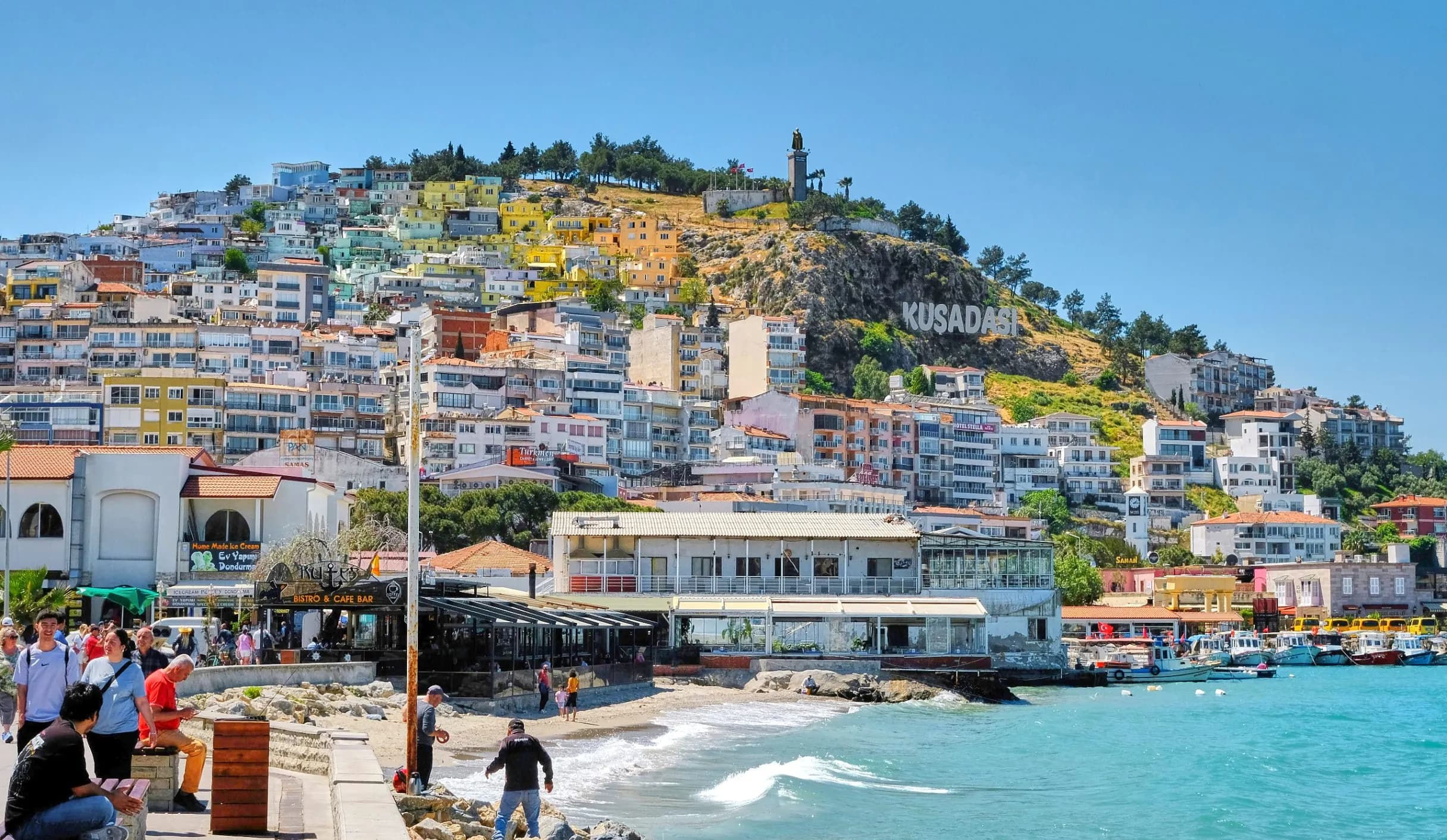

Kusadasi is a small Turkish resort on the Aegean Sea that almost no foreign tourists visit. It is a favourite getaway for Turks and, perhaps surprisingly, for Asian travellers who arrive aboard enormous cruise liners.
The name "Kusadasi" translates from Turkish as "Bird Island." Near the town lies a small island connected to the mainland by a causeway, where pigeons once loved to nest.
In the third millennium BC, the Leleges and Carians migrated here from Central Asia. On these fertile lands they cultivated olives and grapes. From the 11th century BC onwards, ancient Greeks began settling the area. During the heyday of the city of Ephesus, this site served as its trading port. The coastline came under Lydian rule for a time, then under the Achaemenids, and in the 4th century BC it was conquered by Alexander the Great.
In the 2nd century BC, the site of present-day Kusadasi was home to the port of Scala Nuova, which belonged to the Byzantine Empire. From that point on, Ephesus gradually fell into decline while the port city flourished. In the Middle Ages, the port became a Venetian and Genoese trading hub. It was not until 1413 that it came under the rule of the Ottoman Empire.
The Ottoman Empire's defeat in World War I set its dissolution in motion. Following the Armistice of Mudros in 1918, the victorious powers began dividing up the empire's territories. In 1919, Italian troops landed in Kusadasi and other towns, while Greek forces occupied Izmir and the surrounding area. The Turks fought back — this marked the beginning of the Turkish War of Independence, which did not end until 1923. In 1922, Kusadasi was liberated from occupation, after which its Greek population was exchanged for a Turkish one. This is how Kusadasi became entirely Turkish.
Kusadasi remains a port city to this day, with cruise liners from around the world calling at its harbour. Read on to discover what has survived in the city and its surroundings from the ancient empires, and where to find the best beaches, kebabs, and shopping.
Attractions
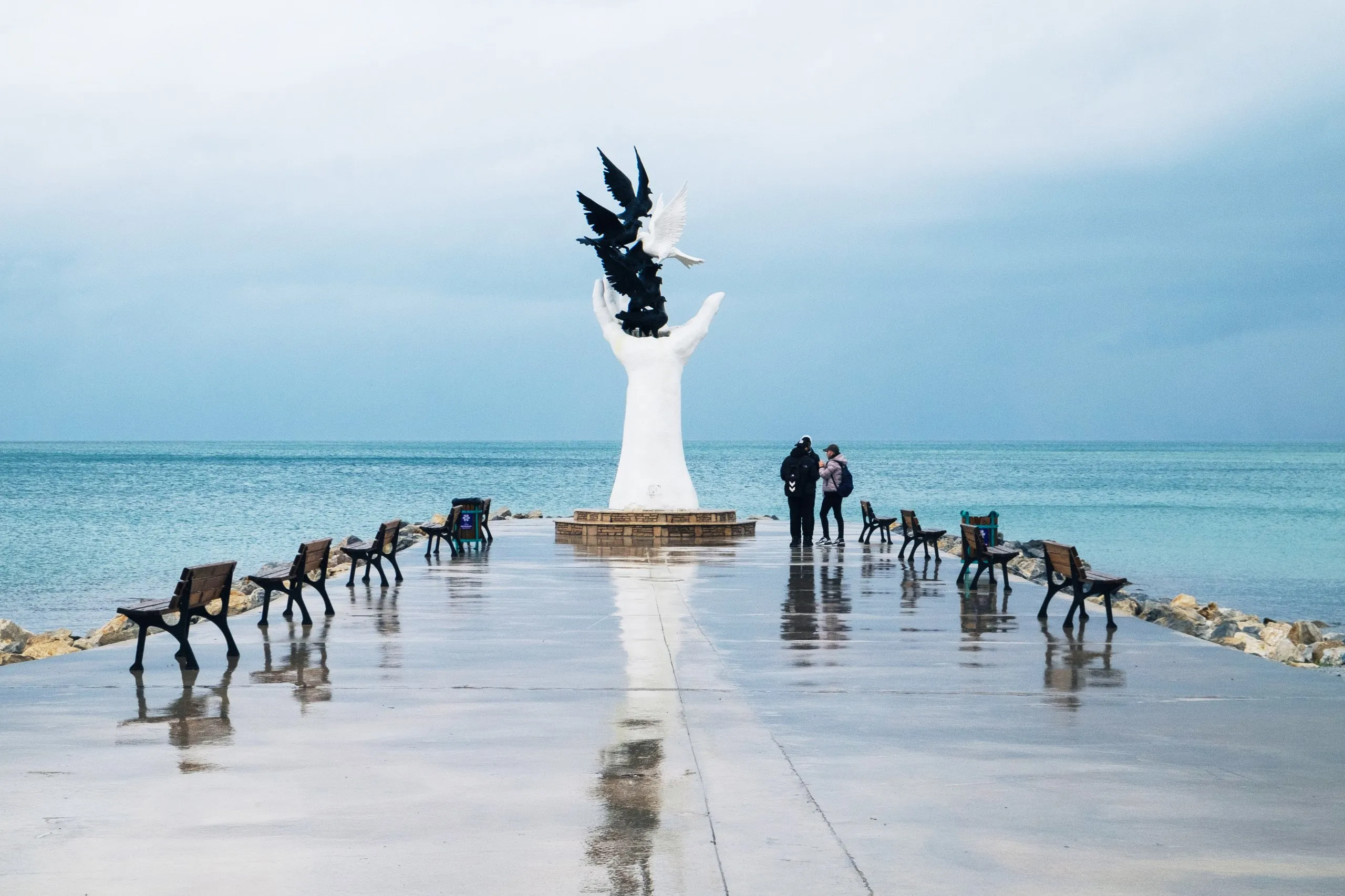
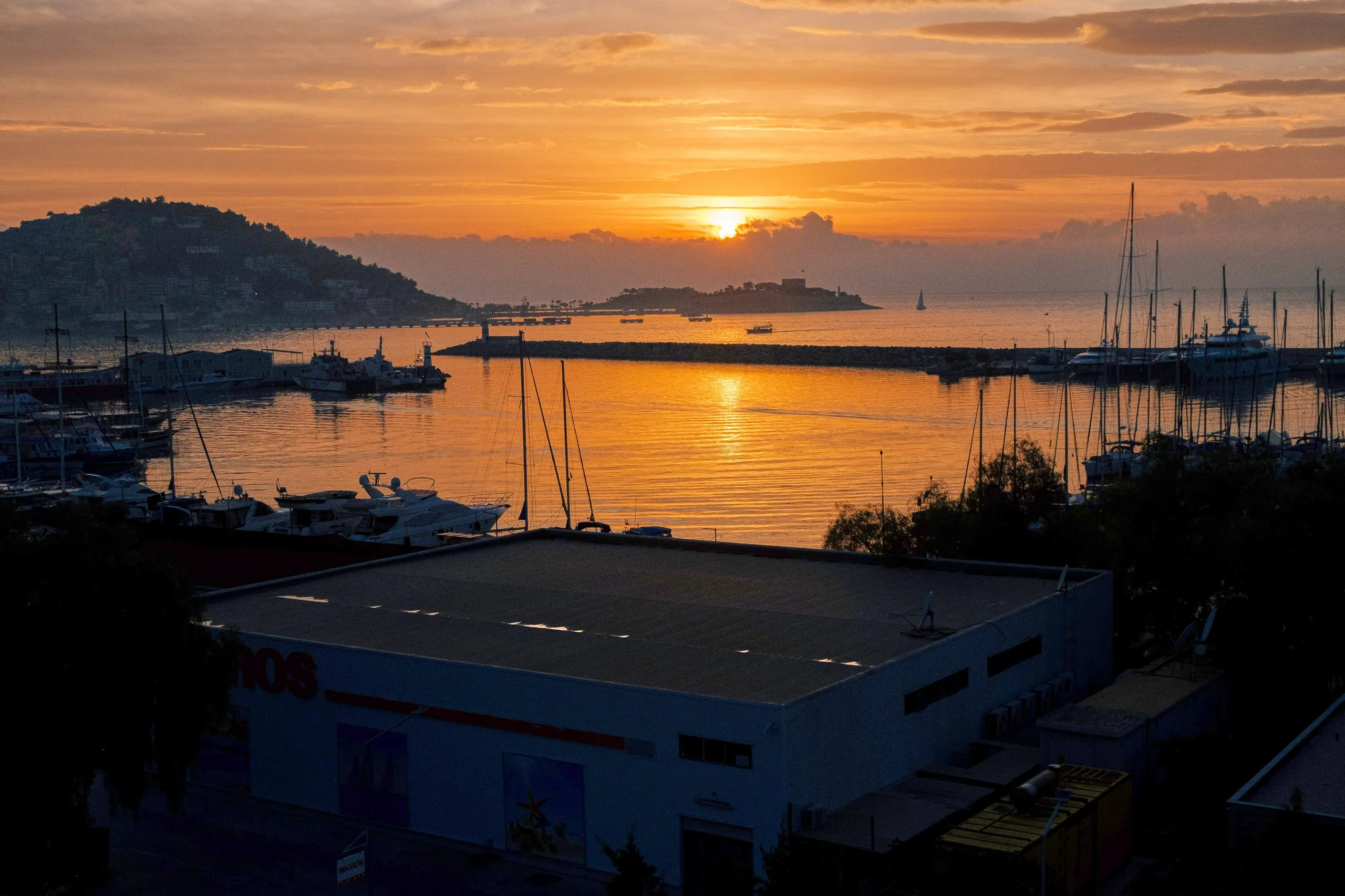
Kusadasi stretches along the coast in a bay of the Aegean Sea. Just over 130,000 people live here. The port, a small historic district opposite it, the waterfront promenade, and Atatürk Boulevard — where tourists stroll — are the main focal points in town. Here by the sea, as is customary at Turkish resorts, bars are clustered together, staying noisy late into the night, mostly thanks to the British. A monument in the form of a giant white hand releasing black and white doves stands on the promenade. It is one of the most recognizable landmarks in the city.
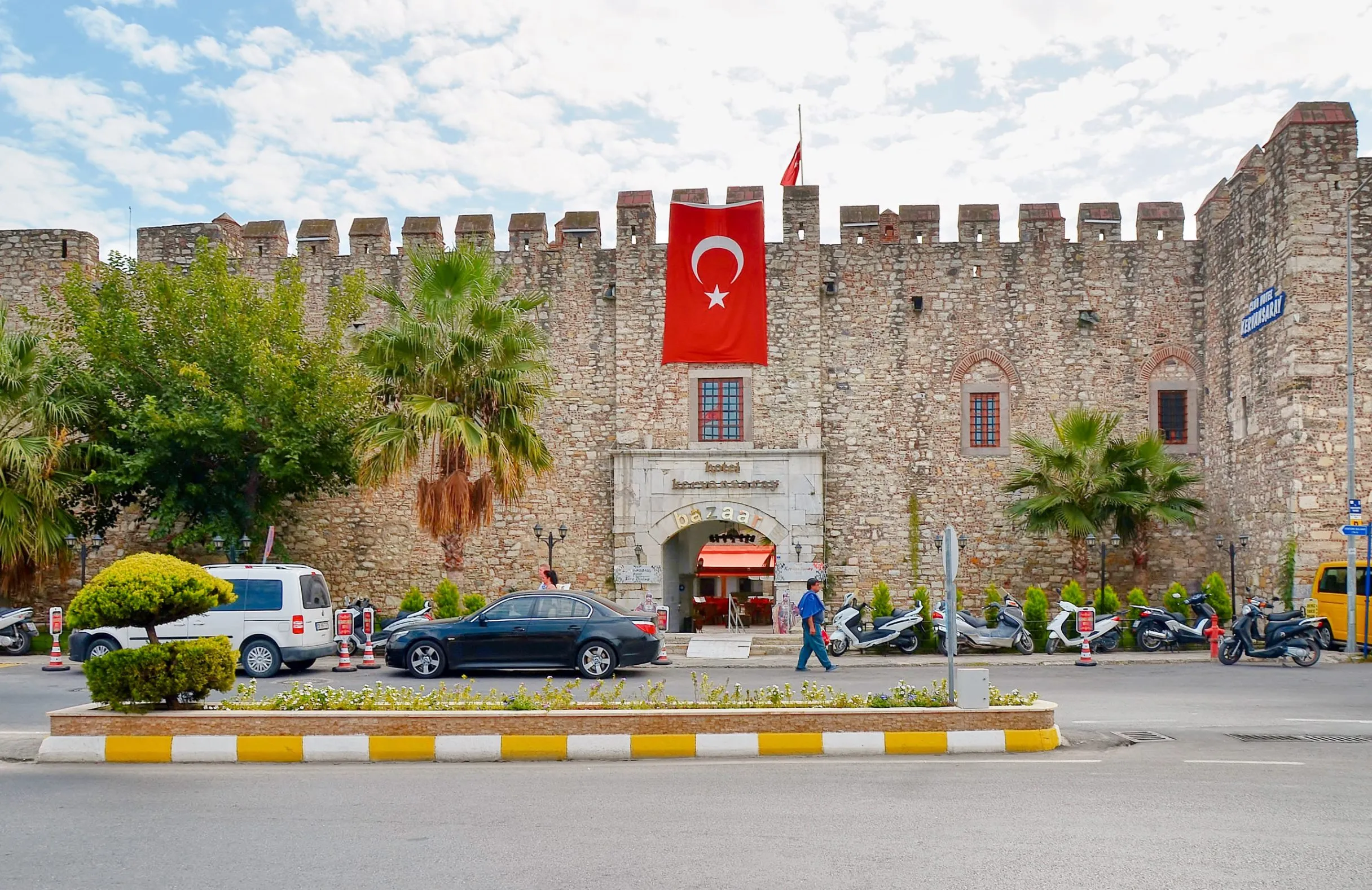
Besides the seafront promenade, people also stroll along İnönü Boulevard and Barbaros Boulevard. These are the only streets where some old architecture has been partially preserved. The rest of the city was built in the last 50 years — there is not much antiquity in Kusadasi. The most notable historical sights are located on Barbaros Boulevard: the Caravanserai of Mehmed Pasha, the castle tower with its gate and a mosque Kaleici. A couple of kilometers from the center, a 100-meter aqueduct.
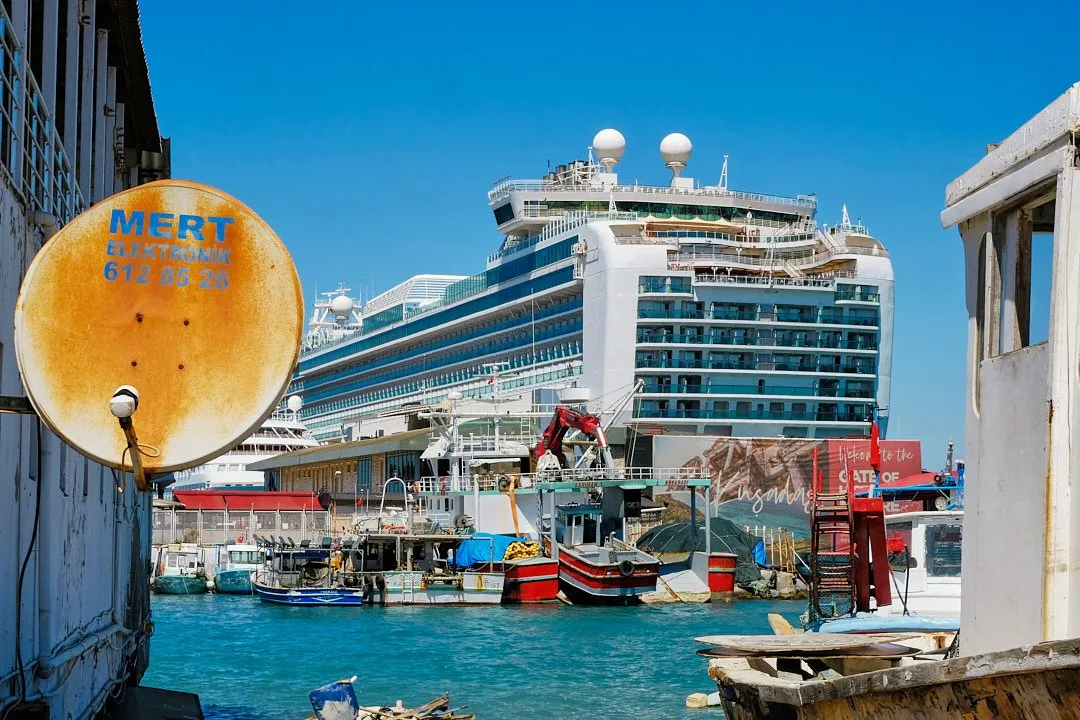
Kusadasi receives enormous multi-deck cruise ships — several can be docked in the port at once. These day-tripping tourists crowd the promenade, stock up on trinkets in souvenir shops, and occupy tables at restaurants where the British are eagerly offered their familiar fish and chips while watching an English Premier League match. During the season and on holidays, Turks love coming to Kusadasi — some have small houses outside the city, much like our dachas, where they gather with family for lavish feasts.
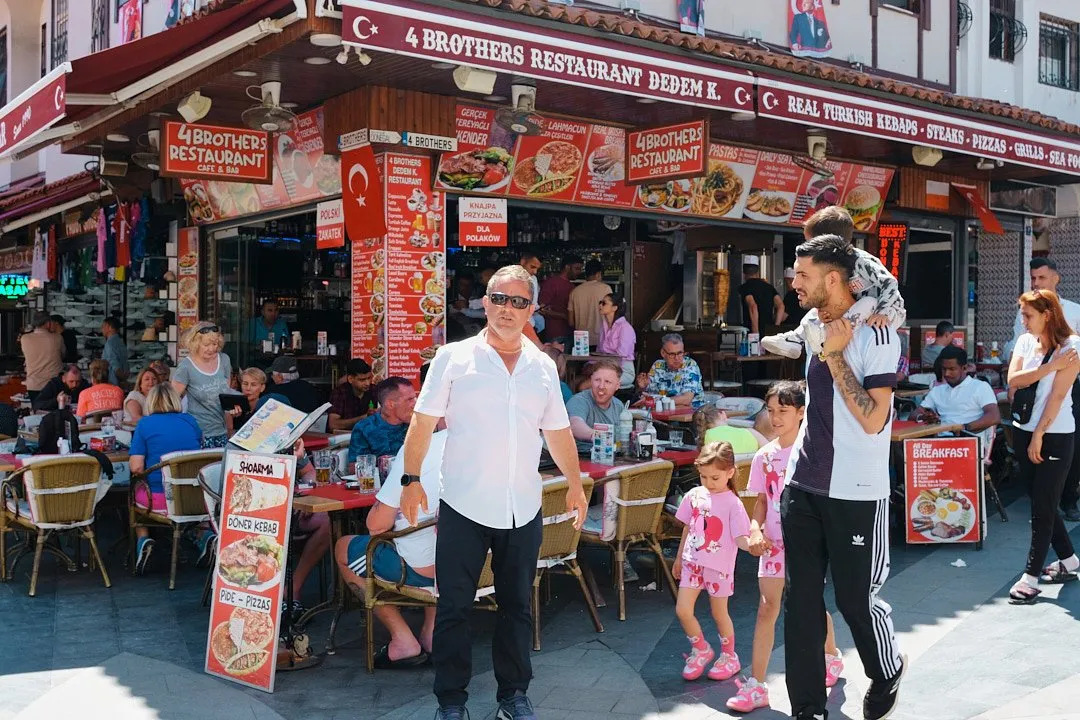
Despite all this, if you step away from the center, you wouldn't say Kusadasi is overrun with crowds of tourists. The shoreline is not packed with hotels, and the beaches are not crammed with sunbeds to the horizon. Souvenir shops are found mainly on the promenade and in the Old Town, shop assistants don't push you into buying anything, and many seem indifferent to whether you're a tourist or not.
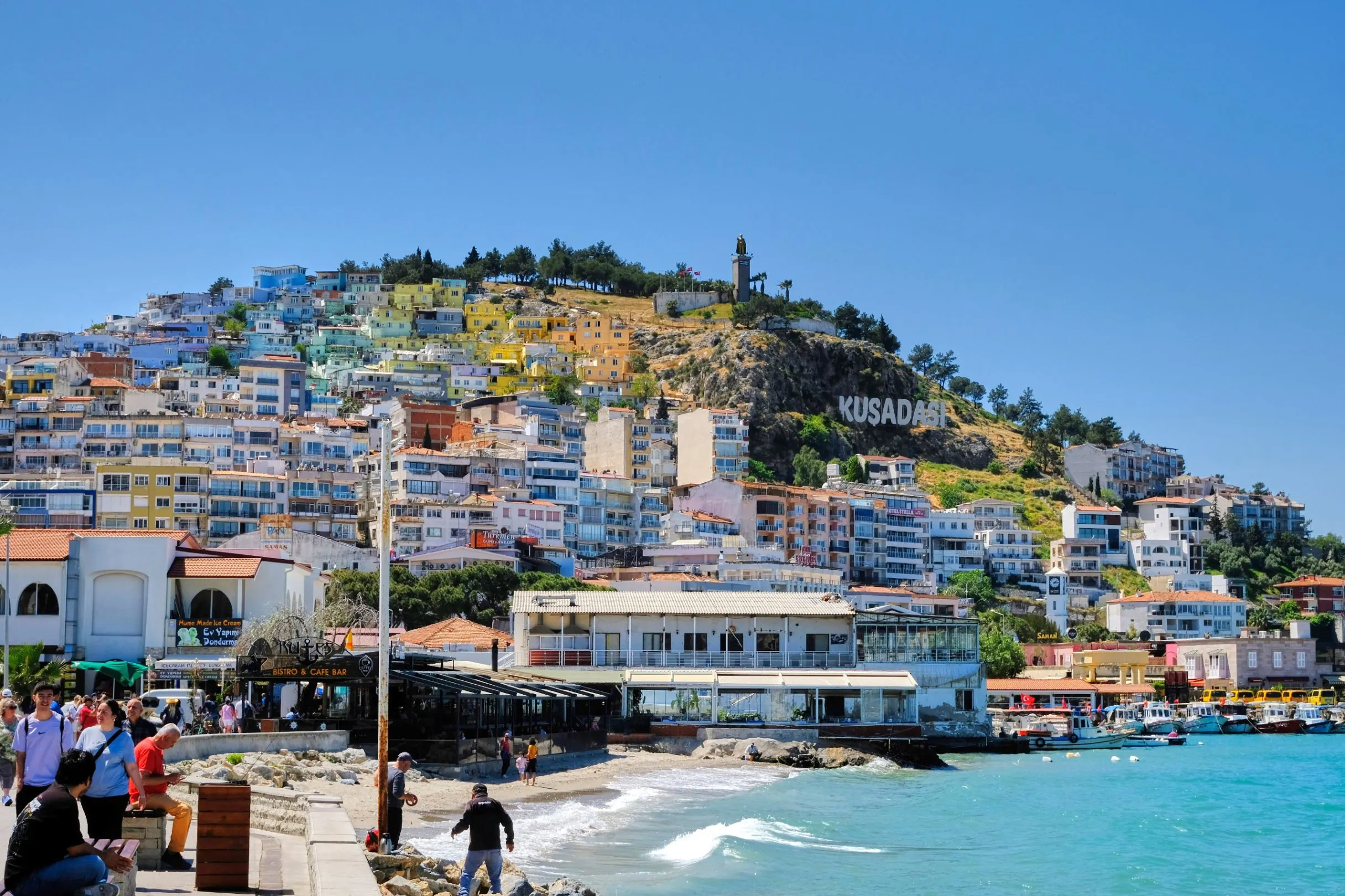
The fortress Güvercin Ada on Pigeon Island — is the city's main attraction. The Genoese first built fortifications here in the 13th century to protect the port from the sea. The fortress itself was constructed under the Ottomans, in the early 16th century. From the tower at the highest point of the island, guards kept watch over the surrounding area.
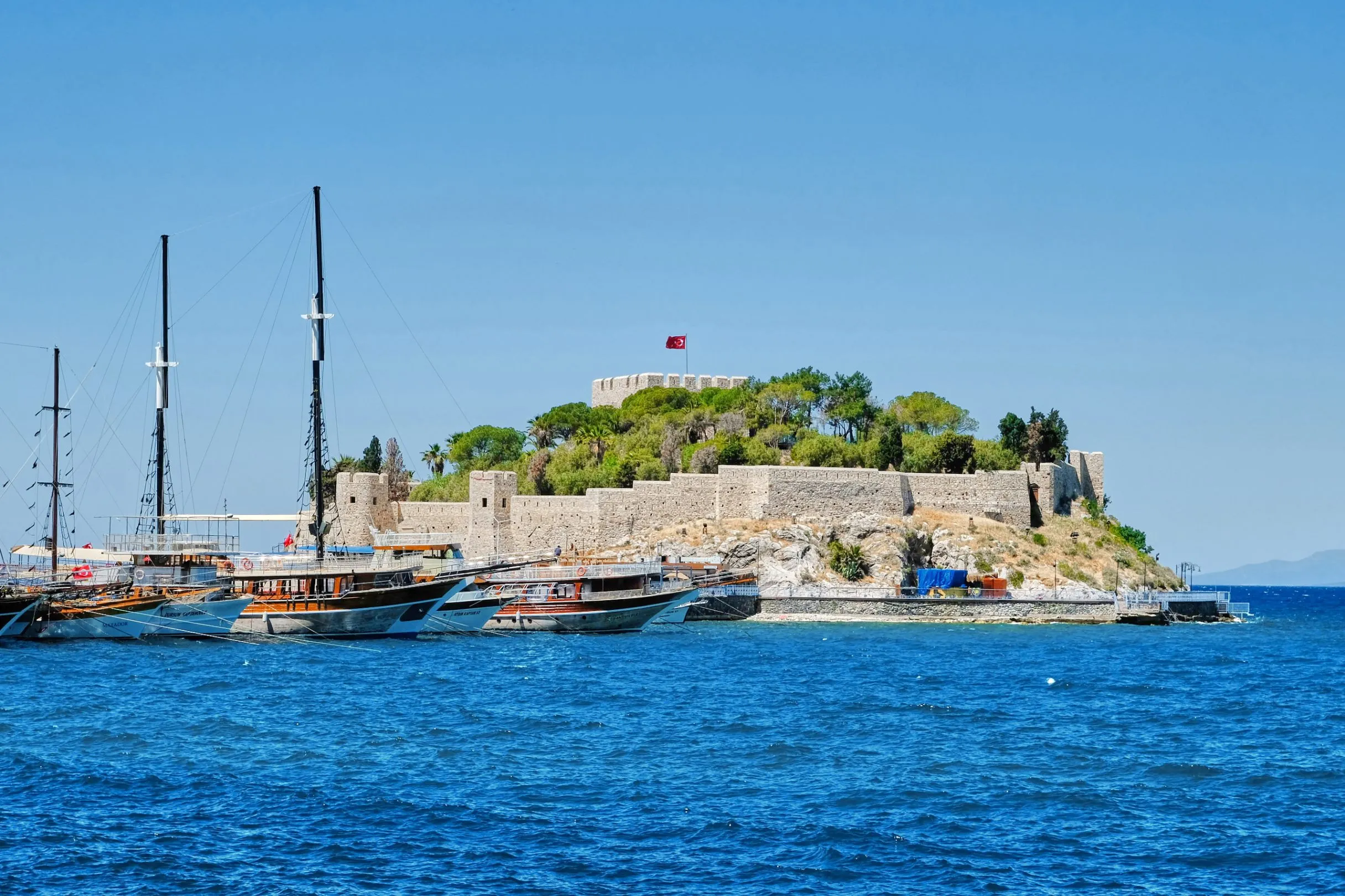
The fortress can be reached via a causeway. At the far end of the island stands a monument to the Ottoman admiral Hayreddin Barbarossa, who recaptured Algeria from Spain, conquered Tunisia, and seized several Aegean and Ionian islands. Inside the fortress are the main tower, a small park with benches, viewing areas, and a lighthouse. Entry to the fortress now costs ten euros (11.2 USD).
The fortress also houses a Museum of Maritime History, which tells the story of maritime trade in the country and displays artifacts from the Roman and Ottoman periods: coins, amphorae, and even a whale skeleton. The museum takes pride in its world's largest collection of hand scales and weights — these exhibits allow visitors to trace how maritime trade changed across different eras. An adult ticket costs ten euros (11.2 USD), a child's ticket — five (5.62 USD).
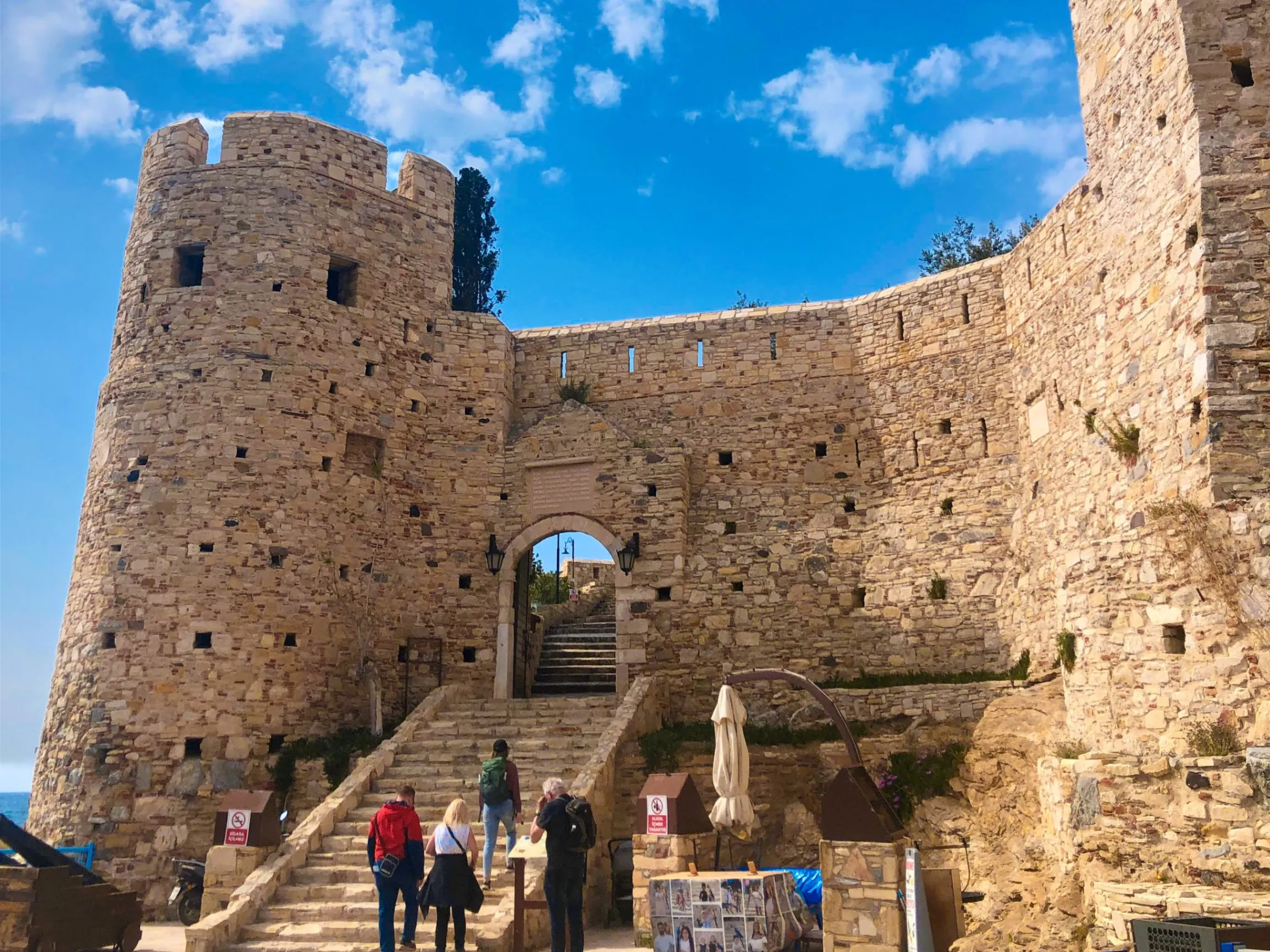
The castle gate. The fortress gate is the only remnant of the 17th-century Ottoman castle. Local residents hold a belief that anyone who passes through this gate and drinks water from the Emine Hatun fountain will never leave Kusadasi again.
The gate tower now houses the Museum of Micro-Miniatures. It brings together more than 40 works by Turkish artist and micro-sculptor Necati Korkmaz — the only master of this art form in Turkey. Among the pieces on display are the world's smallest Quran and chess set, made on a pinhead, and an acrobat crafted from a single strand of hair. Creating one such work can take months: Necati spent half a year on the chess set alone. Admission is 40 lira (0.81 USD) for adults and 15 (0.3 USD) for children.
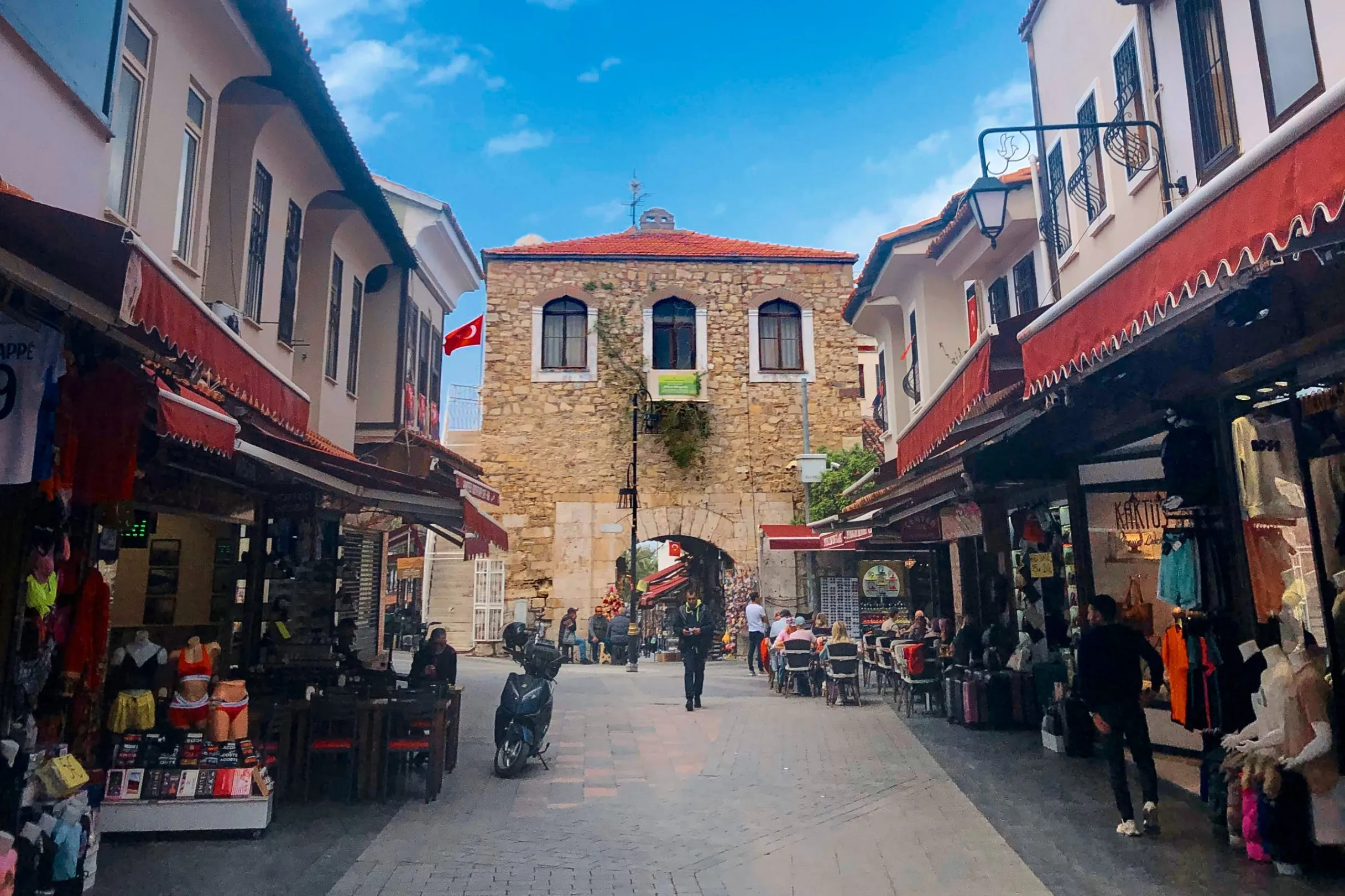
The caravanserai and mosque of Öküz Mehmed Pasha. This resting place for caravans, merchants, and travelers was built in the early 17th century under the statesman Mehmed Pasha, nicknamed "the ox" (Turkish: öküz) because his father shod oxen. He served in various cities of the Ottoman Empire and oversaw the construction of mosques and fortresses. The building also served a defensive purpose, which is why the ground-floor facades were built without windows. Today it hosts festivals and music concerts. A mosque of brick, stone, and marble with a 20-metre minaret was also built under Öküz Mehmed Pasha. A grand door inlaid with mother-of-pearl leads into a hall that seats 500.
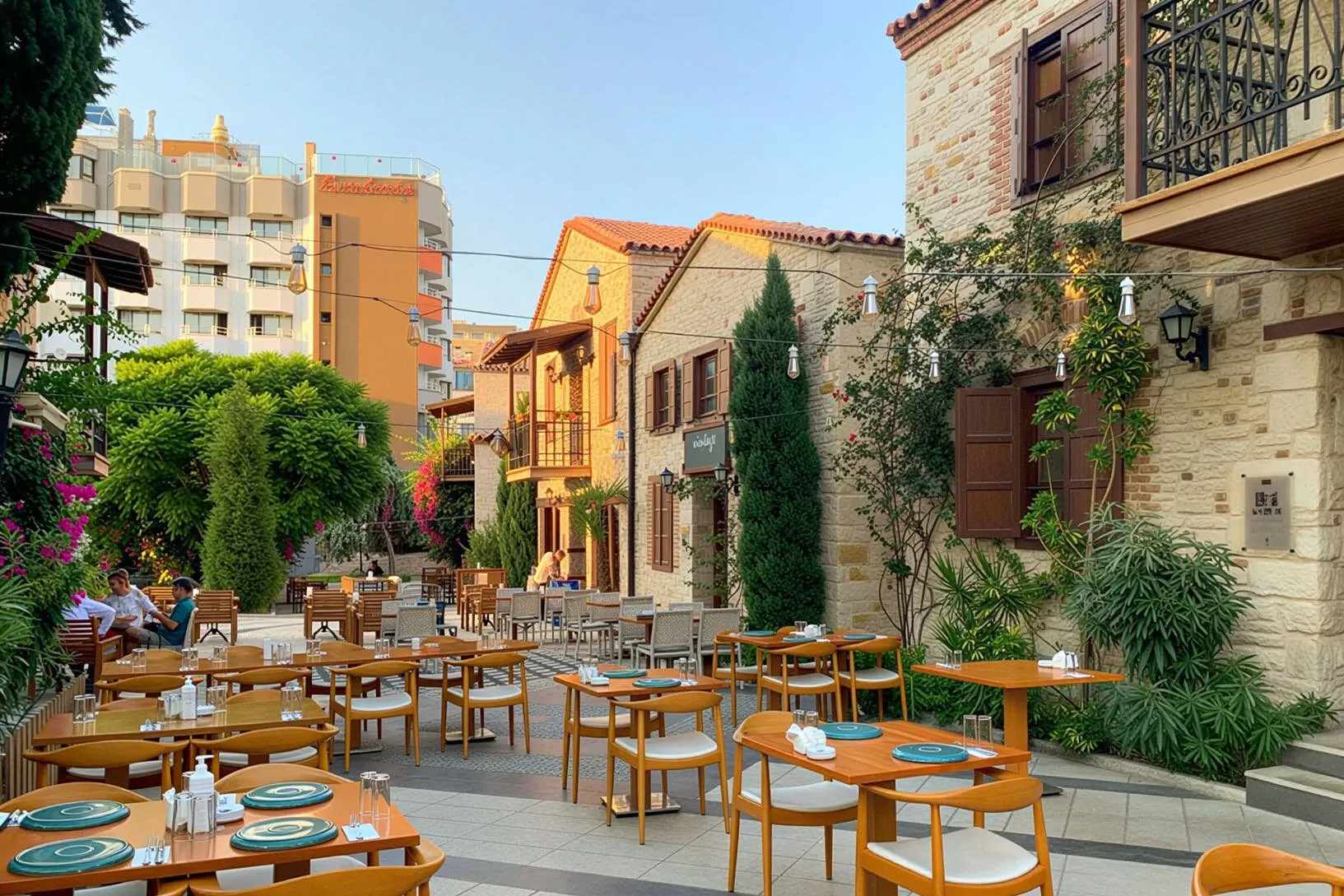
The Old Town Tanneries. The former tannery buildings have been converted into a complex of restaurants and bars. By the late 19th century, Kusadasi was renowned for its leather industry, with more than 20 workshops in operation. Many of the craftsmen and artisans were Greek, so when the Greek population left following the Turkish War of Independence, production declined sharply. By the early 2000s, the tanning trade had disappeared from Kusadasi altogether.
You can have lunch at the restaurant Eski Tabakhaneler Taşhane — the Turkish cuisine here leans more Mediterranean: tomato soup with basil, mushroom risotto, sea bass with coriander. Afterwards you can move on to Public Vineria to sample Turkish wines. And when hunger strikes again, order a pizza at Pizza Mio and Vino.
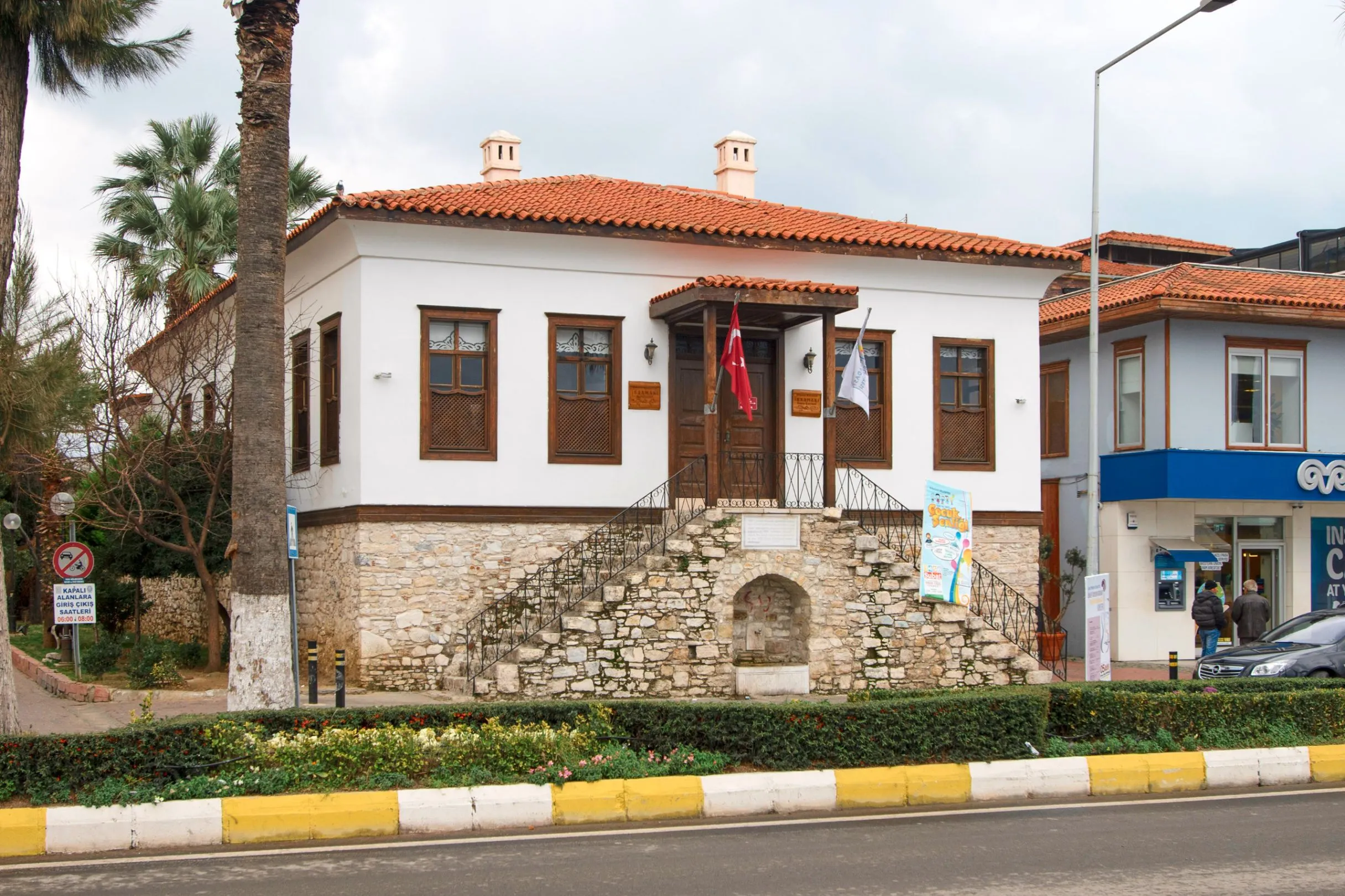
The art gallery Ibramaki was built in the late 19th century at the expense of a prominent local figure, Zeki Efendi. It was restored in 2009 and looks brand new as a result. The two-storey stone building is a vivid example of Ottoman-era civic architecture. The entrance is on the second floor, reached by two staircases with a small fountain set in the space between them. The gallery hosts painting, ceramics, and photography exhibitions, as well as concerts and author meet-and-greets.
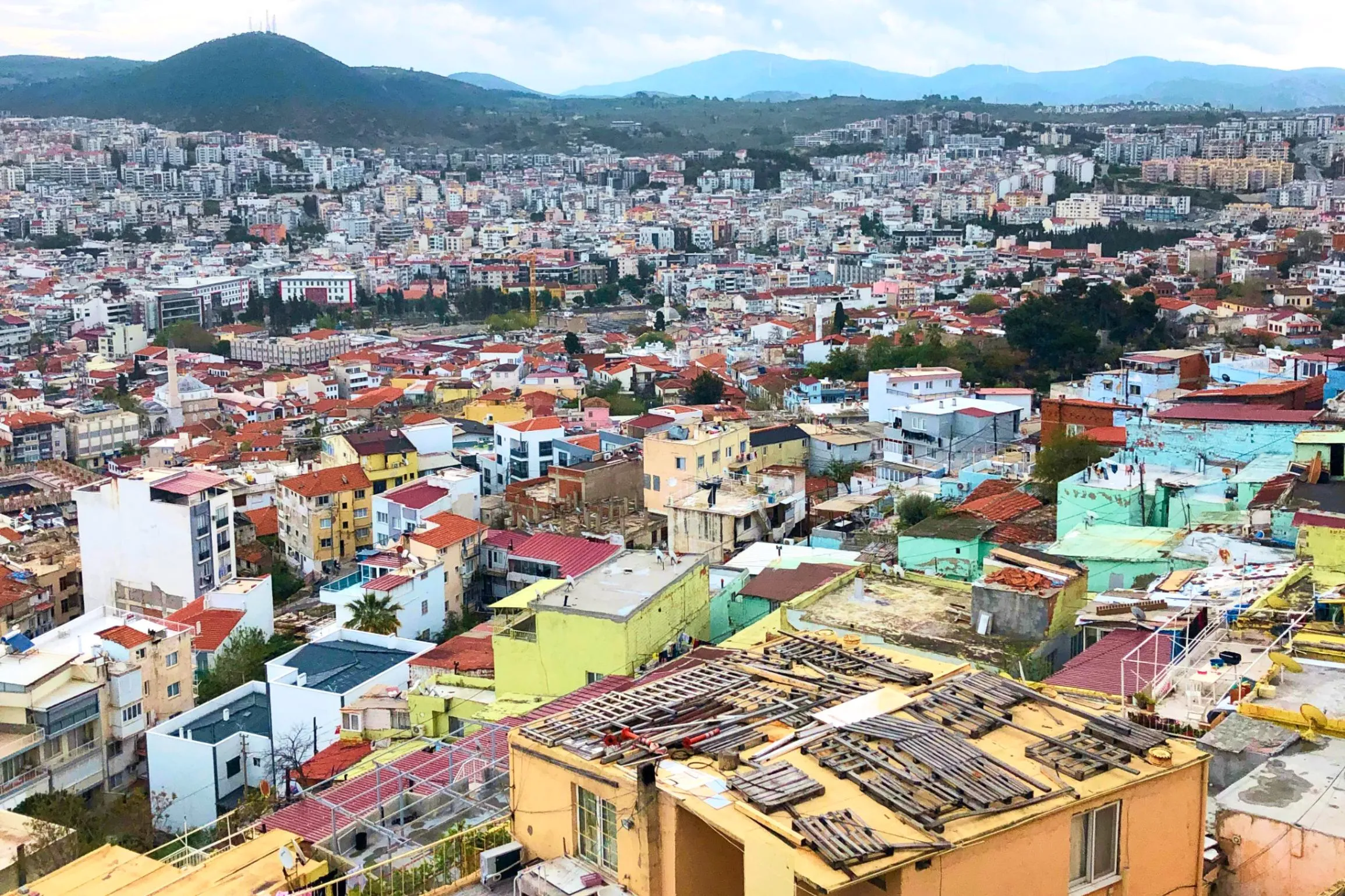
The Atatürk monument on Kese Hill — which also serves as the city's main viewpoint. Couples are especially fond of driving up here to watch the sunset. The views over the city, the sea, and the islands are truly impressive. You can reach the hilltop by car or taxi. Walking up from town doesn't take too long — it's simply uphill all the way. You'll pass by construction sites and a rough neighbourhood where Roma families live.
Snake Island is now connected to the mainland by an isthmus, though it used to be accessible only by water. During the Byzantine period there was a monastery of Saint John on the island, and legends told that snakes protected it from enemies. Only ruins of the monastery remain. The island is not always accessible — the entrance is sometimes fenced off, so a visit is a matter of chance.
The water park and dolphinarium Adaland — slides and dolphin shows (plus the chance to swim with the dolphins) — are a classic resort attraction. Two separate tickets are required to visit both. Water park admission costs 2,000 lira (40.3 USD), and the dolphinarium 17–24 euros (19.1 USD–27 USD).
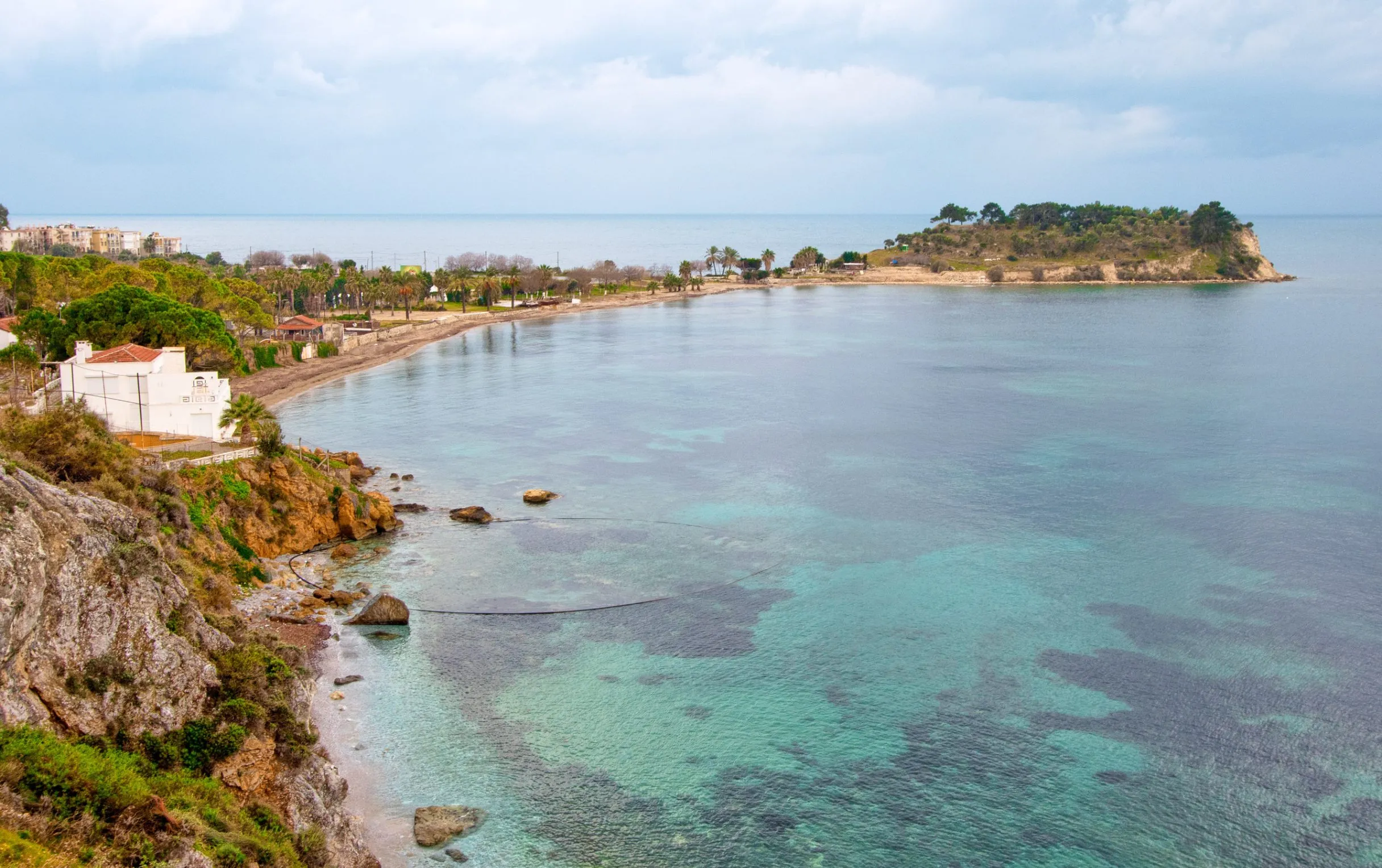
Beaches
In the city center, not far from the Hand monument, you will find the city beach. During the season you can rent a sun lounger and umbrella here. The cove is not very large, but if you really need a swim, you can get in the water.
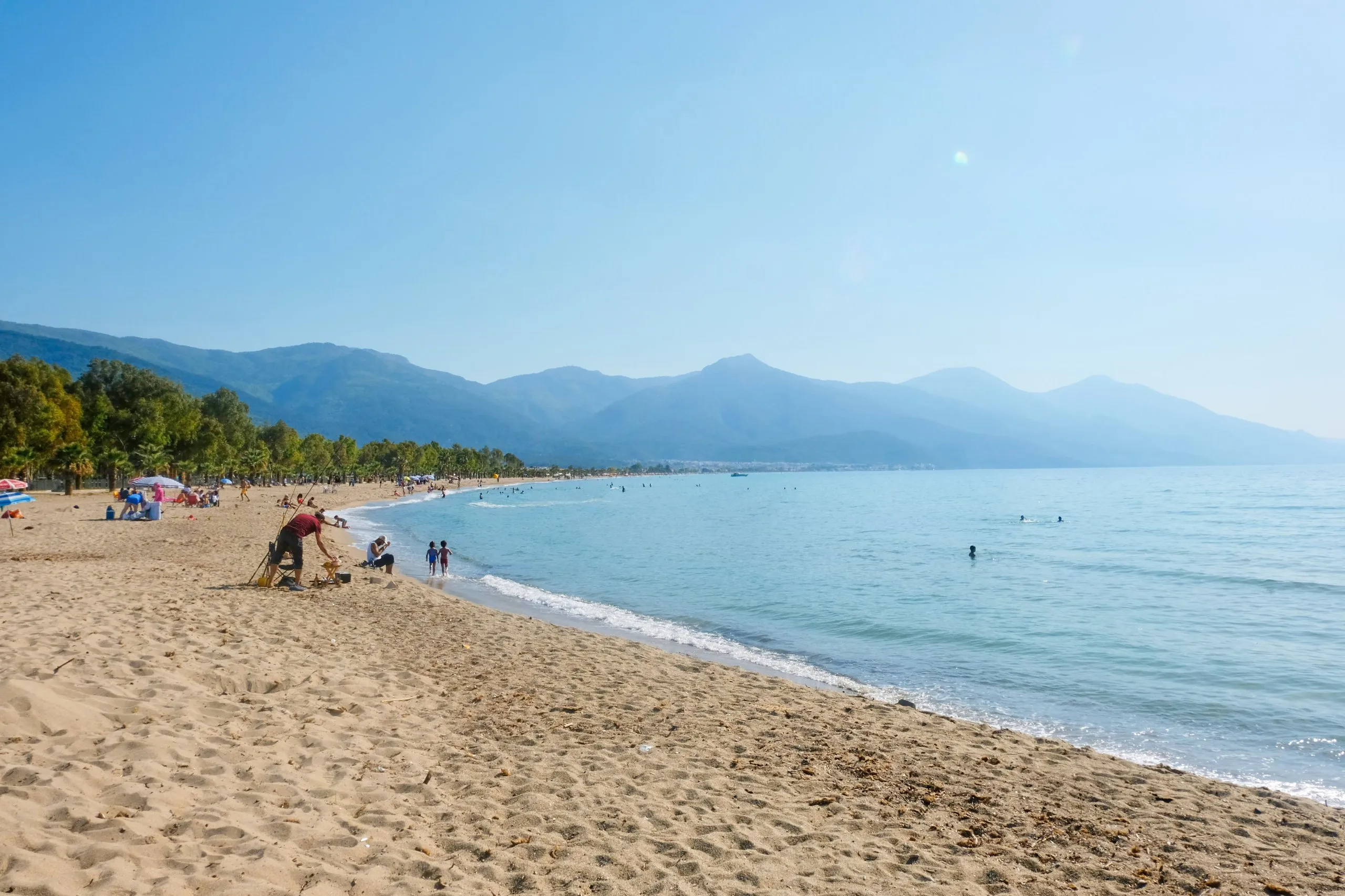
Long Beach, a sandy beach, is located six kilometers from the center and stretches for 15 kilometers to Milli Park. This is the city's main public beach. The entry into the sea is gradual, and you have to walk a long way before it gets deep — ideal for families with children. Sun loungers are available for rent, but you can also sunbathe on a towel without them.
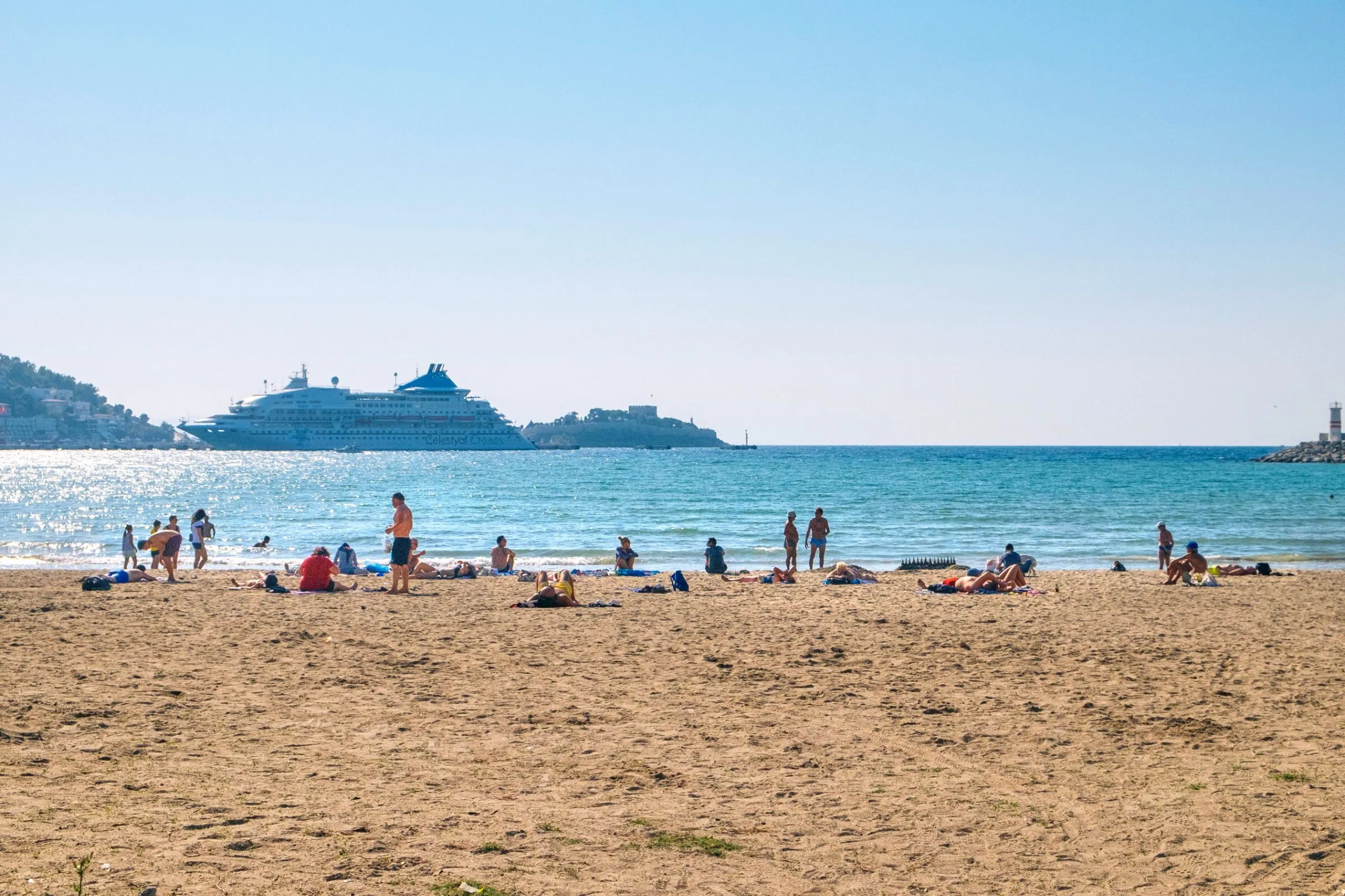
Pigela Beach is set in a picturesque cove, and most mornings the sea here is calm and waveless. The beach stretches for 700 meters and offers sun loungers and umbrellas, changing cabins, showers, and toilets. It can get quite crowded during the season.
Another popular beach is Kadınlar Denizi Plajı, also known as Ladies Beach. It got its name because during the Ottoman era only women were allowed here. Today both men and women are welcome on the beach.
Surroundings
The Ancient City of Ephesus
15 kilometers from Kusadasi
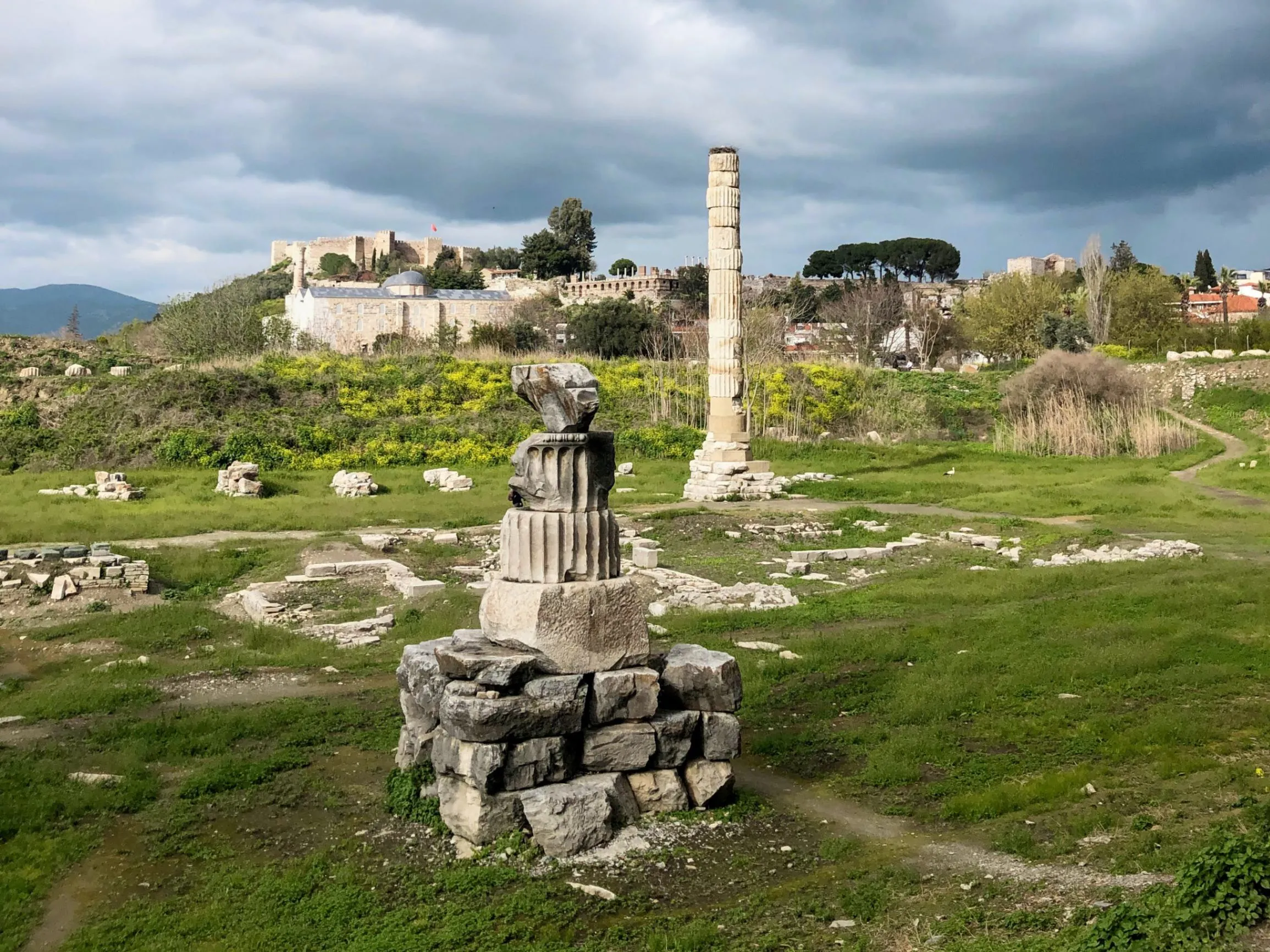
The Temple of Artemis, once one of the Seven Wonders of the World, has not survived to the present day. All that remains are fragments of the foundation and parts of columns, which have been assembled into a single tall — if somewhat crooked — column that tourists pose in front of. To get a sense of the temple's former grandeur, you would need to look up reconstruction models online. It is, however, a free attraction, unlike the other sites in the ancient city.
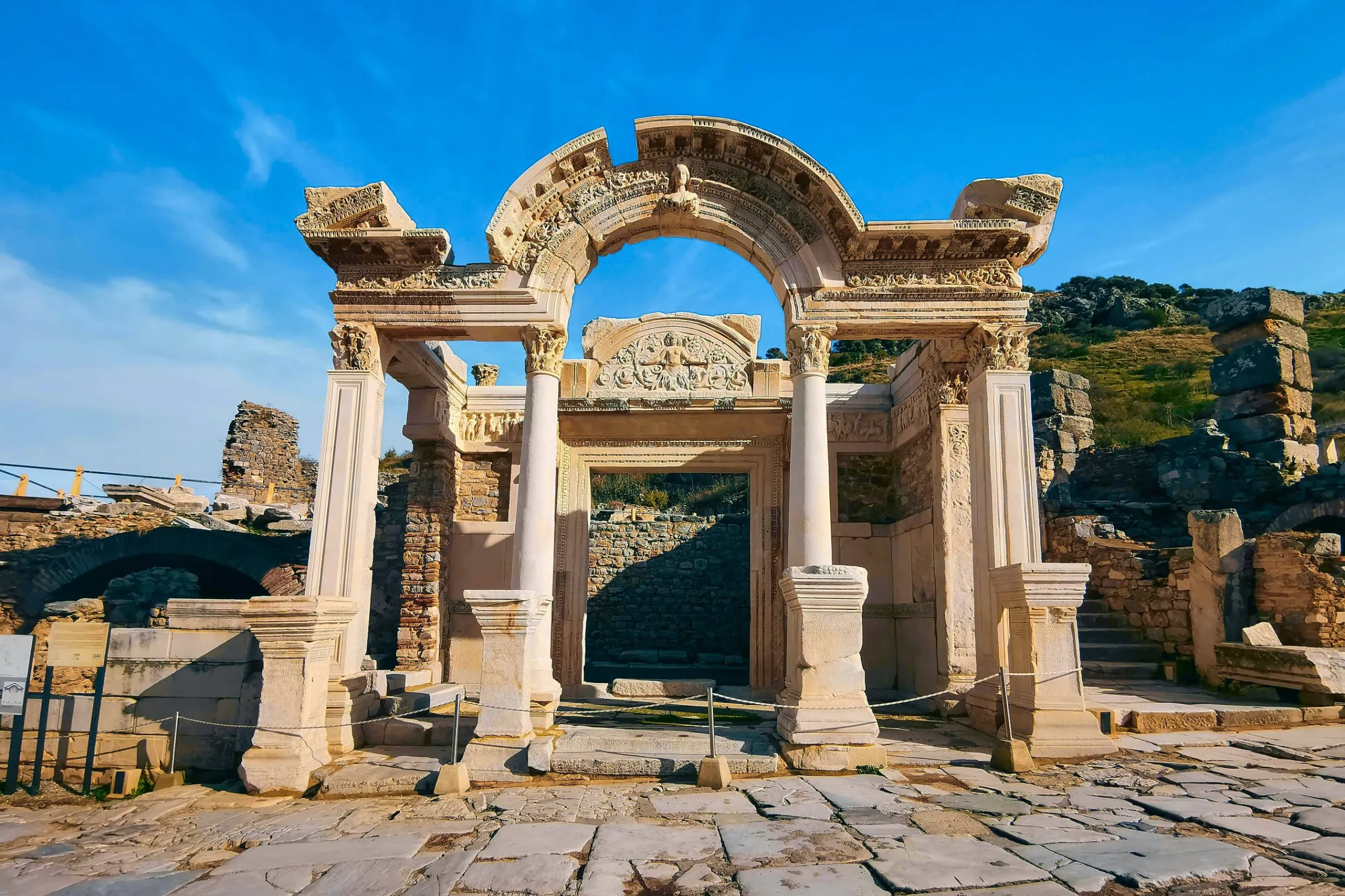
The ancient city of Ephesus is on the UNESCO World Heritage List. The agora has been preserved — the square where merchants traded and festivals were held. A small amphitheater stands nearby. Make your way to the Temple of Hadrian, built in the 2nd century and dedicated to the emperor. It has survived in better condition than the Temple of Artemis: you can admire the carved arch above the entrance, which is frequently depicted on postcards.
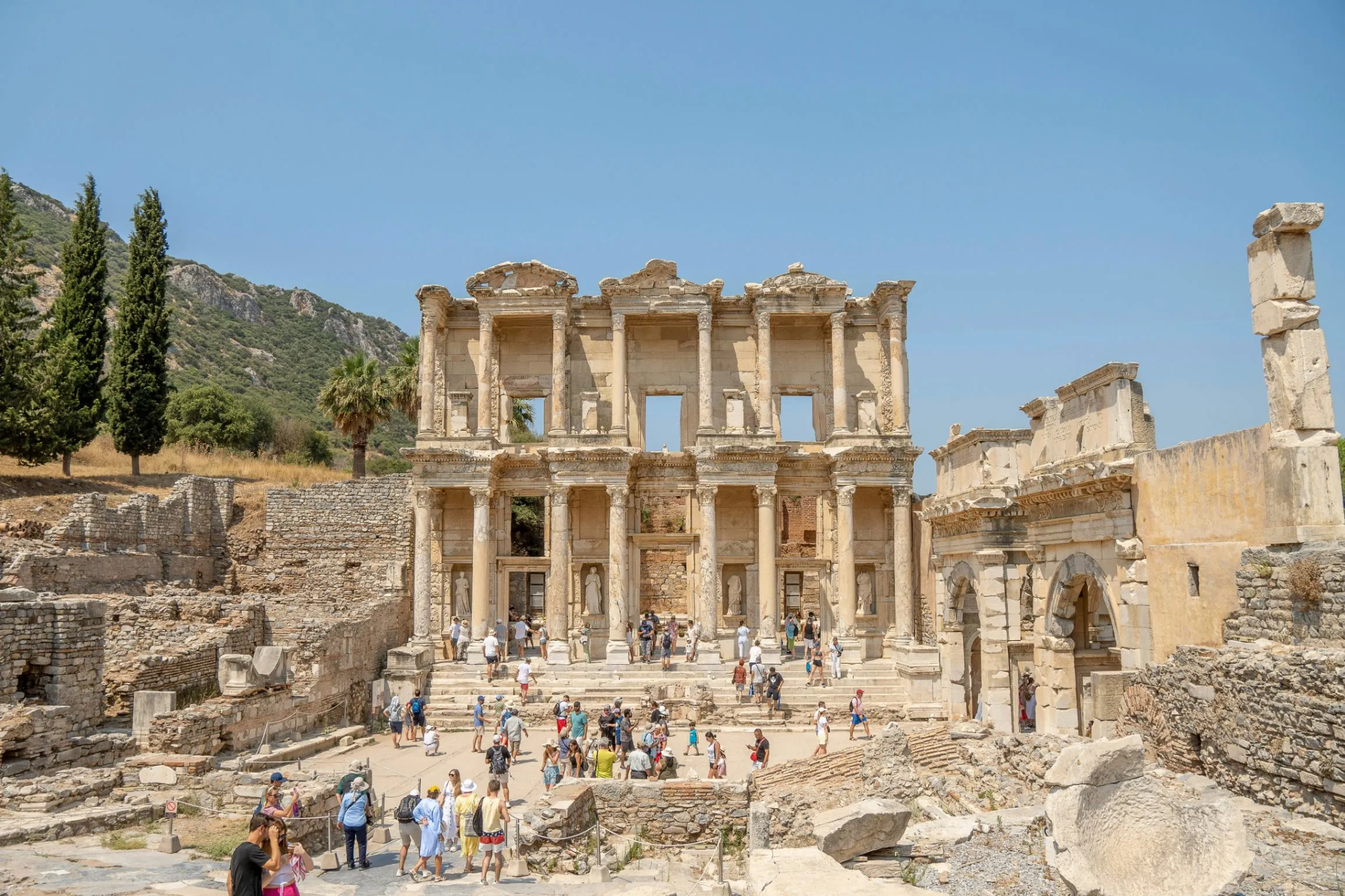
The Library of Celsus was also built in the same century — its entire columned facade has survived.
The archaeological park is open year-round. Plan around two hours for a leisurely visit. An entry ticket to Ephesus costs 40 euros (44.9 USD). From April to October the site is open from 8:00 to 19:00; from November to March from 8:30 to 17:00.
Getting there. Minibuses (dolmuş) to Selçuk and Ephesus depart regularly (every 30–60 minutes) from the bus station between 06:40 and 21:30. The journey takes 30–45 minutes. A ticket costs 100 lira (2.02 USD).
Dilek Milli National Park
20 kilometers from Kusadasi
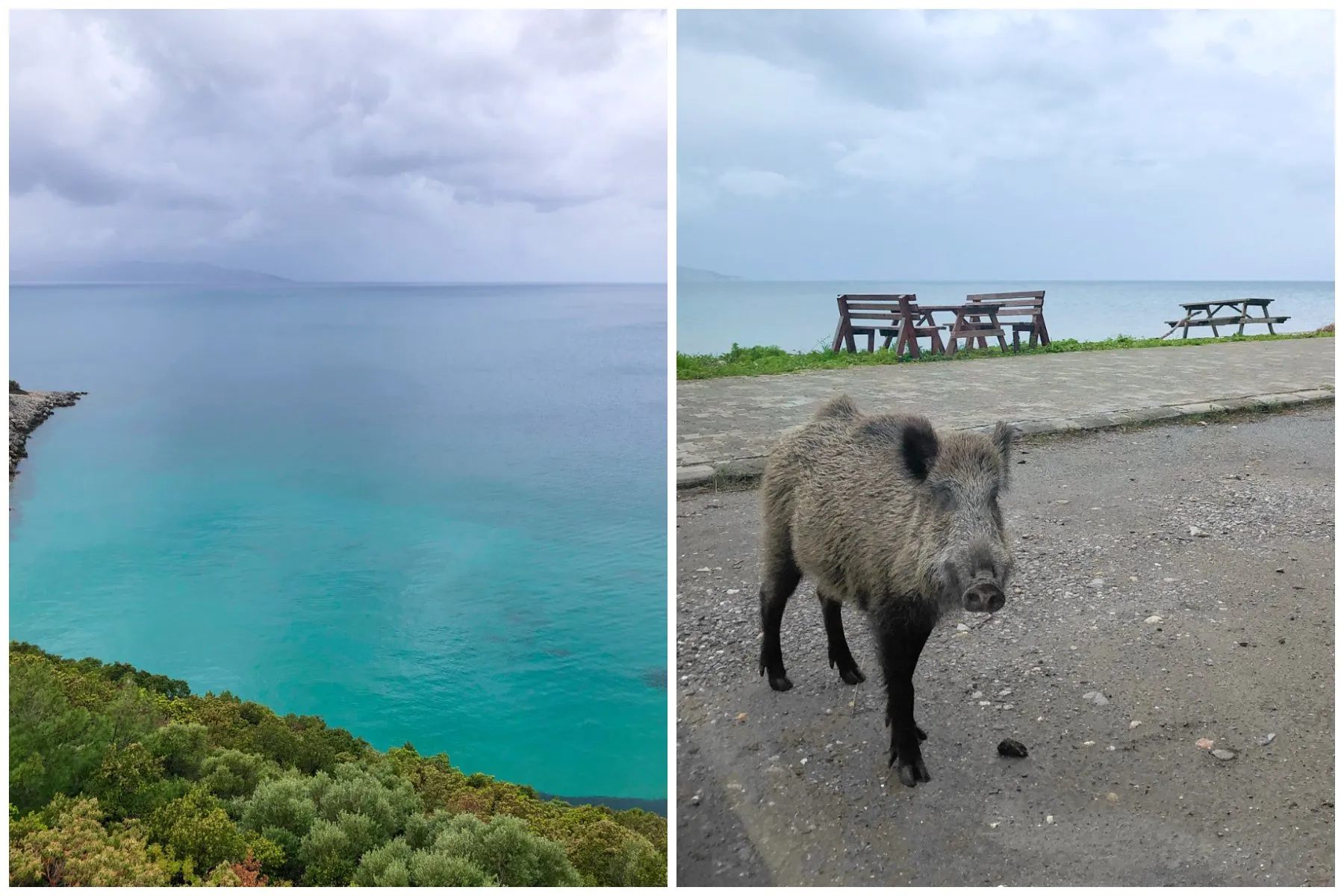
The national park spreads across the Dilek-Büyük Menderes peninsula — its coastline is quite high and rocky in places, but there are several paths down to beaches where you can swim with a view of the Greek island of Samos, which lies just two and a half kilometers from the Turkish shore.
Near the park entrance, you can stop by the Cave of Zeus. A wooden staircase leads up to it, though climbing inside the cave itself is not really possible — it is quite slippery. Scholars of ancient Greek mythology believe this is where Zeus hid from the wrath of his brother Poseidon.
Hiking enthusiasts can set off along an eco-trail through a canyon. There is a slight climb, but the path is perfectly comfortable for all ages and fitness levels. The trail winds along the canyon floor, with cliffs and forest on either side. About halfway along, there are several scenic viewpoints. The route is approximately seven kilometers long, but you can continue further — all the way to the ancient hilltop settlement of the Greek village of Doğanbey.
One of the park's curious attractions is its wild boars. They wander calmly between the wooden picnic tables, come right up to passing cars, and beg for food. Even though the boars behave calmly, it is still best to avoid sudden movements and not to startle them, and to keep food off the tables — they are quite capable of making off with something.
Incidentally, the park is home to other animals as well, which are shyer but still possible to encounter. You might chance upon tracks left by a lynx, jackal, hyena, or caracal — the steppe lynx. Park entry costs 60 lira (1.21 USD).
Getting there. On Candan Tarhan Boulevard you can catch a minibus that will take you there in about 40 minutes. Look for one with Kuşadası — Millipark written on the windshield. A ticket costs 100 lira (2.02 USD).
Samos — the Greek island just opposite
20 kilometers from Kusadasi
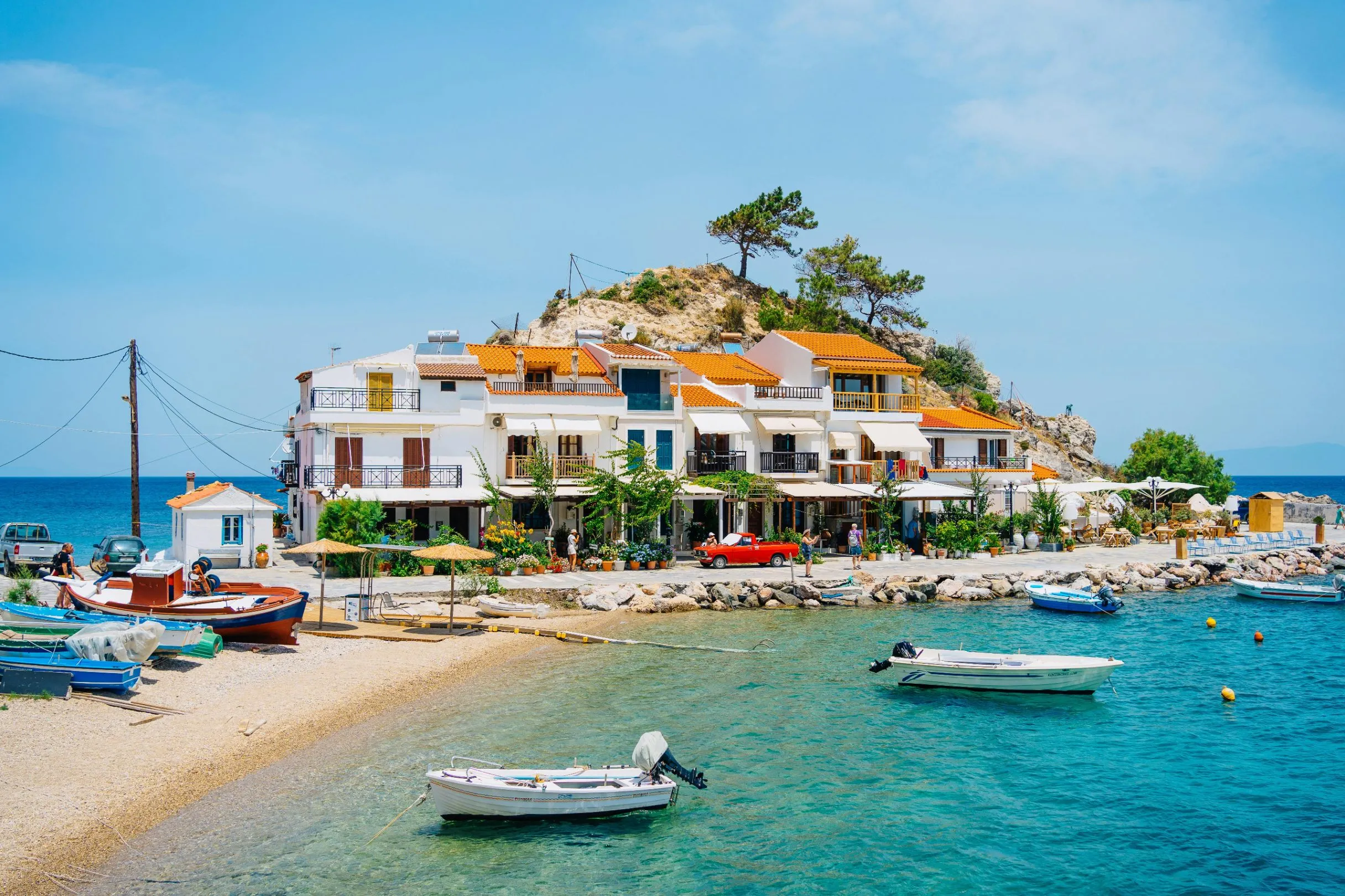
This scenic island was in antiquity the center of Ionian culture. Pythagoras and Hipparchus were born here, and it was home to the Heraion — the temple of the goddess Hera, which Herodotus considered one of the Seven Wonders of the World. In the village of Ireon you can see its ruins today: the foundations and column bases. Samos has several monasteries — Panagia Spiliani is set inside a cave, Megali and Timiou Stavrou lie near the mountain village of Koumaradei, and Zoodochos Pigi is in the Green Gorge. A Schengen visa is required to visit Greece.
Getting there. Ferries run from Kusadasi to the island of Samos. They depart from the city port in the center of town. The crossing takes between 30 and 60 minutes. The ferry goes either to the island's capital, Samos, or to the town of Vathi. Ferry tickets can be purchased at the port ticket offices, on the carrier's website Makri Travel , or through the aggregator Ferry Hopper. A one-way ticket costs 39 euros (43.8 USD), a same-day return ticket — 49 (55.1 USD), and an open-return ticket — 59 (66.3 USD). Some ferries allow passengers to bring pets and bicycles (or other means of transport). In the off-season ferries may run only once every few days, while in high season there are a couple of sailings per day.
Şirince — the village of mathematicians
30 kilometers from Kusadasi
The village of Şirince is tiny — just a handful of lanes lined with souvenir shops and wine sellers, as the region is known for its wine production. Şirince translates from Turkish as "cute" or "charming," and the houses here are indeed so charming that they have been legally protected from redevelopment. The village dates back to the 5th century BC, and Greeks lived here until the early 20th century. Several Christian churches have been preserved, including the Church of St. John the Baptist, which still has a number of frescoes inside.
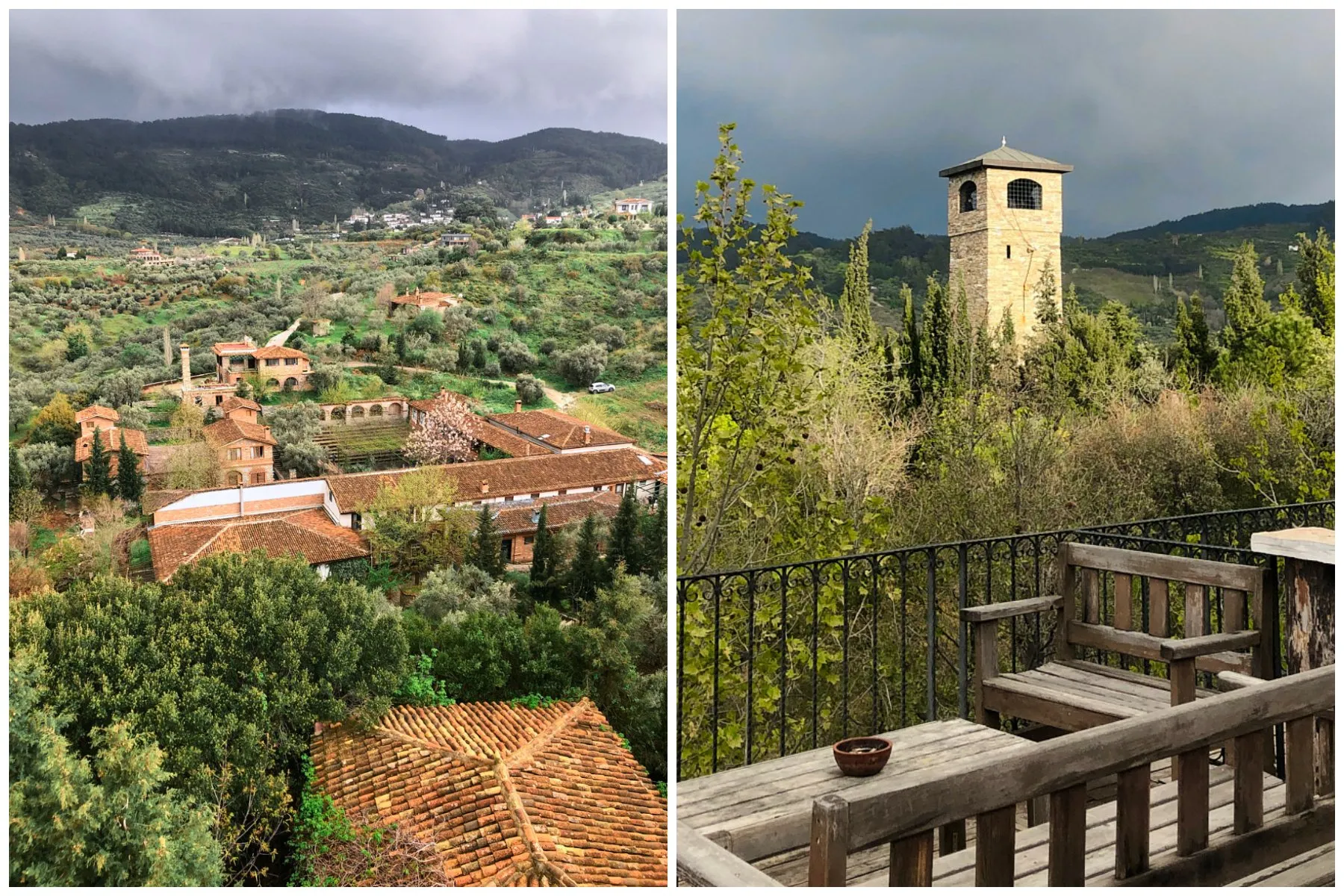
Be sure to visit the mathematics education center Nesin Matematik Köyü, which belongs to the Aziz Nesin Foundation. It is modeled on European-style universities, where classroom buildings and student accommodation sit together in a scenic setting. Strolling through the mathematics village is a genuine pleasure — it feels like a Turkish version of Hogwarts. The grounds are well-kept and filled with plants and flowers; you can wander along shaded paths or sit on a bench with a view and have tea in the student canteen. There is also a stone tower here that you can climb for a look at the surrounding hills.
Getting there. There are no direct buses to Şirince. You first need to travel to the town of Selçuk — 100 lira (2.02 USD) — and then take a minibus from there to Şirince, which costs an additional 70 lira (1.41 USD).
The Ruins of Miletus
70 kilometers from Kusadasi
The famous philosopher and mathematician Thales was born in Miletus. Archaeologists are still carrying out excavations here in search of ancient artifacts. A Hellenistic theater that once held 15,000 spectators has survived. Beneath the theater, cave-like passages remain where ancient statues were once hidden. Visitors can wander freely among the ruins — you simply need to buy a ticket at the museum first, which also grants access to the ruins. A ticket costs six euros (6.74 USD).
Getting there. The nearest settlement to Miletus is the village of Balat. Minibuses run here from Kusadasi.

Temple of Apollo at Didyma
75 kilometers from Kusadasi
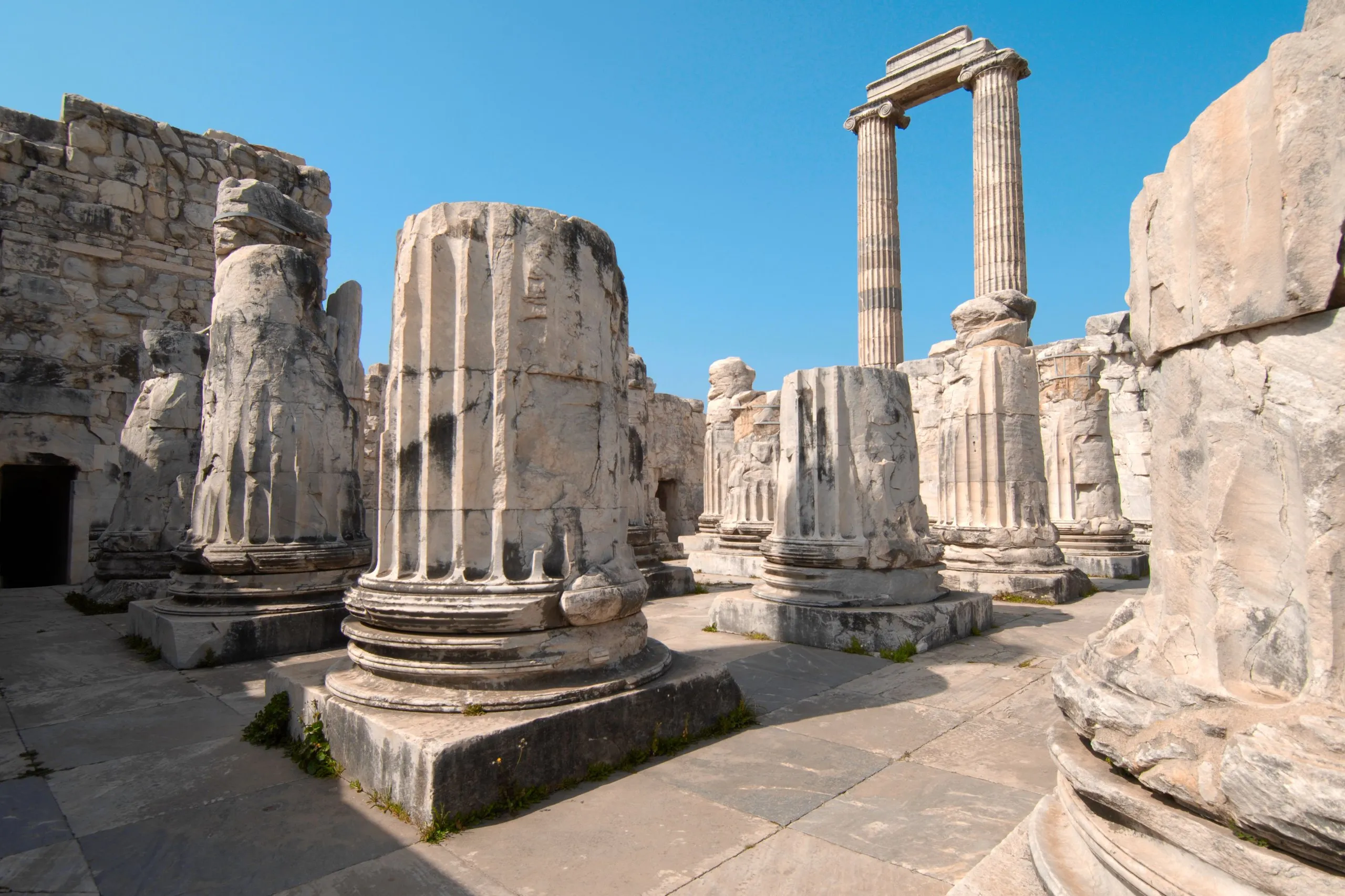
The city of Didyma was founded in the 1st century BC. The Temple of Apollo was built here because, according to legend, this is where the god was born. A temple was also erected in honor of his sister Artemis, which is why the city was named 'twins' — Didyma.
The ruins visible here today are the remains of a temple whose construction began during the time of Alexander the Great, in the 300s BC. Building continued for centuries — even in the 4th century AD it remained unfinished. This did not stop it from flourishing until the Byzantine Emperor Theodosius banned oracles and declared the old religion to be paganism in the 4th century. In the 15th century an earthquake struck the city and destroyed the temple. However, some columns survived, and you can even find bas-reliefs depicting the head of Medusa the Gorgon. Admission costs six euros (6.74 USD).
Getting there. Buses run regularly from Kusadasi bus station to Didyma bus station.
Ruins of Priene
40 kilometers from Kusadasi
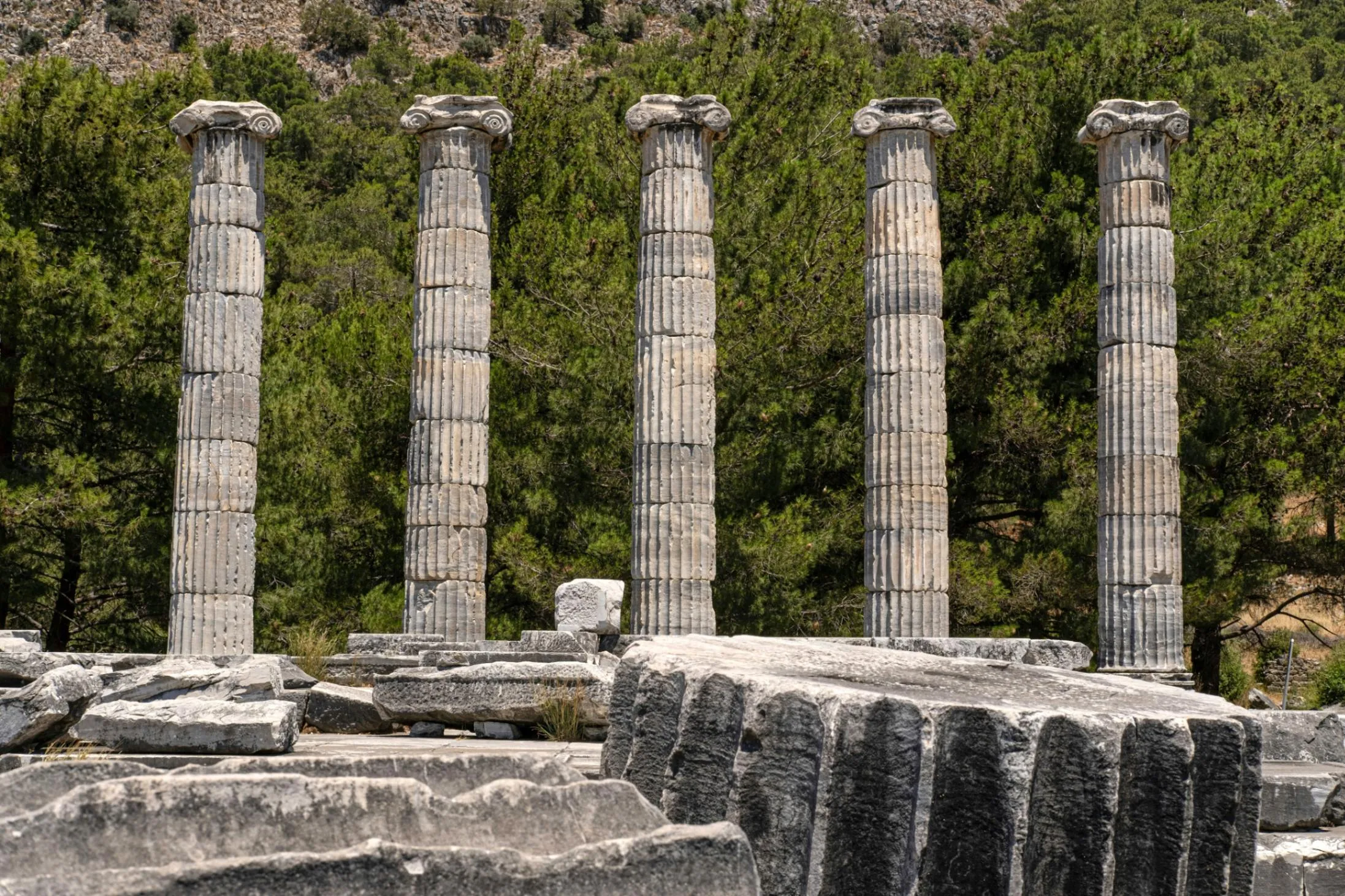
On the way back from Miletus and Didyma you can stop for an hour at the former ancient Greek city of Priene. You can see the well-preserved Hellenistic theater, which held more than 6,000 people, and what remains of the Temple of Athena — a few columns and steps. It was, incidentally, built with funds provided by Alexander the Great. The city itself has also left behind ruins, so you can wander and simply imagine what Priene looked like hundreds of years ago. Be prepared to climb and descend a great many stairs, as the city is built on a hillside and its streets had to be designed to follow the slope. Admission is 20 lira (0.4 USD).
Food
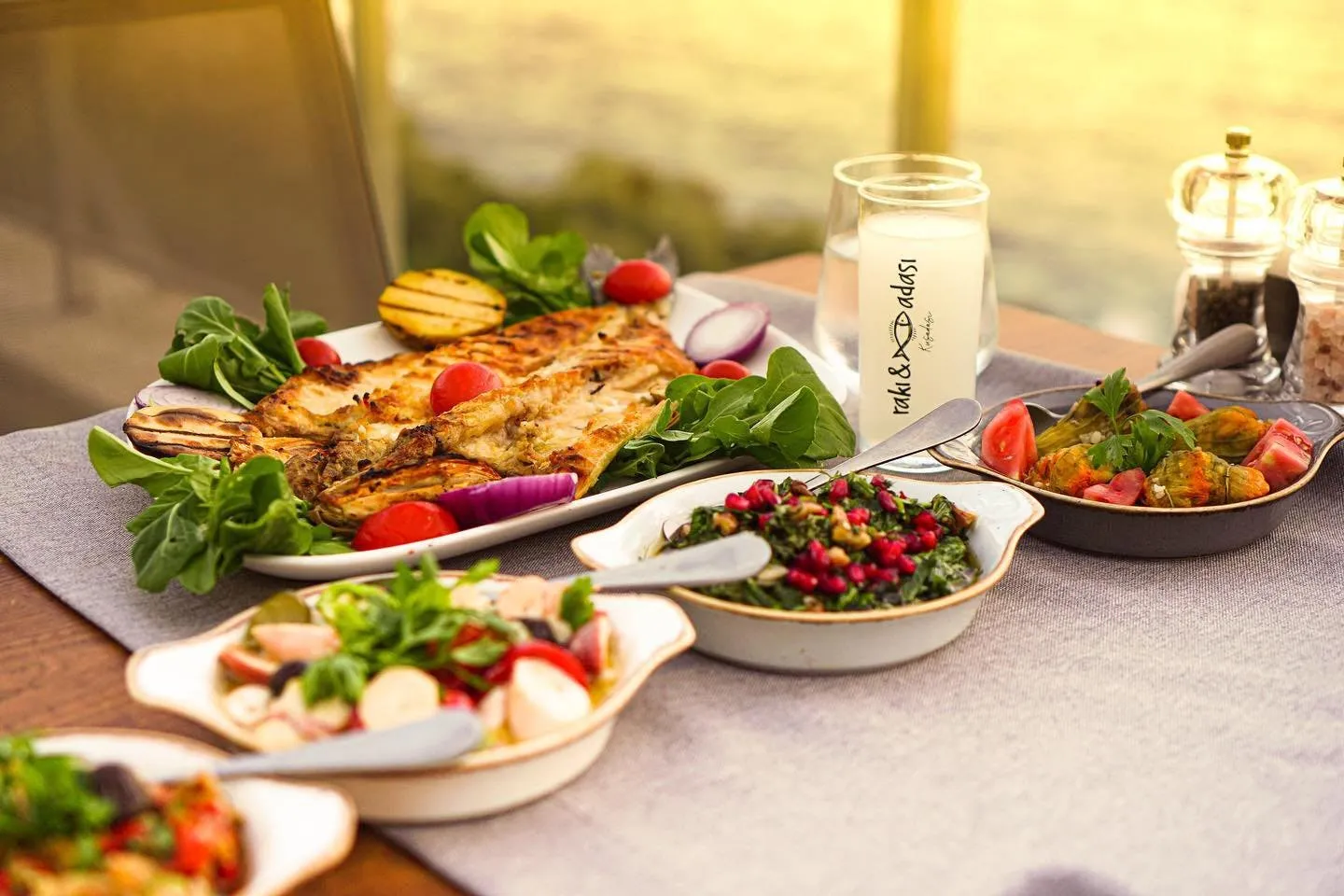
The greatest concentration of cafes is along the seafront on Atatürk Boulevard, where you can have lunch with a view of the sea.
Ada Asansör Balık offers a variety of fish, shrimp, and mussel dishes. The summer terrace is especially lovely at sunset. Another seafood restaurant with sea views is Ali Baba, where they will prepare anything caught in the Aegean Sea, from sea bream to mussels.
Komşu serves not only classic Turkish dishes — köfte, kebabs, and manti — but also burgers, pizza, and pasta.
Köfteci Yusuf is a chain restaurant offering affordable, simple Turkish food: lentil soups, kebabs, a Turkish breakfast, and much more.
Mado Cafe serves baklava in various forms and other Turkish sweets, and its European desserts are also worth trying: think cheesecake, panna cotta, éclairs, and other pastries.
Üsküdar Çaycısı offers Turkish breakfasts, quesadillas, toasts, sweet waffles, and much more. It is also a popular spot for playing the Turkish game okey, in which players collect numbered tiles.
The main place to buy fresh vegetables, fruit, olives, and cheese is the city market. It is located near the bus station and operates two days a week — on Tuesdays and Fridays, from six in the morning until six in the evening.
Accommodation
Villa Ephesus — if you want to experience Turkish luxury, this place has carpets, carved beds, and a stunning terrace with sea views. From 90 euros (101.1 USD) per night.
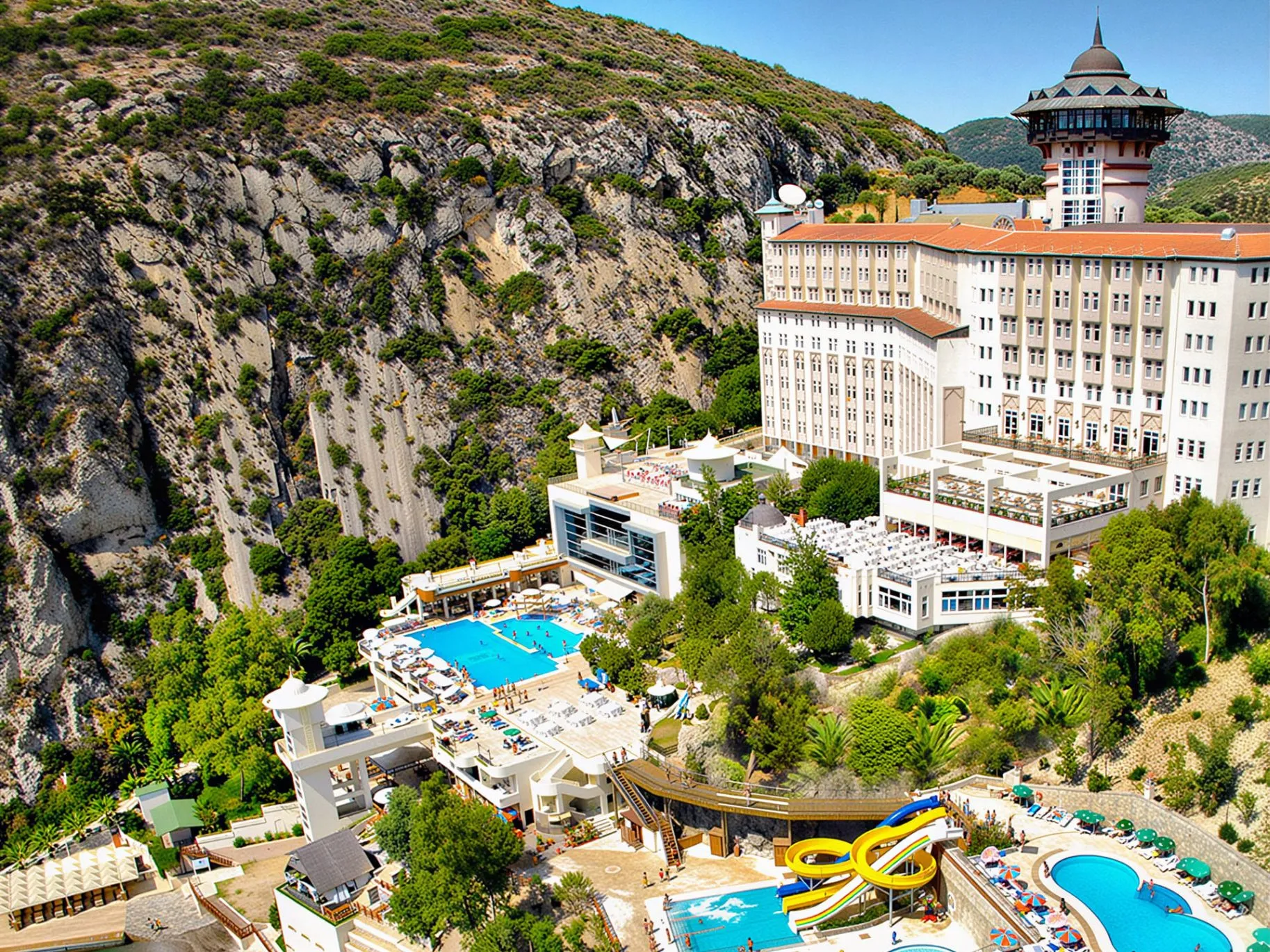
If you prefer a resort-style stay away from the bustle of the city, the coastline in the northern part of Kusadasi has several large hotels with swimming pools, tennis courts, and fitness centers.
For example, Pine Bay Holiday Resort features a private beach and its own yacht marina — from 180 euros (202.2 USD) per room per night. Nestled among the hills is Ladonia Hotels Adakule , where the waters of the bay shimmer in shades of azure and blue — from 110 euros (123.6 USD) per night.
You can also rent a villa in an orange grove — at Batıhan Vadi Hotel, in addition to the cottages, there is a seafood restaurant, a spa with a pool, a Turkish bath, and a tennis court. Rooms cost 150 euros (168.5 USD), villas 300–430 euros (337.1 USD–483.2 USD) per night.
Getting around the city
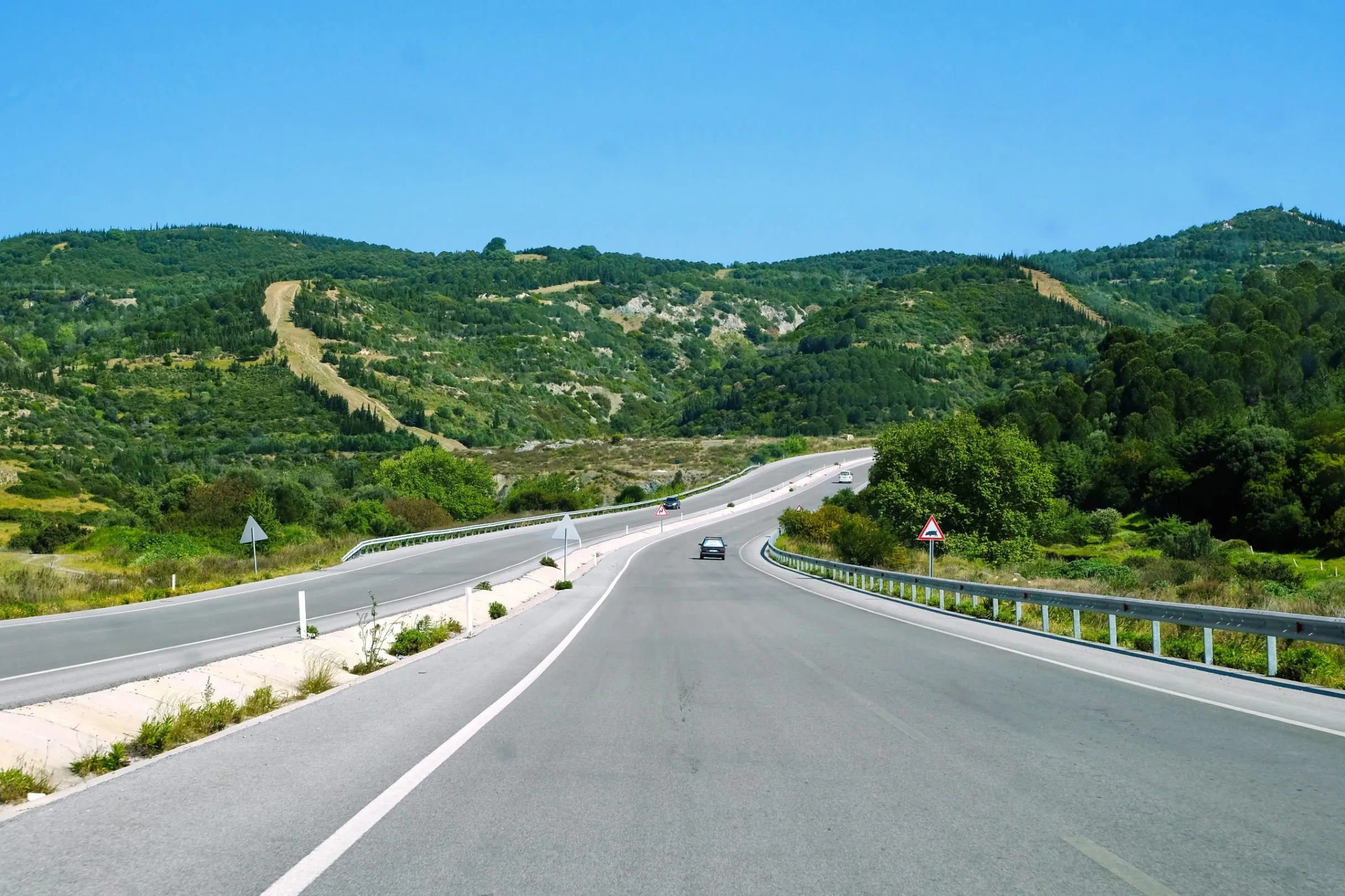
The city is not very large, and all the main sights can be explored on foot. The only form of public transport is dolmuşes (shared minibuses) running on several different routes.
Minibuses also serve the surrounding area — some routes depart from the Central Bus Station, while others leave from the Şevki Hasırcı Meydanı roundabout (Selçuk/Ephesus, Dilek Milli National Park, Aydın).
Getting there
Kusadasi sits at roughly equal distance from two airports — Izmir (100 km away) and Bodrum (125 km away).
Izmir. Flights arrive from all major European cities, though mostly from capitals. There are also a handful of routes from the Middle East — from Egypt, Saudi Arabia, and the UAE. Domestically, there are flights to all major Turkish cities.
Bodrum. Many European cities also add seasonal routes. Out of season, the airport handles only flights from Dublin, London and few other cities. Domestic routes connect Bodrum with Ankara, Antalya, and Istanbul.
From either Izmir or Bodrum you will need to continue by bus — you can check schedules and buy tickets on Obilet. From Izmir the journey takes one to one and a half hours, and tickets start from 300 lira (6.05 USD). Buses run around the clock every half hour, and sometimes more frequently. From Bodrum to Kusadasi takes three hours, and a ticket costs 450 lira (9.08 USD). From Milas it is an hour faster and 100 lira cheaper.
Mobile connectivity
SIM cards are issued on presentation of a foreign passport and are sold under special tourist tariffs, which are higher than those for Turkish citizens and are among the most expensive in the world. For that reason, using an eSIM in Turkey makes the most sense.
Here are the rates of the most popular eSIM providers for Turkey:
Trip.com — 30 GB for 30 days costs 12 USD.
Unisim — from $1.20 (1.2 USD) per gigabyte.
Yesim — 10 GB for 30 days costs 18 euros (20.2 USD). Promo code for new users: VTWN932.
Airalo — 10 GB for 15 days costs 11 euros (12.4 USD). Promo code for new users: TRAVEL7460.
Turkey's 'big three' mobile operators are Vodafone, Turkcell, and Turk Telekom. A package with 20 GB of mobile data plus calls and texts costs 1,800 lira (36.3 USD) with Turkcell and 1,500 lira (30.3 USD) with Vodafone. Turk Telekom offers a plan with 25 GB for 1,800 lira (36.3 USD). At the airport, the same SIM cards can cost up to 3,500 lira (70.6 USD). There is also one more operator — Ptt Cell, run by the Turkish postal service and operating on the Turk Telekom network. Its cheapest tourist tariff costs 850 lira (17.1 USD) and includes 25 GB of data, 750 minutes, and 750 SMS messages per month.
When to visit
As early as late March the whole city is filled with the fragrance of blossoming orange and mandarin trees. It is still too early for swimming, though the hardiest visitors do venture into the water. The sea warms up by late June, and swimming is possible until almost November. July and August are quite hot for daytime walks around the city. Winter is mild and warm.
.JPG)


