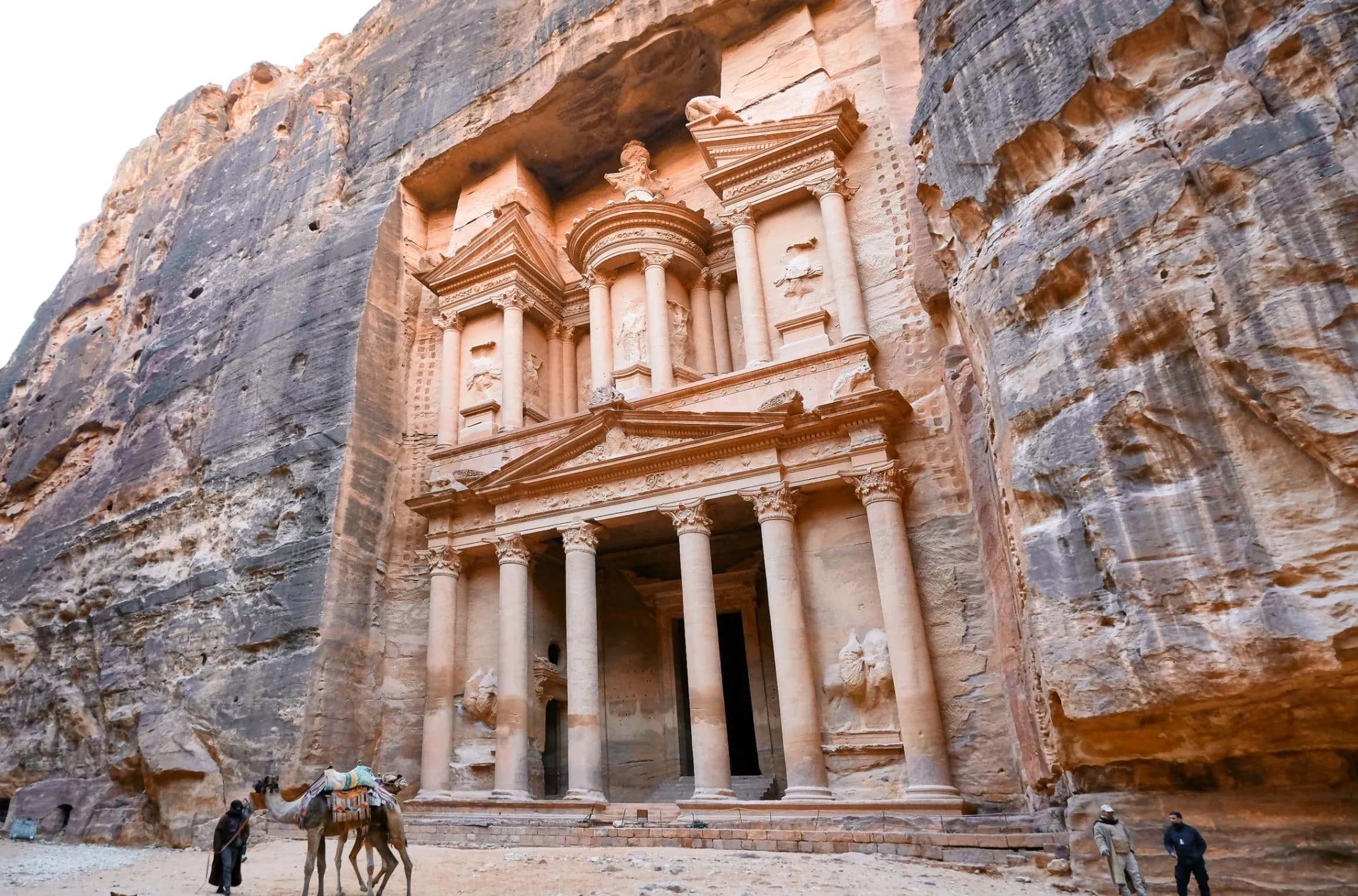

Jordan is often treated as an optional add-on to a trip to Israel, from which tourists make day trips to Petra. But the ancient Nabataean city on the UNESCO World Heritage List is far from the only thing worth seeing in this country. Byzantine mosaics, ruins of ancient temples, the otherworldly desert of Wadi Rum, scenic gorges and hot springs — even a full week wouldn't be enough to cover all the must-see highlights.
The history of the territory that makes up modern Jordan stretches back to ancient times. Nabataean merchants, Roman legionaries, Muslim conquerors, crusader knights — countless peoples have left their mark on these lands. The territory of modern Jordan was part of Palestine, which was administered by Great Britain under a decision made at the San Remo Conference in 1920, where the victorious powers of the First World War signed peace treaties and divided up the defeated countries. Later, in 1921, on Churchill's initiative, the Emirate of Transjordan was established in the eastern part of Palestine; it gained independence from Britain in 1946.
Today Jordan is a fairly secular country that is welcoming to tourists. Islam is practiced here, but strict norms do not apply to visitors — there are no religious police monitoring whether women cover their heads. Tourist infrastructure is well developed: major hotel chains operate here — Hilton, Kempinski, Mövenpick — comfortable buses run between cities on good roads, rather than minibuses or battered taxis (though those exist too). An English speaker can be found almost anywhere, and tourists will feel at ease even if they have never visited a Muslim country before.
What to See
Most of Jordan's attractions are concentrated in the west of the country, between its two main tourist hubs — Amman and Aqaba. The most convenient way to get around is by car. In a week you can drive from north to south, making stops along the way and taking in all the highlights.
Amman — Antiquities, Club Nights, and Friday Prayers
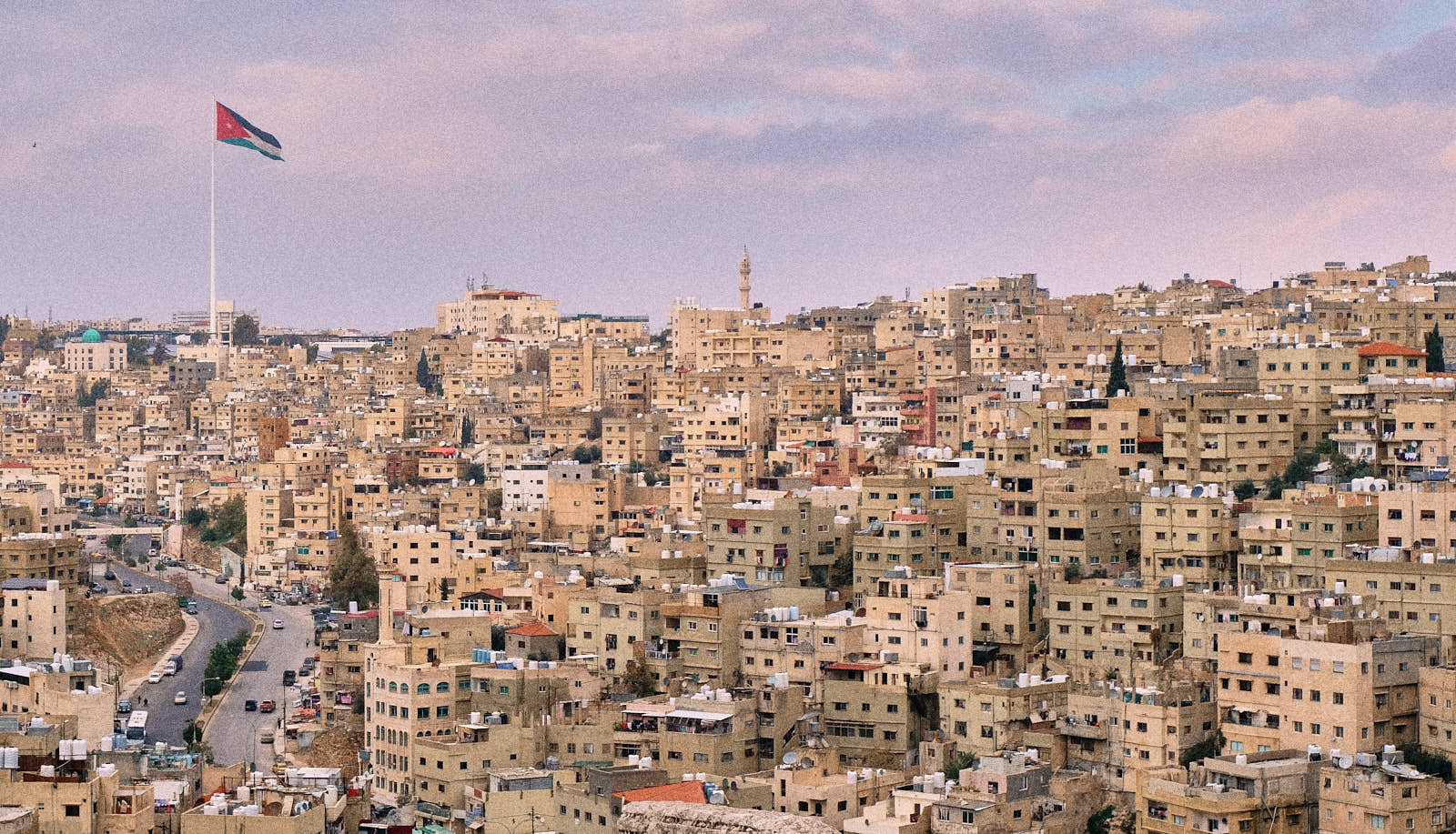
Amman is the largest (about 4 million residents) and most modern city in the country. It's easy to spot women in short outfits here, dance at clubs, or grab a drink at a bar. At the same time, it is a conservative Muslim city where, on Fridays, thousands of worshippers fill every street for prayer.
The main attraction of Amman is the historical park at the top of Jabal al-Qal'a hill (one of seven within the city limits). This is one of the oldest sites in the Jordanian capital and ranks among the oldest continuously inhabited places in the world (since the 18th century BC). Some artifacts found on the hill date back to the Neolithic era.
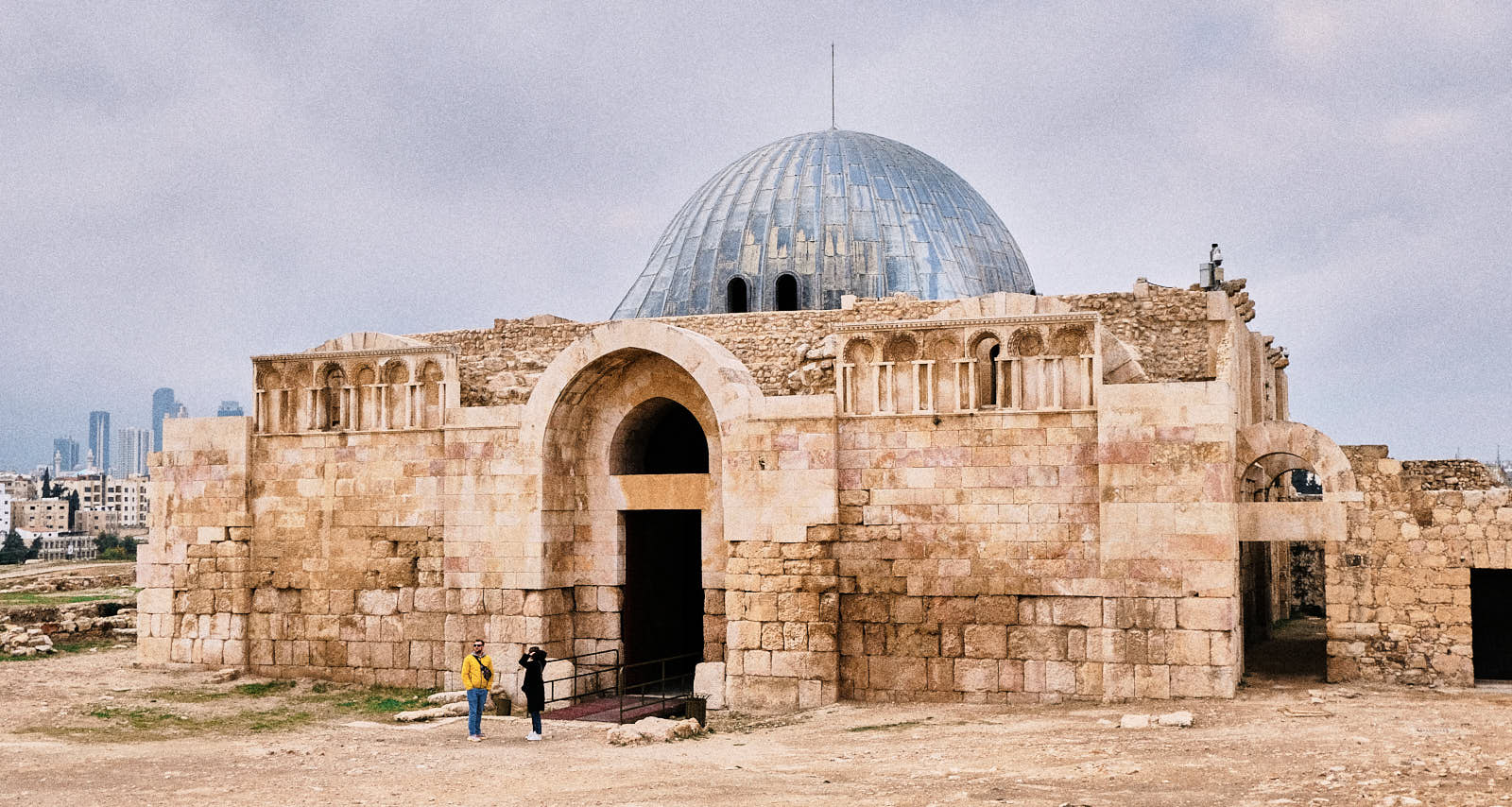
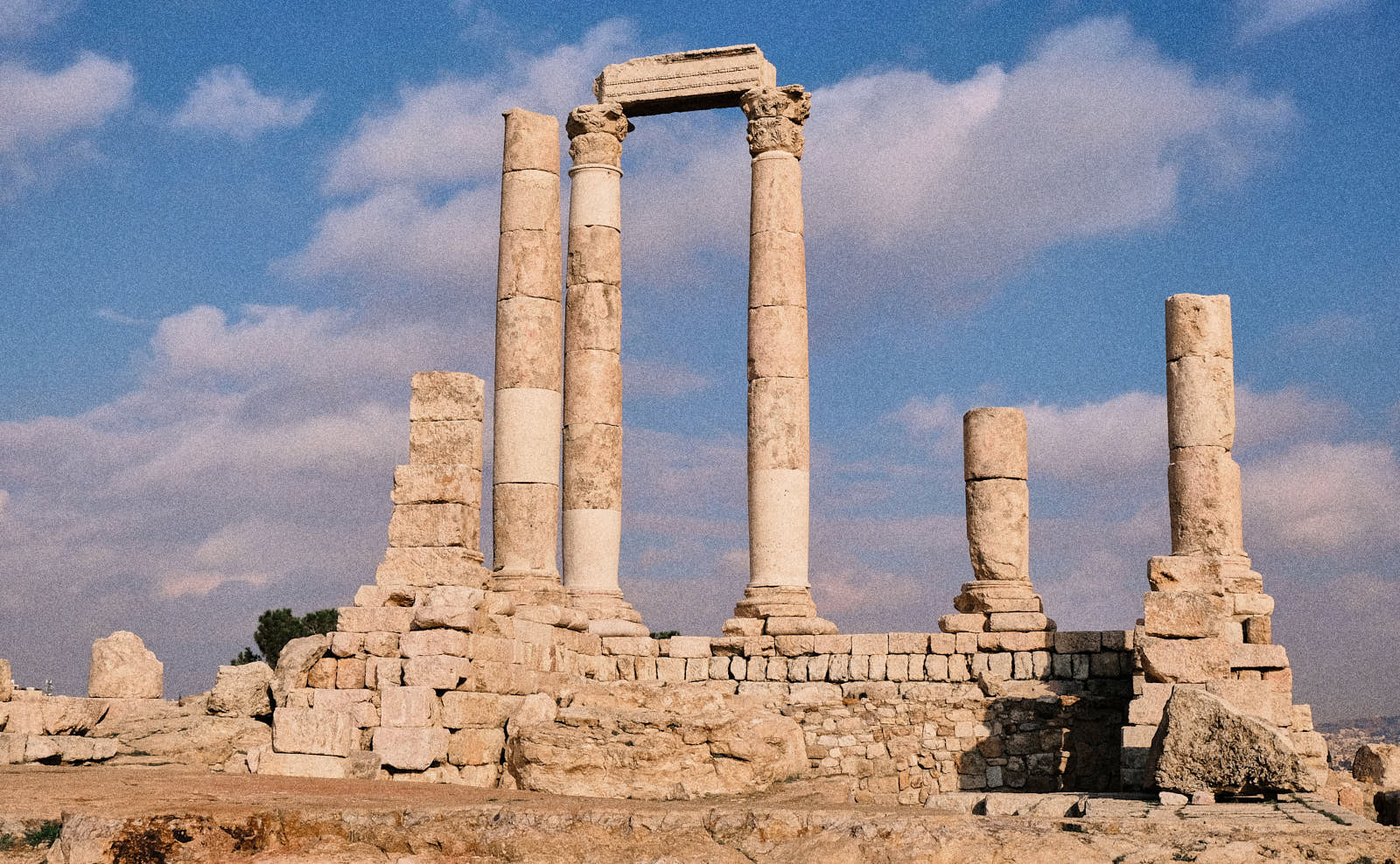
In the citadel, you can see traces of three empires at once: the Roman, the Byzantine, and the Umayyad. The Temple of Hercules represents the first, a Byzantine church the second, and an early 8th-century palace the third. The nearby Archaeological Museum lets you delve even deeper into the history of this site. If you're not particularly interested in history, the citadel's summit still offers a wonderful view over Amman.
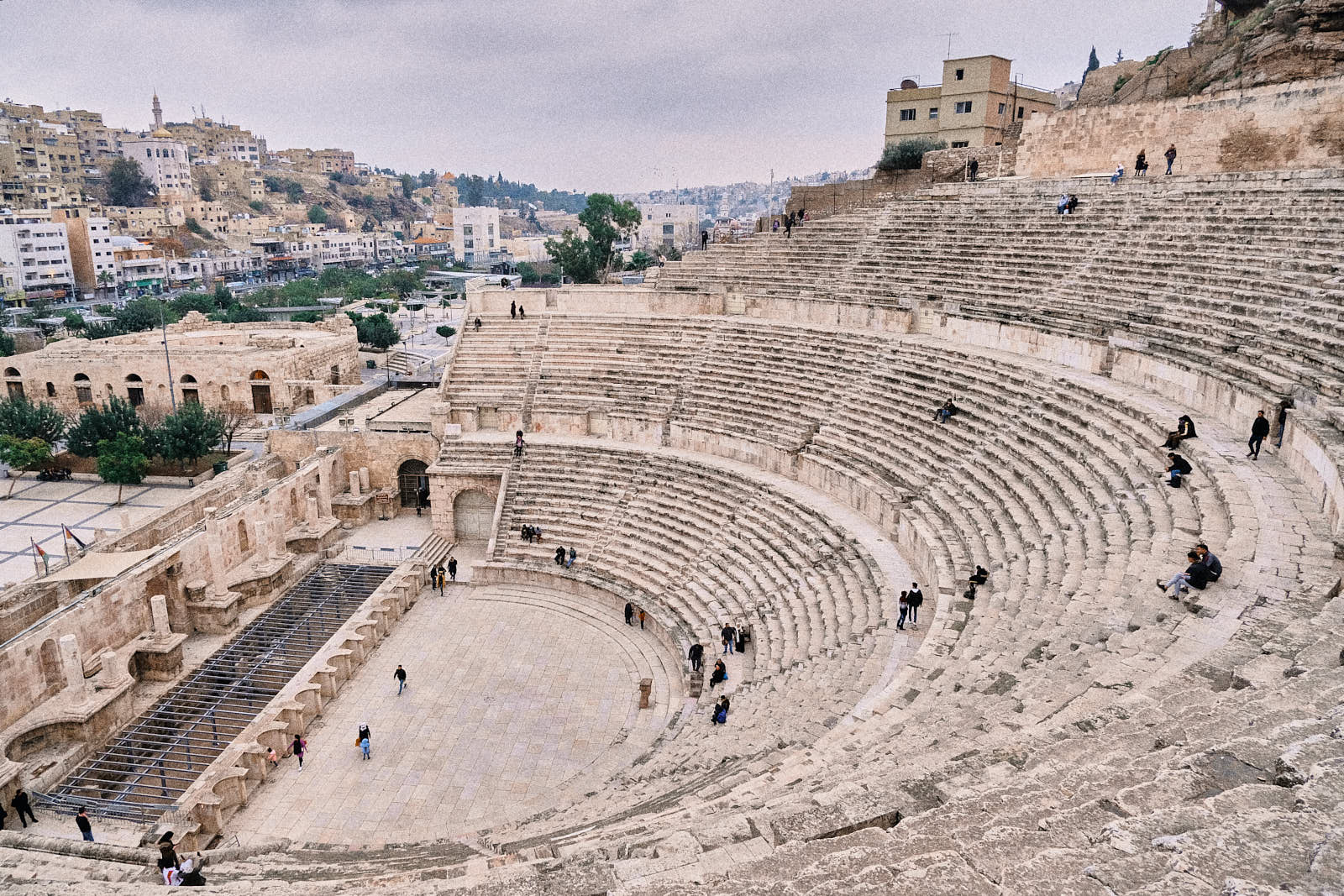
The second attraction in Amman that no tourist skips is the 2nd-century Roman theater. The six-thousand-seat theater is in excellent condition, and despite charging an admission fee (two dinars, 2.82 USD), the Jordanian authorities chose not to turn it into a museum piece. So in the evenings, Ammanis gather on its steps to chat, grab a shawarma, or smoke a hookah — all while sitting on 2nd-century stone terraces. A perfect blend of antiquity and modern life.
King Al-Hussein Street is the city's main thoroughfare — the busiest and most crowded. Trading starts early in the morning and continues until close to midnight. Here you can find everything a traveler needs: currency exchange offices, cafés, bakeries, and souvenir shops.
The Duke's Diwan is a mansion with historic interiors where you can also grab a bite or have a coffee. A numismatic and philatelic shop operates on the ground floor of the building.
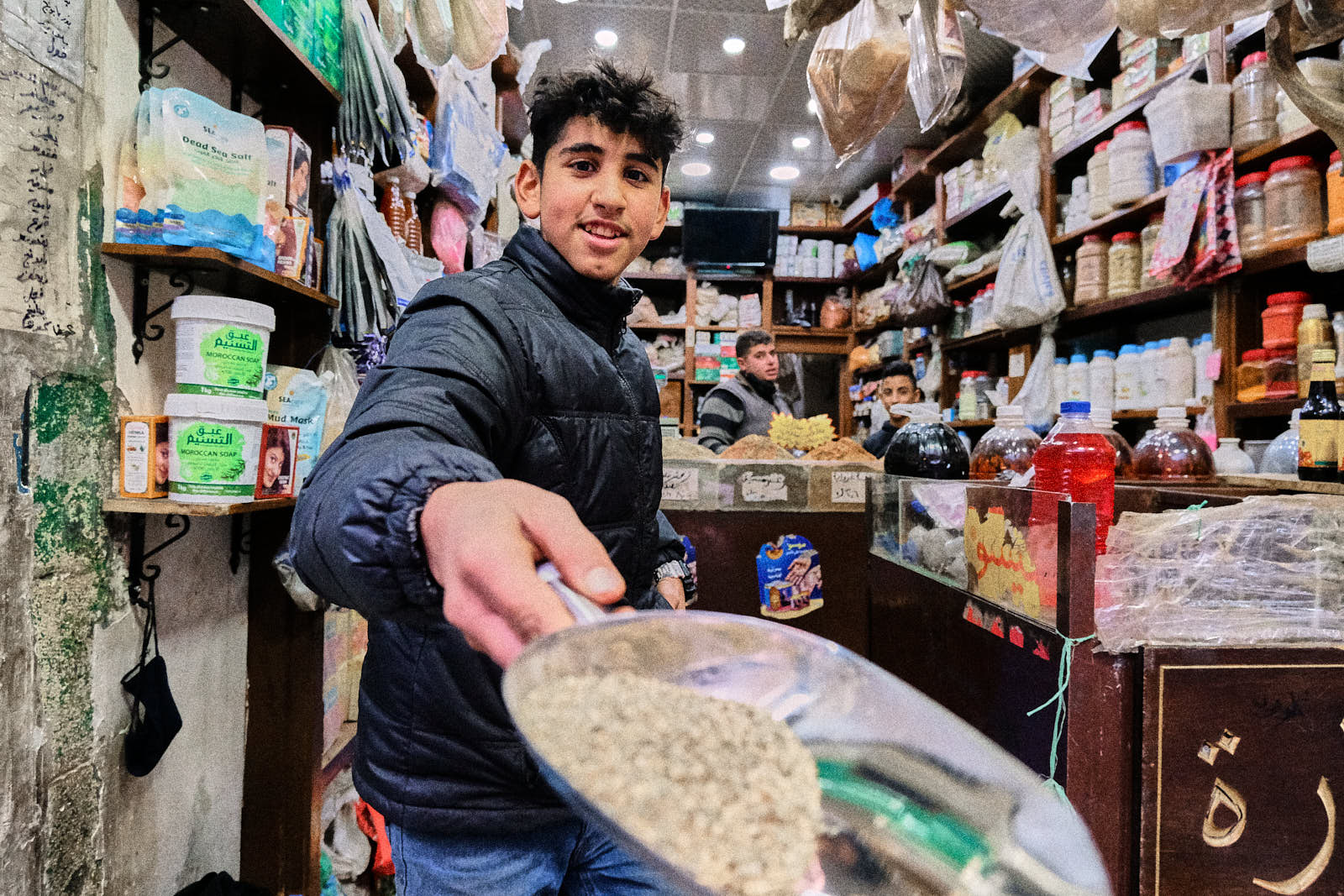
Rainbow Street — souvenir shops and cafés. Mlabbas is one of the most original souvenir shops on this street. Other good souvenir options include Jo Shop and Ali & Rama's Gallery, both of which carry plenty of items with a distinctly Jordanian flavor.
Al-Ba'ouniyah and Kulliyat Al-Shari'ah streets are among the few quiet and cozy spots in the Jordanian capital. There are lovely mansions, churches, and abandoned buildings, and a large expat community. It's the best neighborhood if you want to settle in Amman for a longer stay. Paris Square features historic lampposts and sculpture, with various fast-food outlets around it where you can pick up a snack and sit out on the square.
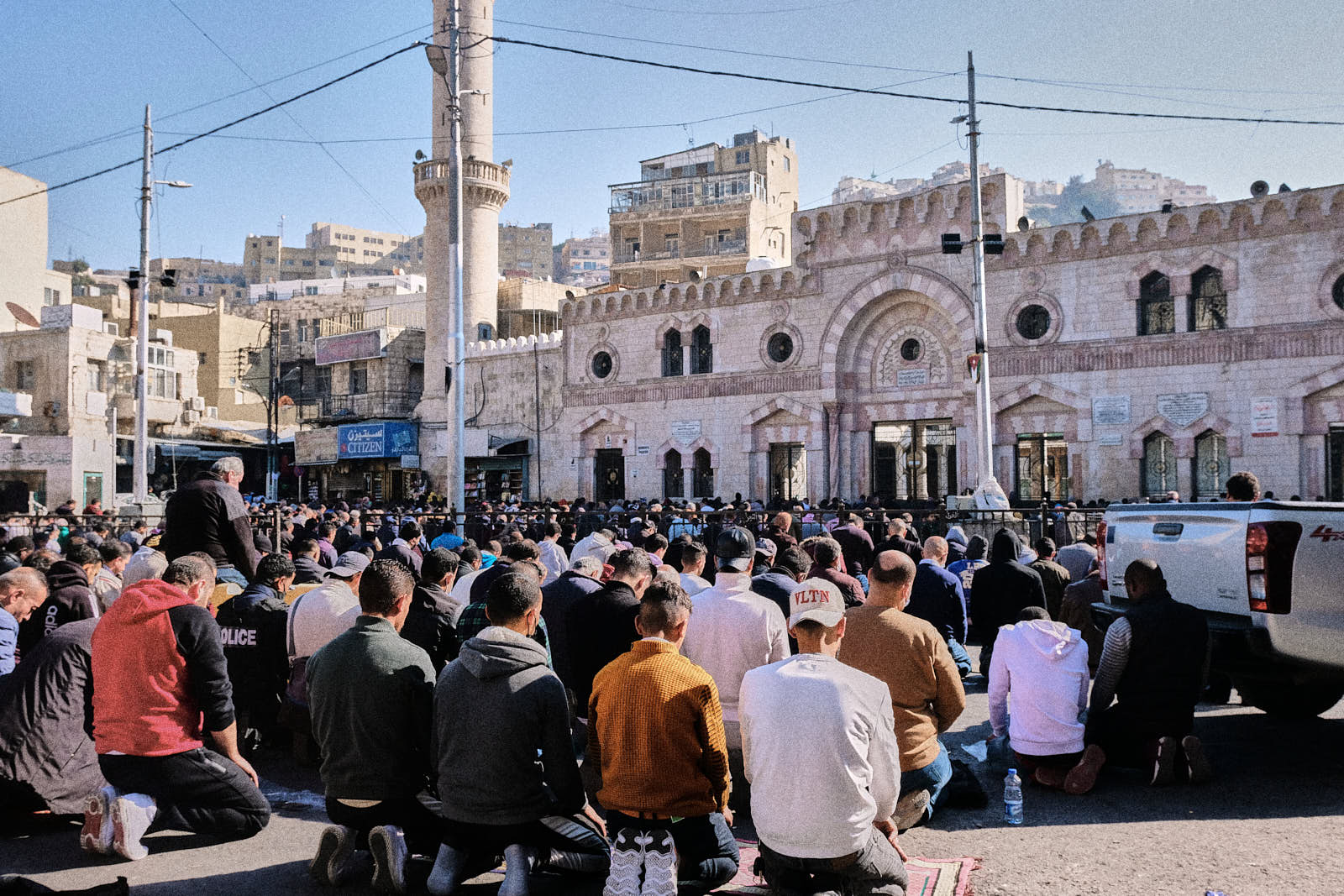
The Grand Husseini Mosque is the main historic mosque in the city. On Friday afternoons, traffic comes to a standstill for many blocks around the mosque as worshippers take over all the sidewalks and roads to gather for the most important prayer of the week — the Friday Jumu'ah prayer. It's an impressive sight. Other notable religious sites include: King Abdullah I Mosque and two churches across from it — a Coptic church and a Greek Orthodox church.
Modernist architecture — the Al Iskan bank building (1982), the 91-meter Al Burj skyscraper (1982), and the Ministry of Finance. The postmodernist Le Royal hotel (2003) — where you can spend the night (from $100 per night).

Al Nada city market is the main retail hub in the city center. You can find everything here: from toothpicks and fruit to fake soccer jerseys and wholesale cookie shops. Around the market there are about a dozen cafés — not particularly appealing and a little grubby, but full of local character and probably the cheapest places to eat in the city.
The fruit and vegetable market sits right next to the main mosque. Bargain hunters will enjoy browsing the flea market, though don't expect too much — there are no ancient treasures going for next to nothing there.
Darat al Funun – The Khalid Shoman Foundation — galleries housed in three well-restored historic buildings from the 1920s, with a charming and cozy courtyard, a library where you can work, and a café.
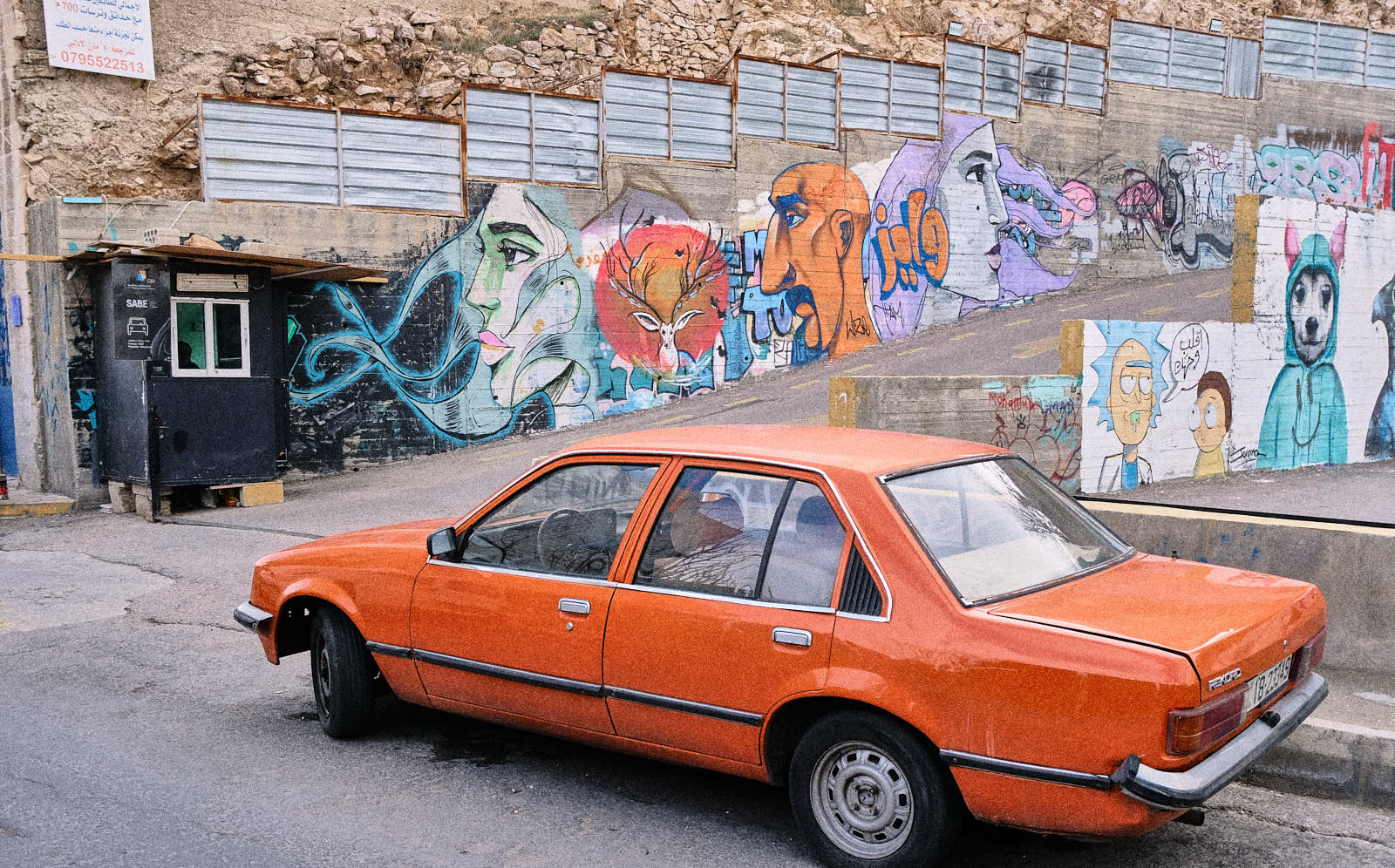
The Al-Hussein Cultural Center, galleries Ras Al-Ain, Nabad Dar Al-Anda — with workshops, a gallery selling paintings, and sculptures displayed on the street. The Jordan Museum, with a collection of Jordanian heritage — from traditional costumes to fragments of amphorae.
Jadal — a pay-by-the-hour café and cultural center that occasionally hosts events. The first hour costs two dinars (2.82 USD), and subsequent hours — 0.5 (0.71 USD). In warm weather it's lovely to sit in the shady courtyard, and in cooler months to gather in the ground-floor room by the fireplace. A couple more convenient spots for working and meeting friends are an unnamed coworking space and Kopie.
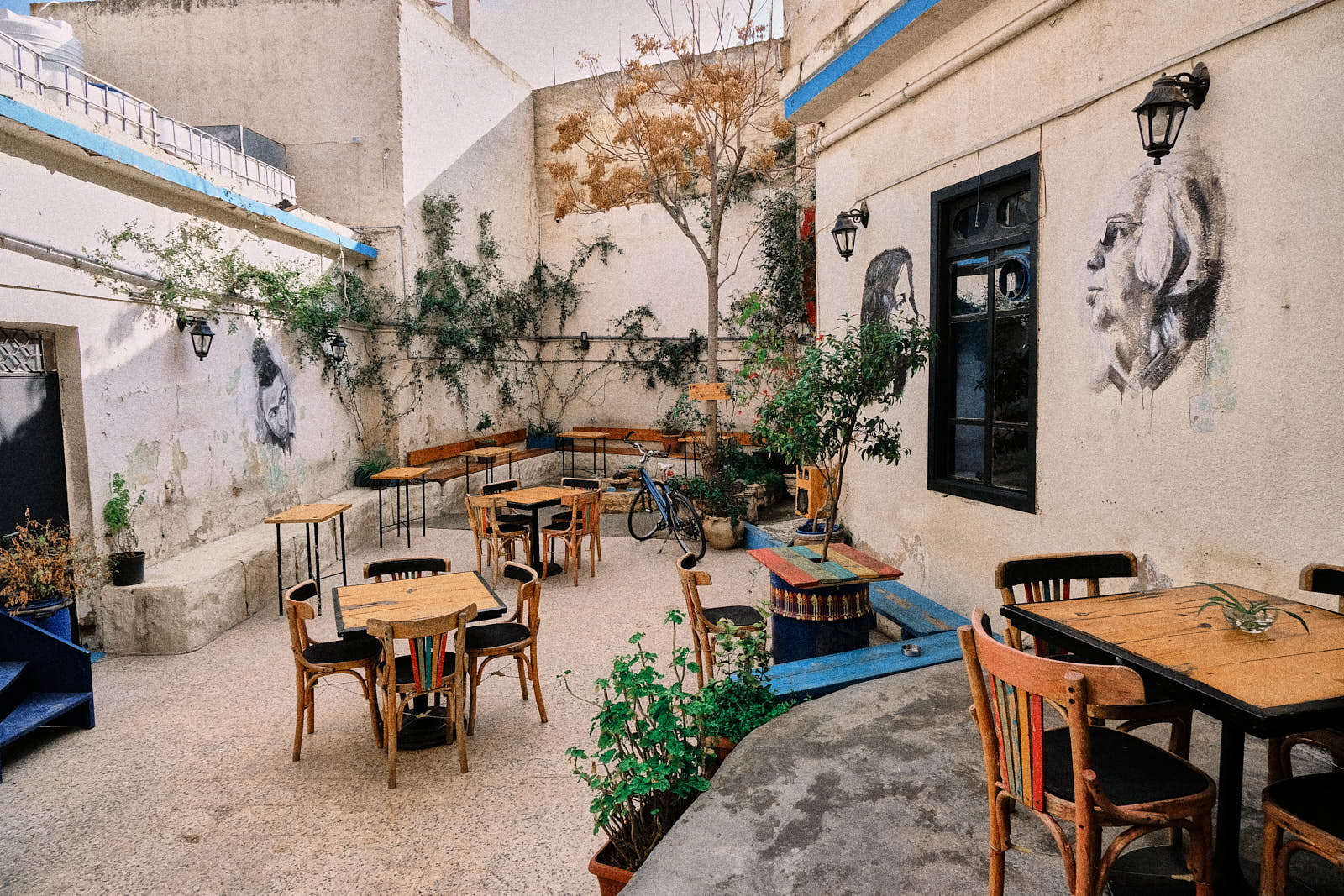
Food
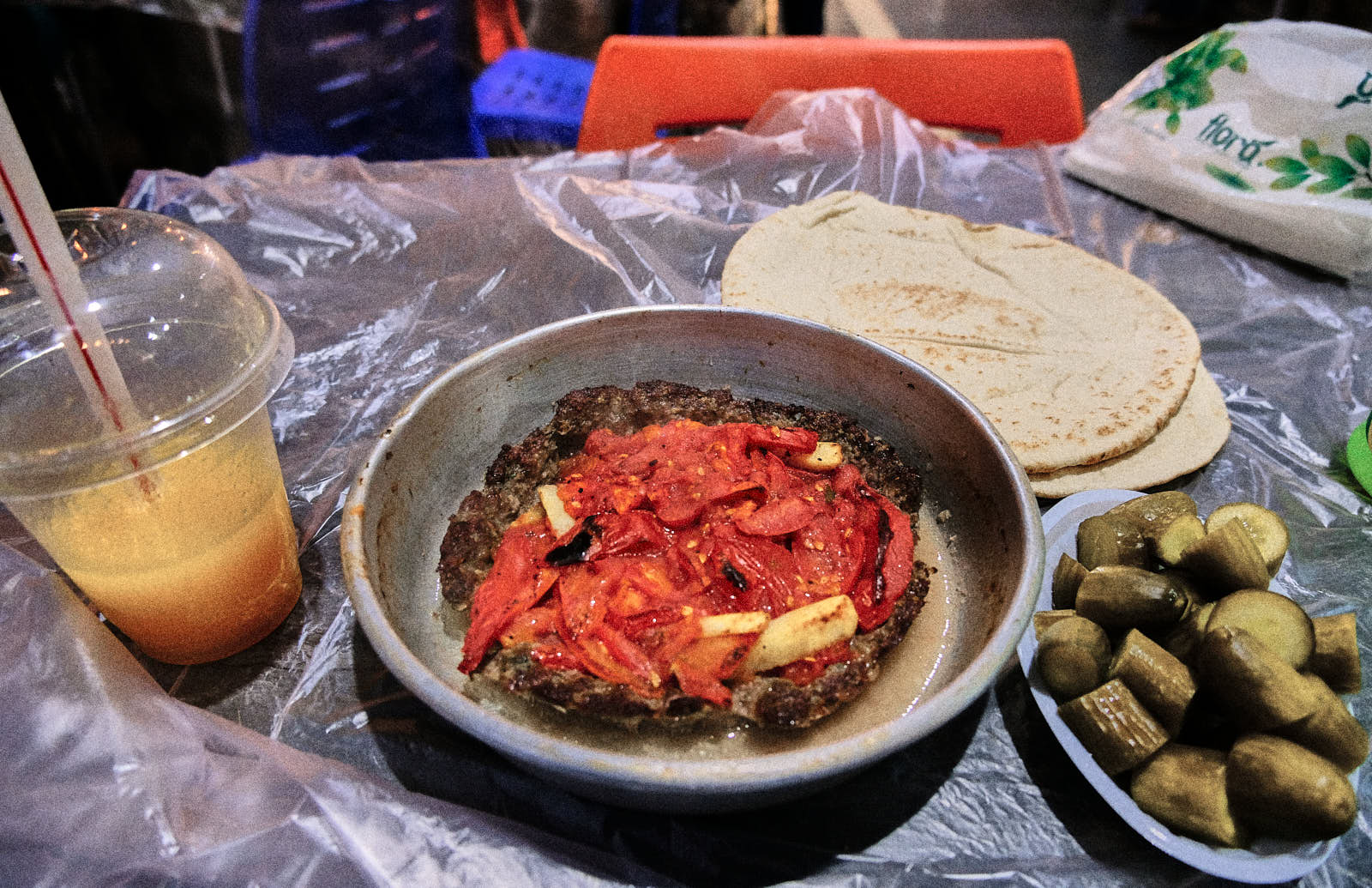
Sharazad — specializes in three dishes: baked kofta (tray kofta) with tomatoes or tahini, flatbreads with minced meat and tomato, and kebabs. Always packed with people.
Shawerma Reem — a cult shawarma spot, open until two in the morning.
Zghairon — a nonprofit café: all food is sold without a markup. You can pay more and effectively pay a meal forward for someone who cannot afford to pay for their own lunch.
Jameeda Khanum — a café on the second floor of a building with historic interiors.
Oliva — an Italian café: pasta is around five dinars (7.05 USD), pizza seven to ten (9.87 USD–14.1 USD).
عجنات زهرة حي الارمن (Armenian Bakery) — a walk-up pizzeria where pizzas are baked over an open fire, from one dinar (1.41 USD).
Samawer (9:00–19:00) — a restaurant serving Circassian and Caucasian cuisine. Following the Caucasian War of the 1860s and the Russo-Turkish War of 1877–78, a portion of the Circassians settled in Jordan. Amman has a small Circassian club and cultural center.
Hashem — falafel and sandwiches.
Al Quds Falafel — frying falafel since 1966.
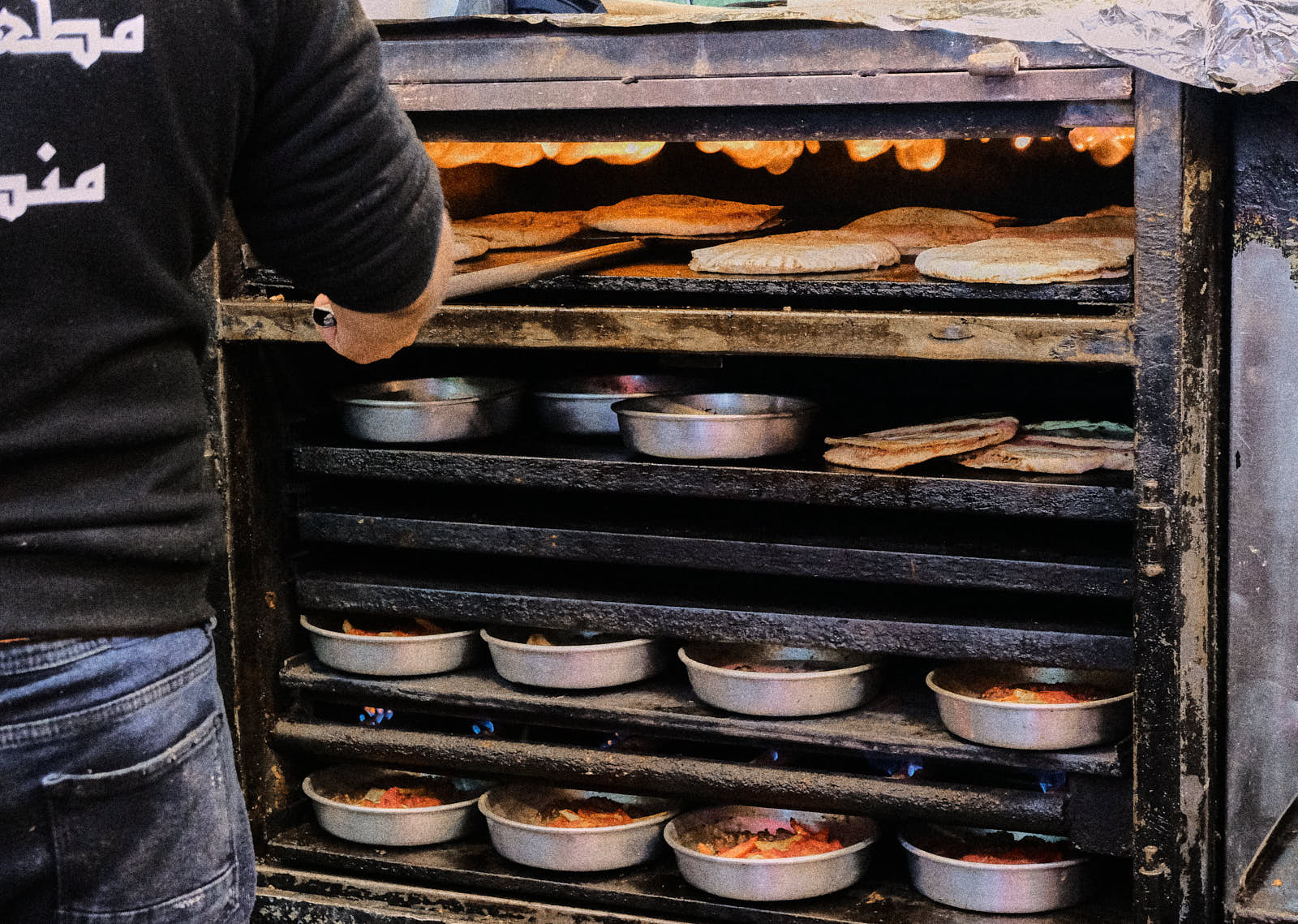
Tea, coffee, sweets
Habiba Sweets — serving knafeh and other desserts since 1951. There is almost always a line of several dozen people at the café, but it moves quickly.
The Good Bookshop — a bookshop with a café, a convenient spot to get some work done.
Zayzafoun — coffee, art, and a fireplace.
Dimitri's Coffee — local roasters offering alternative brewing methods.
Rumi — tea, coffee, desserts, one of the most popular spots among expats.

Transport
Transport. There is a bus from the airport to Tabarbour (also known as The Northern Station); a ticket costs three and a half dinars (4.94 USD). From there you will need to take a shared taxi or a regular one to get to the city center.
The main form of transport in Amman is the shared taxi (known locally as a "servees", from the French "service"). These are ordinary cars with their own fixed stops and routes, departing once full. Organic Maps even marks the most useful taxi stands for travelers in the city center.
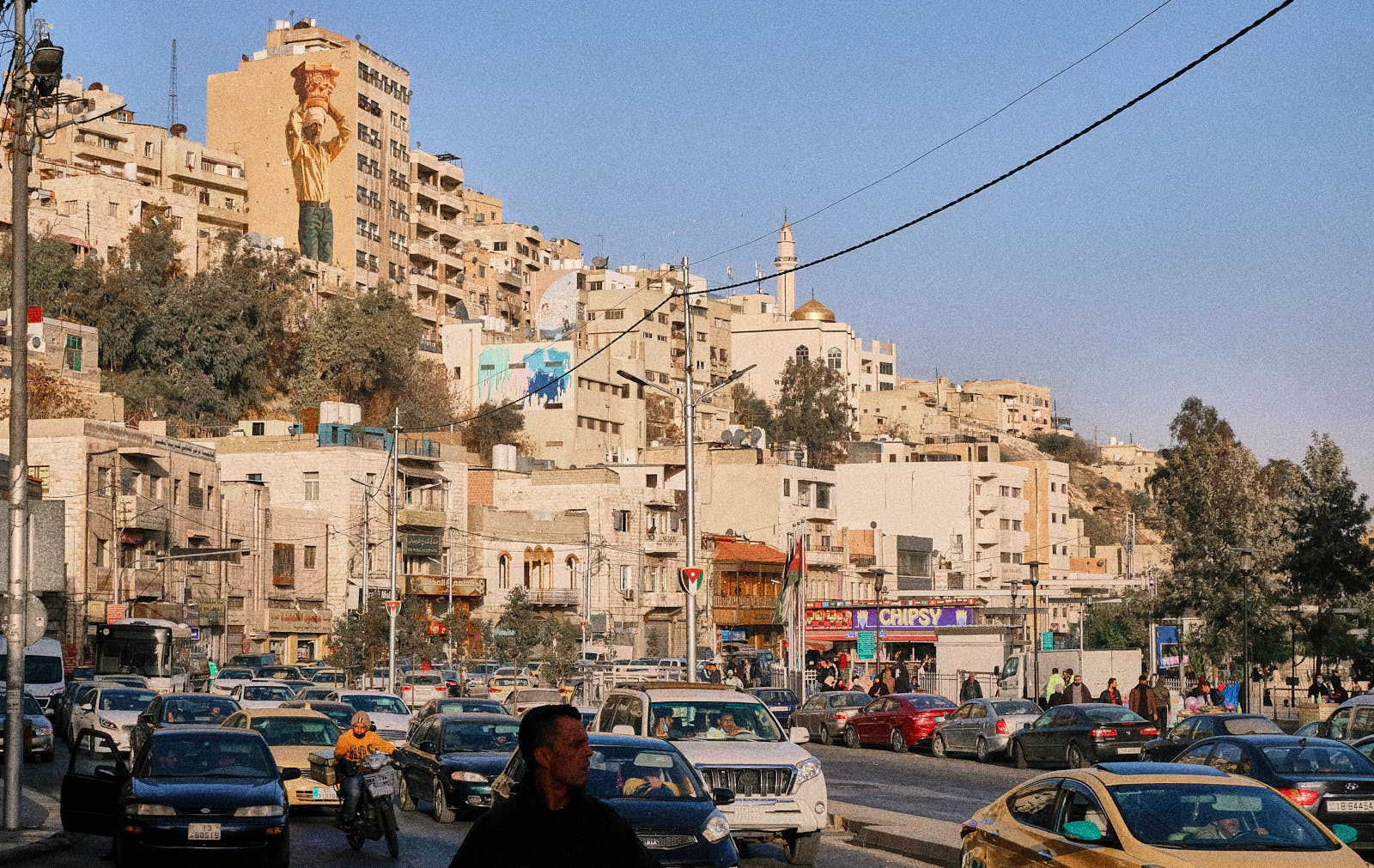
The second most popular form of transport is minibuses, which run on fixed routes — check with the driver or other passengers for details. Payment is in cash to the driver. There are also a few regular buses, but these require a transport card to pay, which is sold in very few places and is also difficult to top up. Payment by bank card or cash is not accepted.
Jerash — A Vast Complex of Ancient Ruins
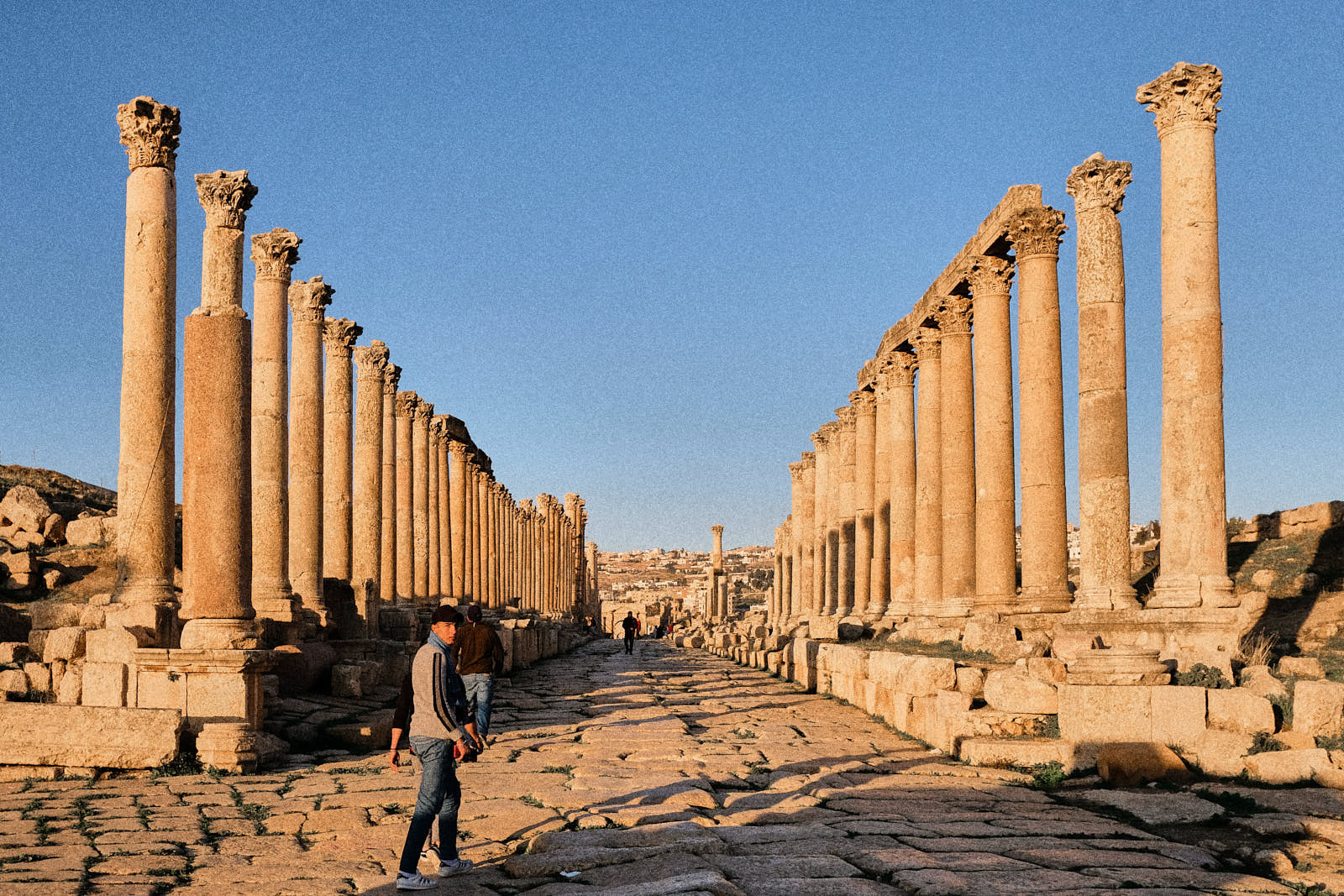
Jerash is located 50 kilometers from Amman. It is one of the best-preserved cities of the Decapolis (a league of ten Greco-Roman cities) in the world. Here you can continue exploring the Roman heritage. Ruts left by Roman chariots are still visible on the stone-paved streets, and the arch built to mark Emperor Hadrian's visit in 129 AD still stands at the city's entrance. The excellent preservation of Jerash is a result of an earthquake in 749 AD: sand and soil sealed the ancient structures, which were rediscovered in 1806 by the German traveler Ulrich Jasper Seetzen.
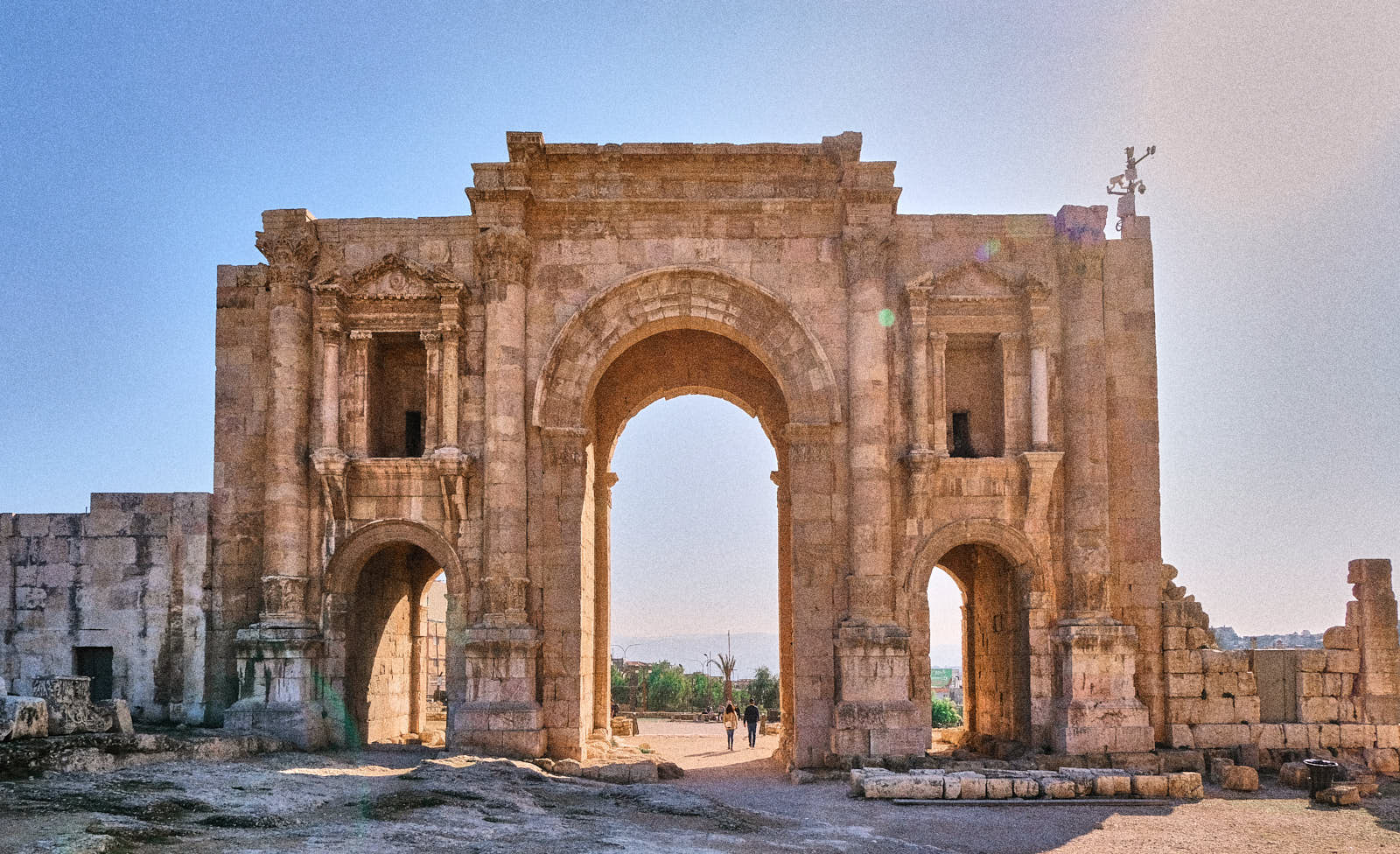

Jerash offers a vivid lesson in how ancient cities were organized. The site preserves an enormous forum — a place for gatherings and assemblies — several temples, and a hippodrome. The surviving columns let your imagination reconstruct what the main street once looked like. Most impressive of all, however, is the theater: both for its scale and its remarkable acoustics. An orchestra of bagpipers in national dress still performs here on occasion. Allow at least four hours for an unhurried tour of the ancient city.
Within the modern town itself there are ruins of a bathhouse near the main mosque and a Roman bridge.
Azraq — Desert Castles and the Chechen Quarter
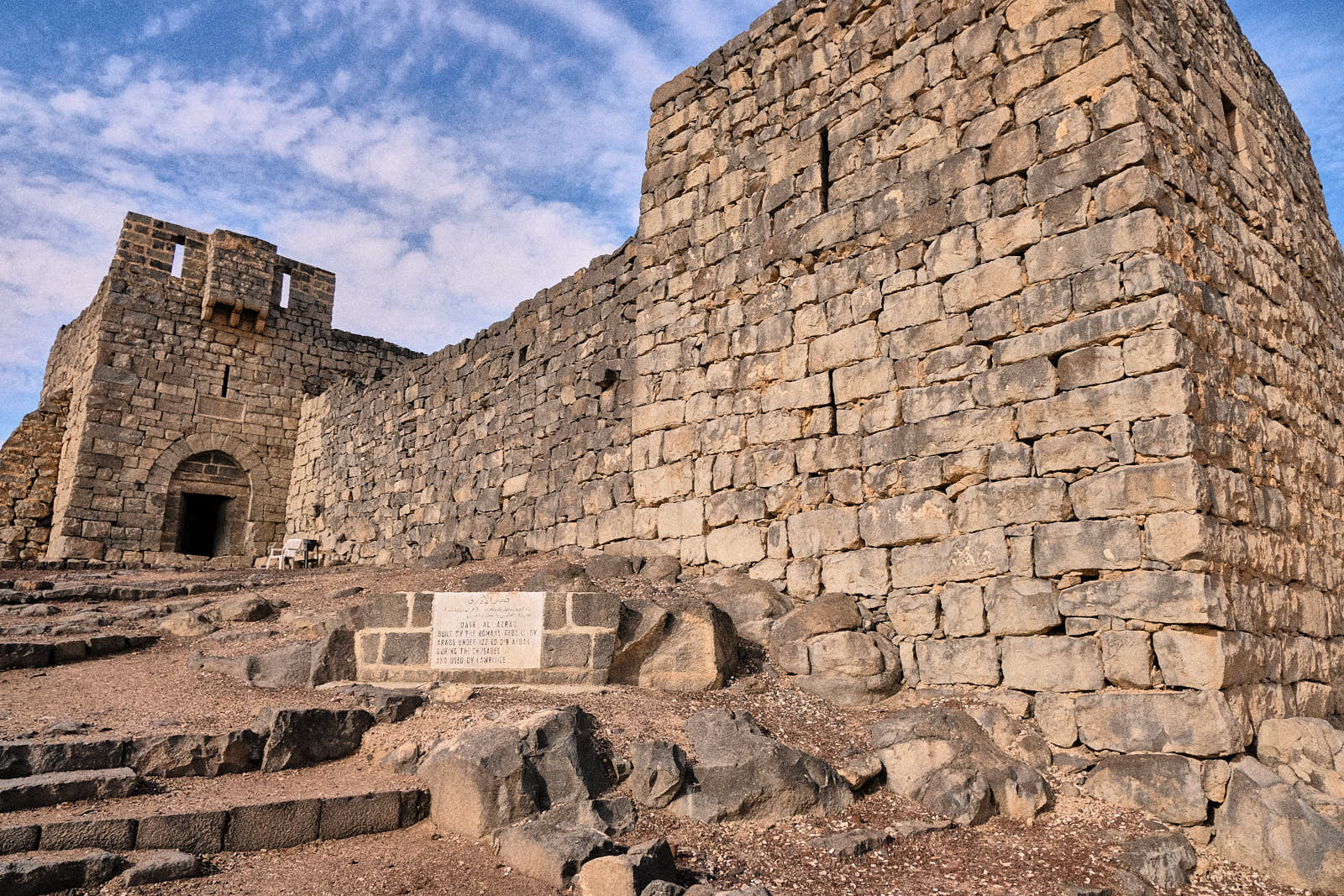
Azraq (also spelled Al-Azraq) is a small town near the borders of Saudi Arabia, Iraq, and Syria. Along the way, all those place names we have only heard in the news over recent years come to life — Damascus, Baghdad. The town was founded by Chechens in the second half of the 19th century, and they still live here, though they have largely assimilated. One of the town's districts is called Azraq Al Shishan (shishan means "Chechen" in Arabic). The town's points of interest are Al-Azraq Castle and the oasis nearby.
At the entrance to the Zarqa governorate (province), where Azraq is located, police may stop you and check your passport.
Some 25 kilometers from Azraq lies the second-largest (35,000 people as of 2019) Syrian refugee campin Jordan. You cannot enter it, but you can try to drive closer to the gates and fence. There are three Syrian refugee camps in Jordan in total.
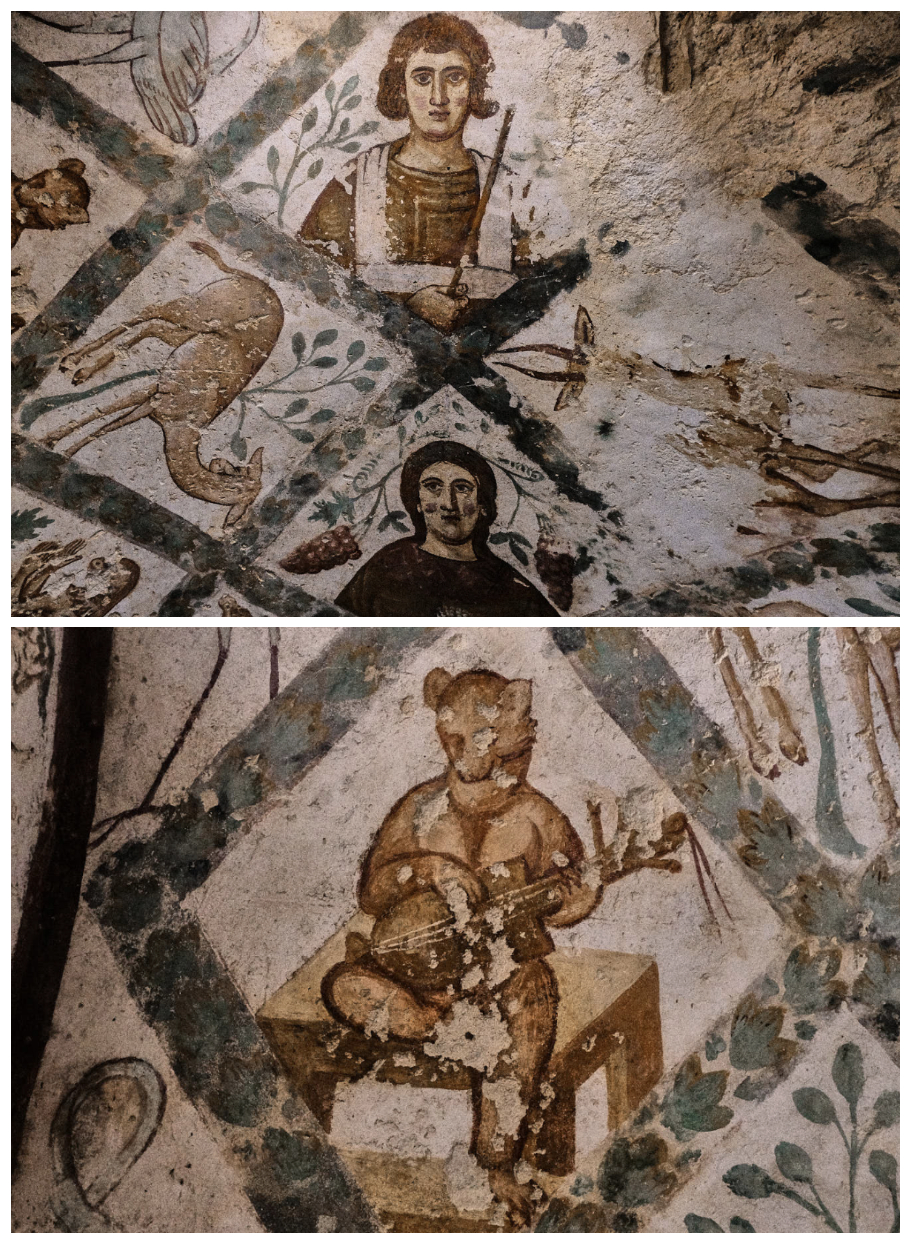
25 kilometers away, but along a different road (Route 40), stands the castle of Qasr Amra dating from the 8th century. Almost nothing of the castle itself has survived except for the bathhouse. However, inside it are Umayyad-era frescoes — one of the finest surviving examples of paintings from this period in the world. Qasr Amra is included on the UNESCO World Heritage List. Another desert castle — Qasr Kharana — is located 15 kilometers away.
Madaba — Temples and Byzantine Mosaics
Madaba is known as the "City of Mosaics": several hundred have survived from Byzantine times. Most are on display at the city's Archaeological Museum. If you are short on time, it is enough to see just one — the mosaic Map of the Holy Land from the 6th century, located in the Church of Saint George.
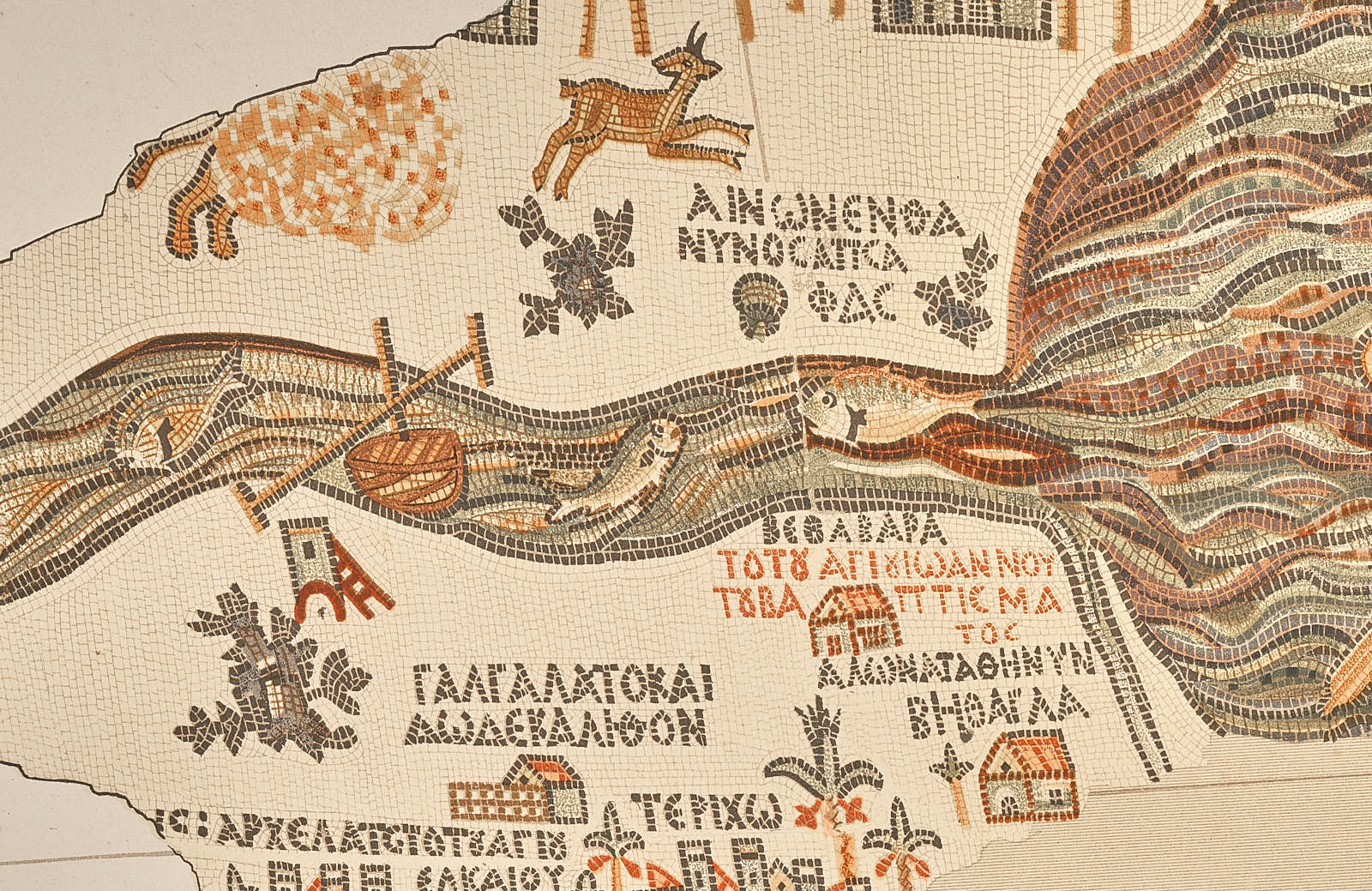
It was discovered during the construction of the Church of Saint George, and the remains of the ancient mosaic now adorn the floor of the church. The map, which was originally 21×7 meters in size, allows you to make out the outlines of Jerusalem, the Dead Sea, the Jordan River, Mount Sinai, and other sacred sites. Catacombs are also located beneath the church and are open to visitors. The entrance fee for tourists is one dinar (1.41 USD).
Also worth seeing — the Church of the Holy Martyrs with its mosaics, the Catholic Church of Saint John the Baptist with catacombs, the ruins of a fortress with a mosaic and the Madaba Museum.
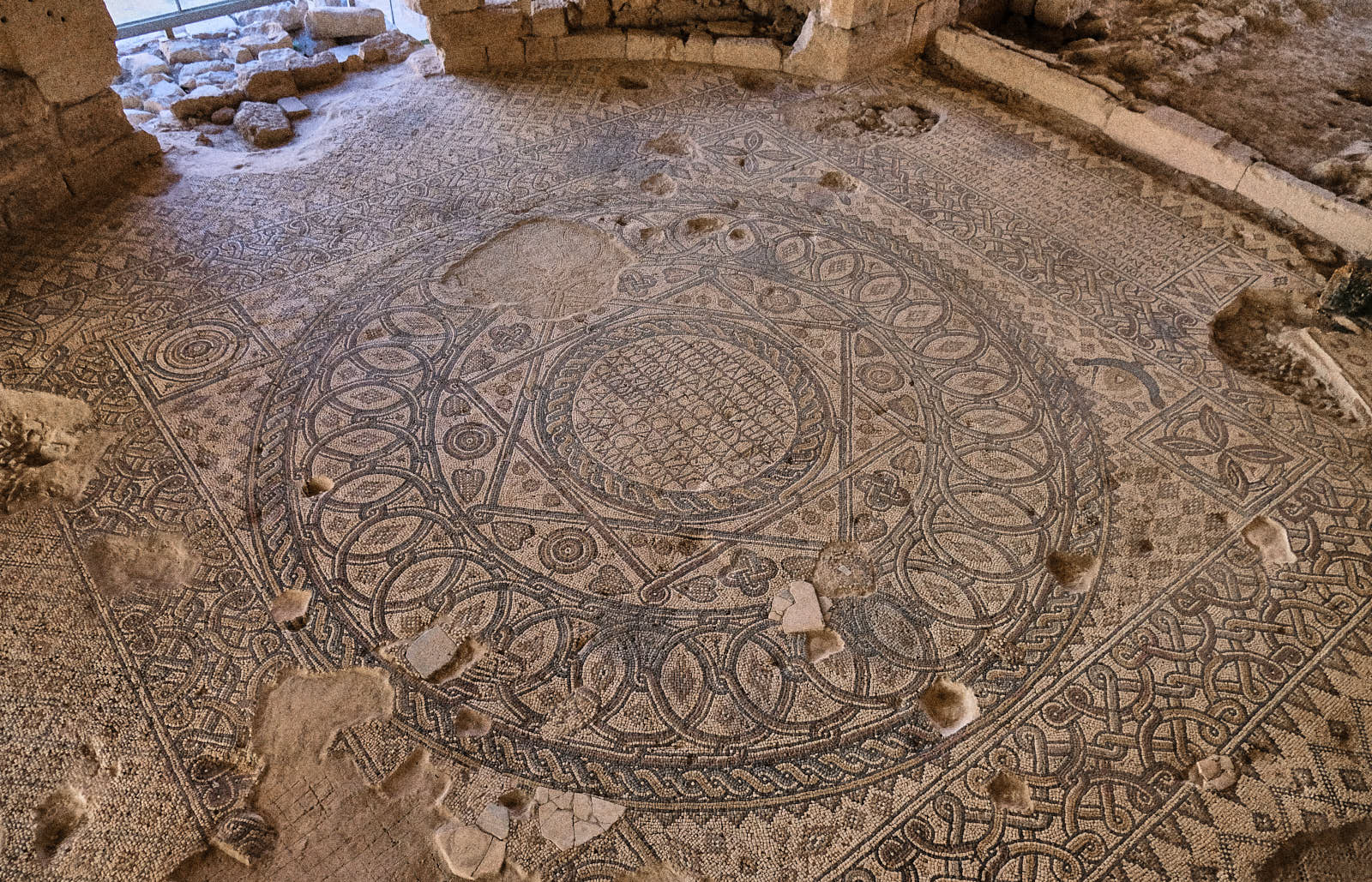
Mount Nebo and the Baptism Site of Christ
The two most sacred sites in Jordan are Mount Nebo, where, according to legend, the prophet Moses was buried, and the Jordan River, where Jesus Christ was baptized. Both sites are close to each other, so they can be visited in a single day. According to the Bible, the prophet Moses saw the Promised Land from the summit of Mount Nebo. He died here at the age of 120 and was buried on this spot. Every year, thousands of pilgrims make their way to the mountain. At the summit, visitors can see a stone memorial dedicated to the Prophet, explore an ancient Byzantine church, and gaze out over the surrounding rust-brown hills, the Jordan River valley, and the Dead Sea.

About 30 kilometers from Mount Nebo lies Al-Maghtas, also known as the Baptism Site of Christ. Jordan and neighboring Israel still argue over whose territory it happened on. The Jordanian side points to a small pool — which dries up in the dry season — surrounded by the ruins of Byzantine structures. According to local archaeologists, these ruins are evidence that the site was venerated from ancient times and that it is most likely here that Christ was baptized.
A short walk further on, visitors can perform the ritual of immersion in the Jordan River. The river forms the natural border between Israel and Jordan, and at this point it is no more than five meters wide. This means you will be wading in under the watchful eyes of border guards on both banks. At the entrance you will be asked to show your documents, and if you have arrived without a guide, you will need to wait for a group of at least five people before a dedicated escort is assigned to accompany you.

The Dead Sea. Yes, You Really Don't Sink in It
Swimming in water that is ten times saltier than the Mediterranean and twenty times saltier than the Black Sea is already an experience in itself. It takes about an hour to drive from Amman to the Dead Sea shore, so residents of the capital often spend their weekends here. A dozen hotels from international chains — Hilton, Kempinski, Marriott — line the coast, each with a strong focus on spa treatments and wellness: the water and mud of the Dead Sea are considered therapeutic, said to help with skin and joint conditions, relieve fatigue, and improve immunity and circulation.
Most resorts have their own private beaches. For those not staying at a hotel, the public Dead Sea Tourist Beach is open to all, with pools, changing rooms, and showers. Admission is 20 dinars (28.2 USD). Along the shoreline you can find free, undeveloped spots where locals swim, though conditions there are typically very basic. After bathing you'll have to rinse off under a makeshift shower — a hose enclosed by old advertising banners.
Swimming is recommended early in the morning, before 9:00, or in the evening after 17:00, when the sun is no longer blazing. Because of the high salt concentration, doctors advise against staying in the water for more than 15 minutes. After your swim you can coat yourself in therapeutic mud. The Dead Sea is also the lowest point on Earth, and the surrounding desert landscapes are just as impressive as the water's famous properties.
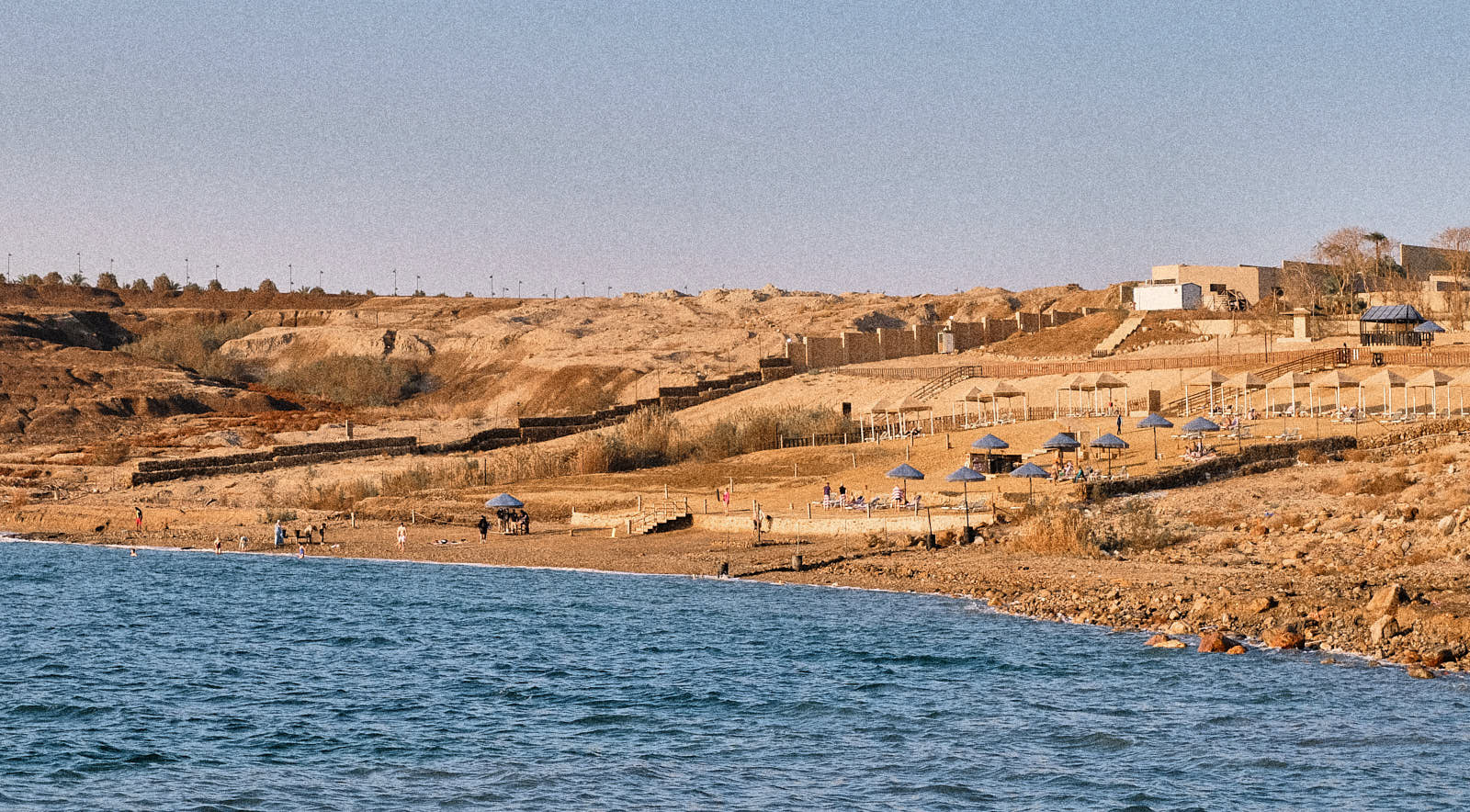
Petra — One of the Seven New Wonders of the World
Most tourists come to Jordan solely for Petra — an ancient city and former capital of the Nabataean Kingdom, one of the seven New Wonders of the World and a UNESCO World Heritage Site. It is the most famous attraction in the country.
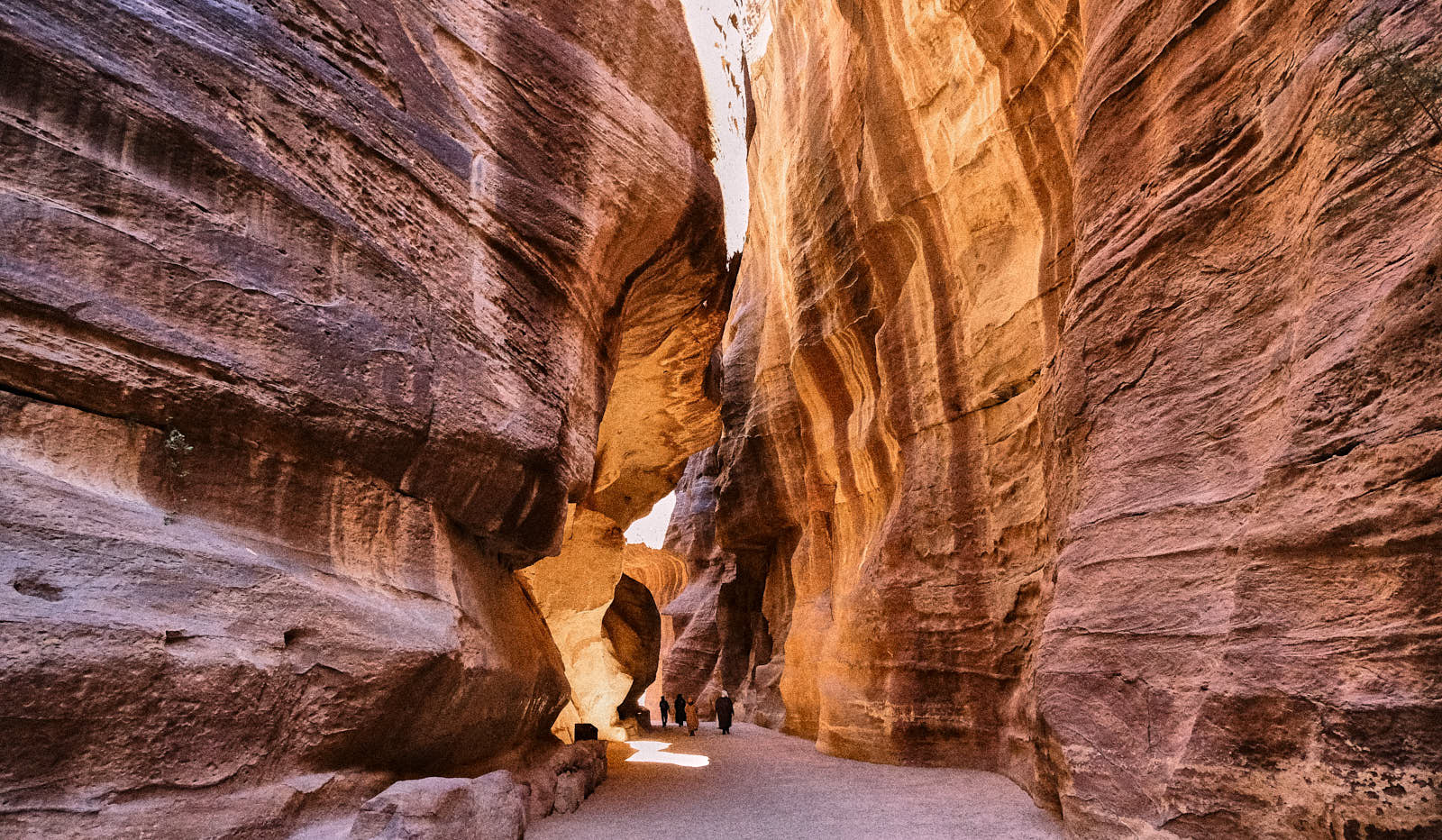
Tourists typically follow the standard route through the Siq gorge to the temple-mausoleum of Al-Khazneh (the Treasury), which everyone recognizes from Indiana Jones and the Last Crusade. From there, you can climb 800 steps up to Ad Deir (the Monastery), explore ancient tombs, see sites of ritual sacrifice, and make your way to the viewpoint opposite Al-Khazneh, which offers the best view of it.
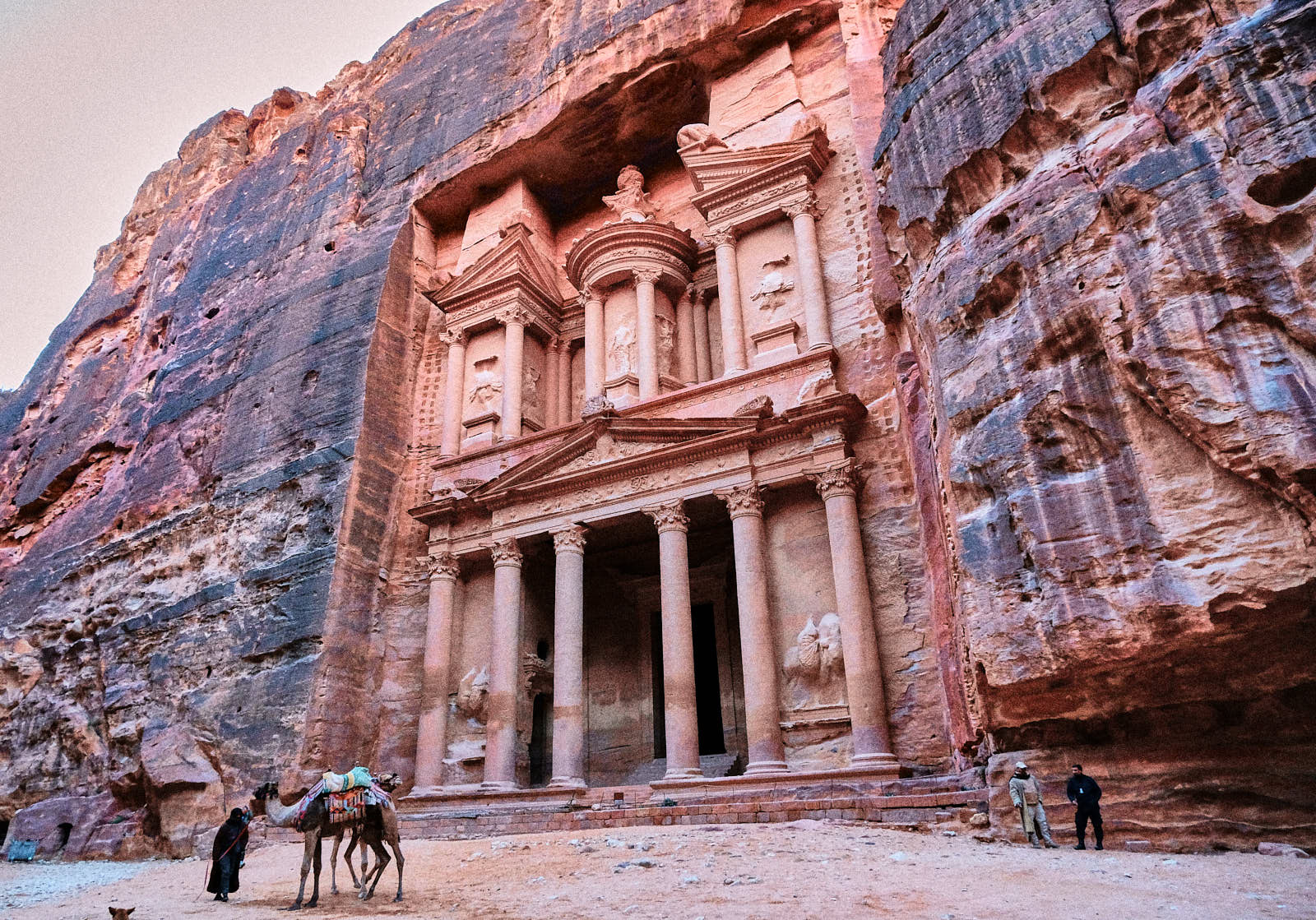
Be sure to wear comfortable shoes and bring a couple of liters of water. Along the way you will encounter local Bedouins, whose homes are still carved into the rocks. They persistently offer tourists their services as guides or tempt visitors into riding donkeys instead of walking. Whether to accept is entirely up to you, but keep in mind that you can — and should — bargain with Bedouins. In general, all services offered by the Bedouins in Petra are very pushy, and this can detract from the experience. Even in the most secluded and remote corners of the site, a local will be sitting nearby inviting you for tea or selling trinkets.
The ideal option is to spread your visit to Petra over a couple of days and book a hotel in the nearby town of Wadi Musa. All the tourist infrastructure you need is there — currency exchanges, hotels, and buses.
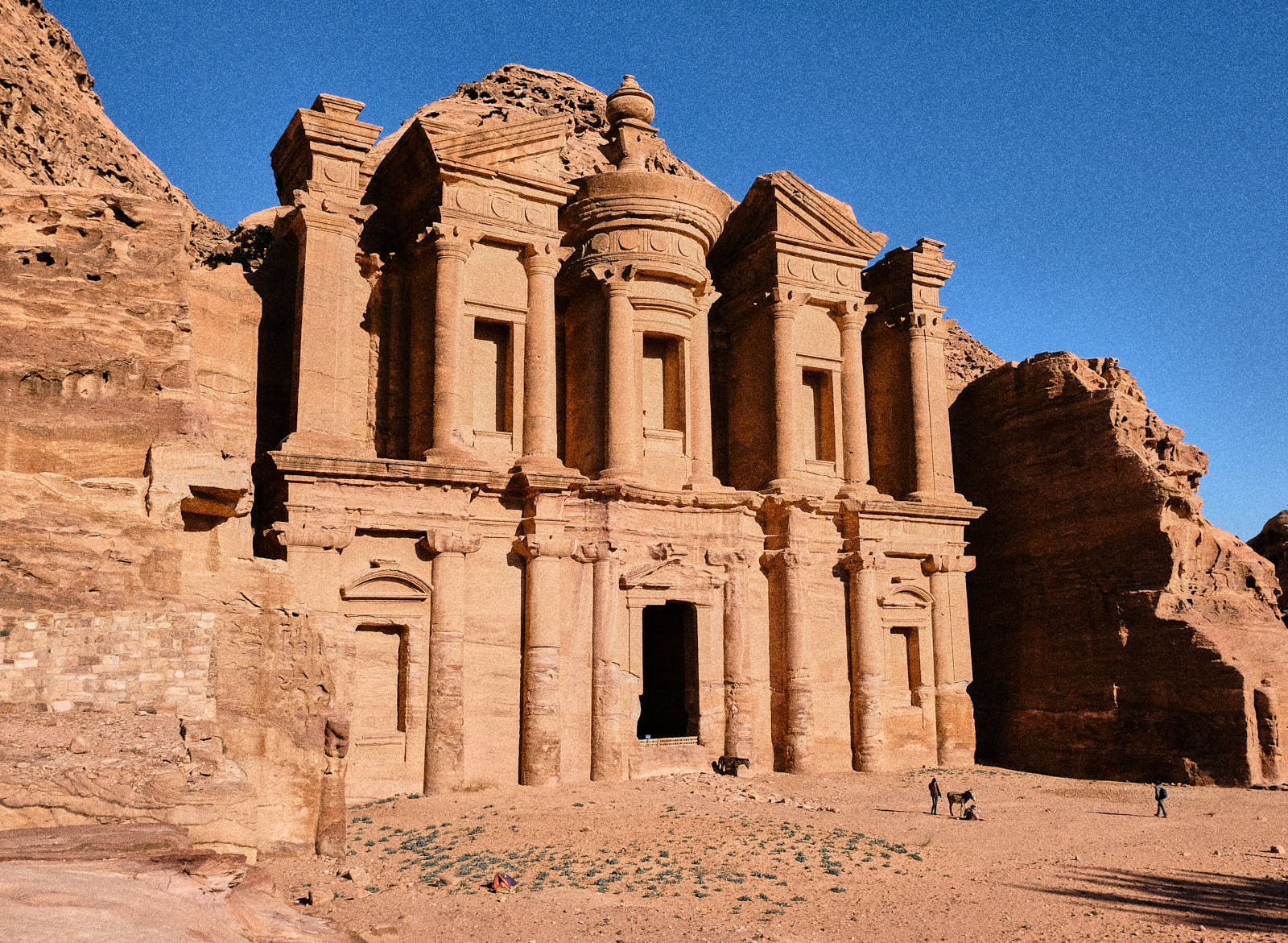
Staying overnight also means you can see the ancient city after dark and catch the Petra by Nightshow, which takes place three times a week — on Mondays, Wednesdays, and Thursdays at 20:30. A ticket costs 30 dinars (42.3 USD). Visitors first walk through the Siq by the light of 1,000 candles, then arrive at Al-Khazneh illuminated by floodlights, before sitting down in the square to enjoy the mystical sounds of bagpipes and flutes performed by Bedouins.
A one-day entry ticket to Petra costs 50 dinars (70.5 USD), a two-day ticket — 55 (77.6 USD), and a three-day ticket — 60 (84.6 USD).
The Jordan Pass is a travel pass that gives access to more than 40 attractions across the country. It must be purchased before entering Jordan and costs 70–80 dinars (98.7 USD–112.8 USD), with the price depending on how many days you plan to spend in Petra. The Jordan Pass works out as a saving even if you have no plans to visit anything other than Petra.
Wadi Rum — Martian Landscapes in the Desert
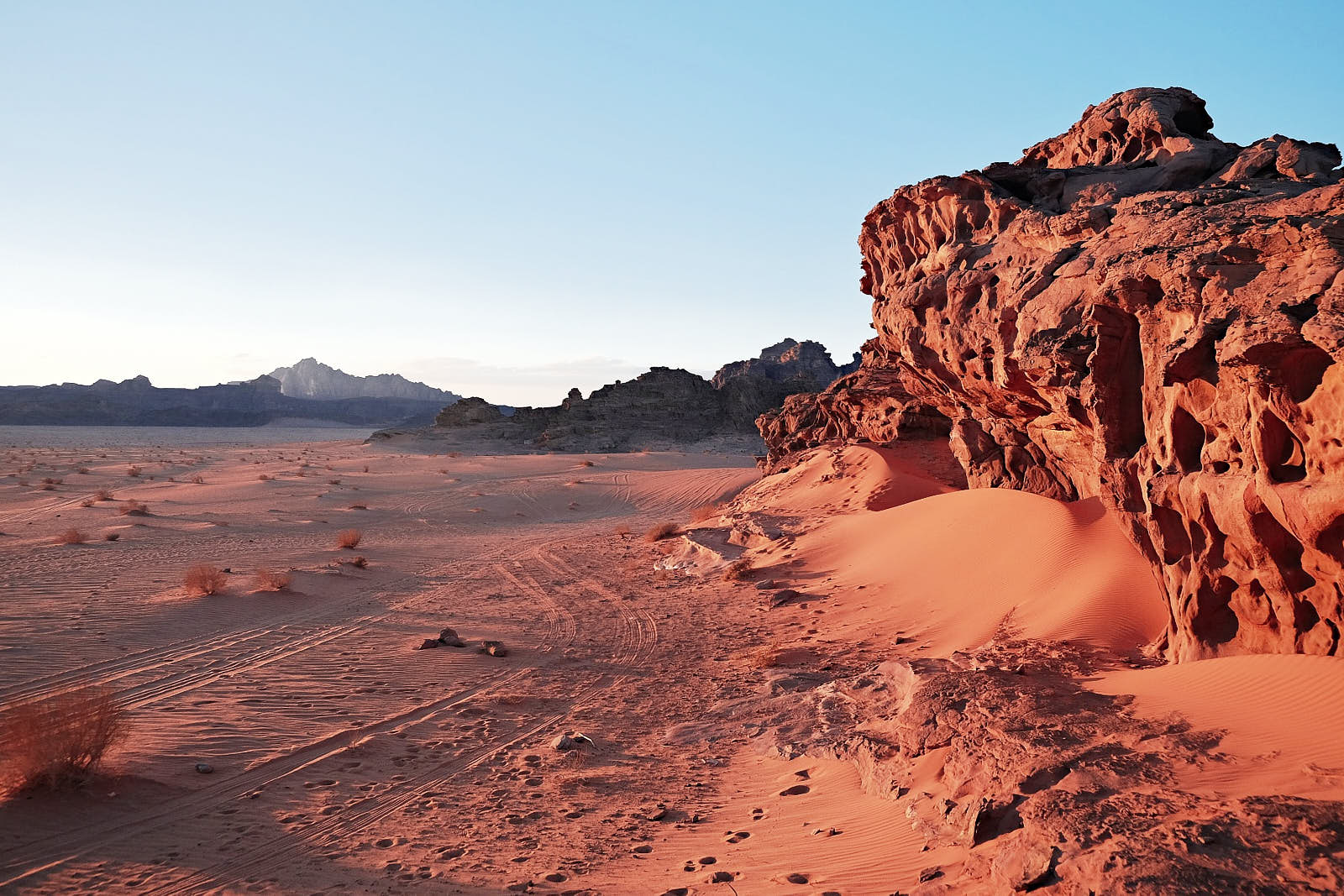
Since the release of the film The Martian, the Wadi Rum desert has been nicknamed "Mars on Earth." Its red-orange sands and dunes, rock formations, natural stone bridges, and wells truly give it the feel of a distant planet. The desert has also served as a filming location for Transformers, Lawrence of Arabia, and Prometheus.
Wadi Rum Desert is a UNESCO World Heritage Site. Private vehicles are not permitted inside. Only local Bedouins are allowed to take tourists across the vast dunes. Renting a jeep costs around 70 dinars (98.7 USD), plus five dinars (7.05 USD) for the entry ticket to the protected zone.
The desert can be explored in a single day, but to make the most of the experience it is worth spending the night at one of the campsites — sharing a Bedouin-style lamb dinner cooked in the sand, sitting in silence under the stars before sleep, and waking up to what may be the most beautiful sunrise of your life. The camps range from traditional Bedouin tents to bubble hotels — transparent domes that resemble giant soap bubbles. Overnight accommodation starts from 15 dinars (21.2 USD).
Aqaba — The Red Sea and the Route to Egypt or Israel
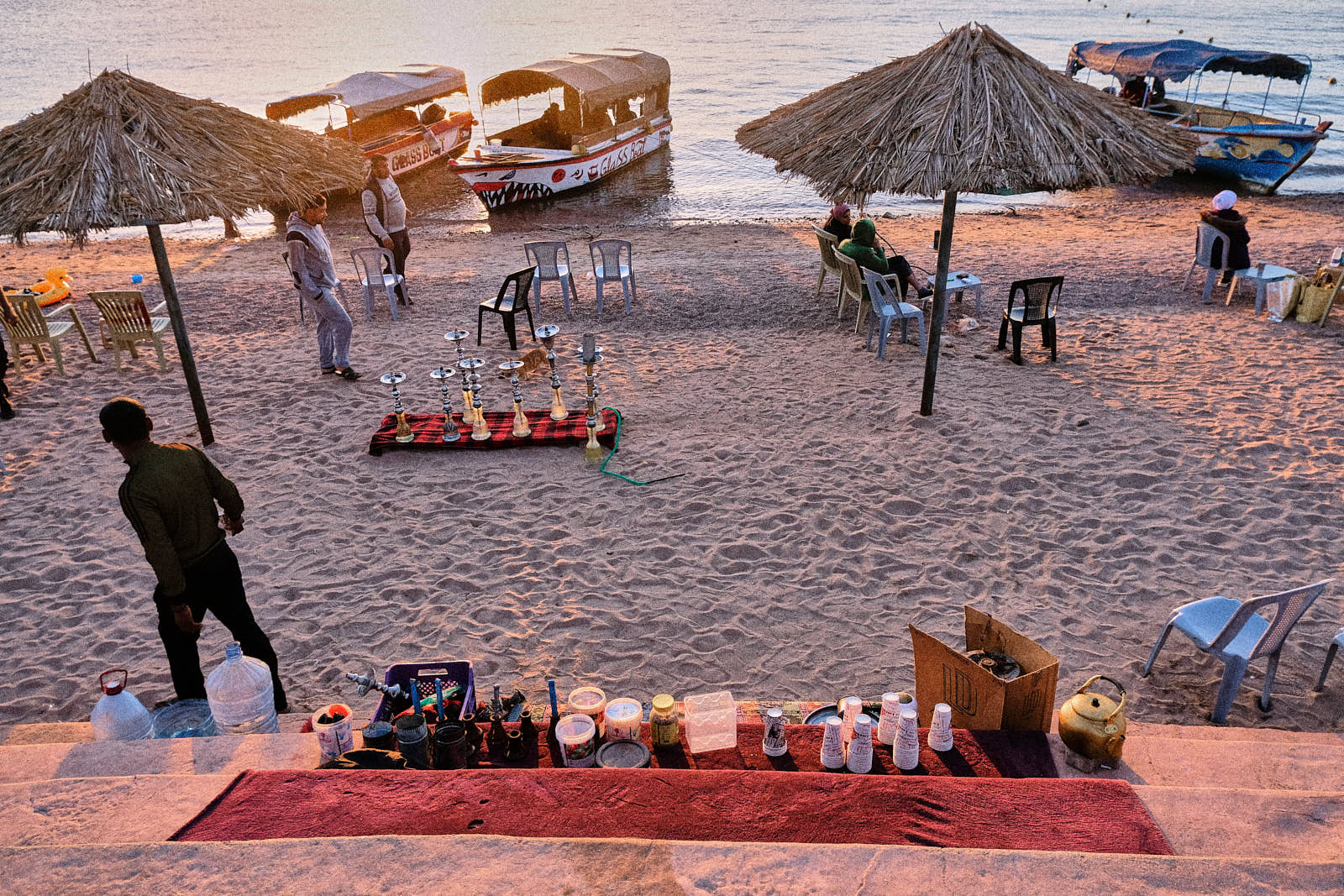
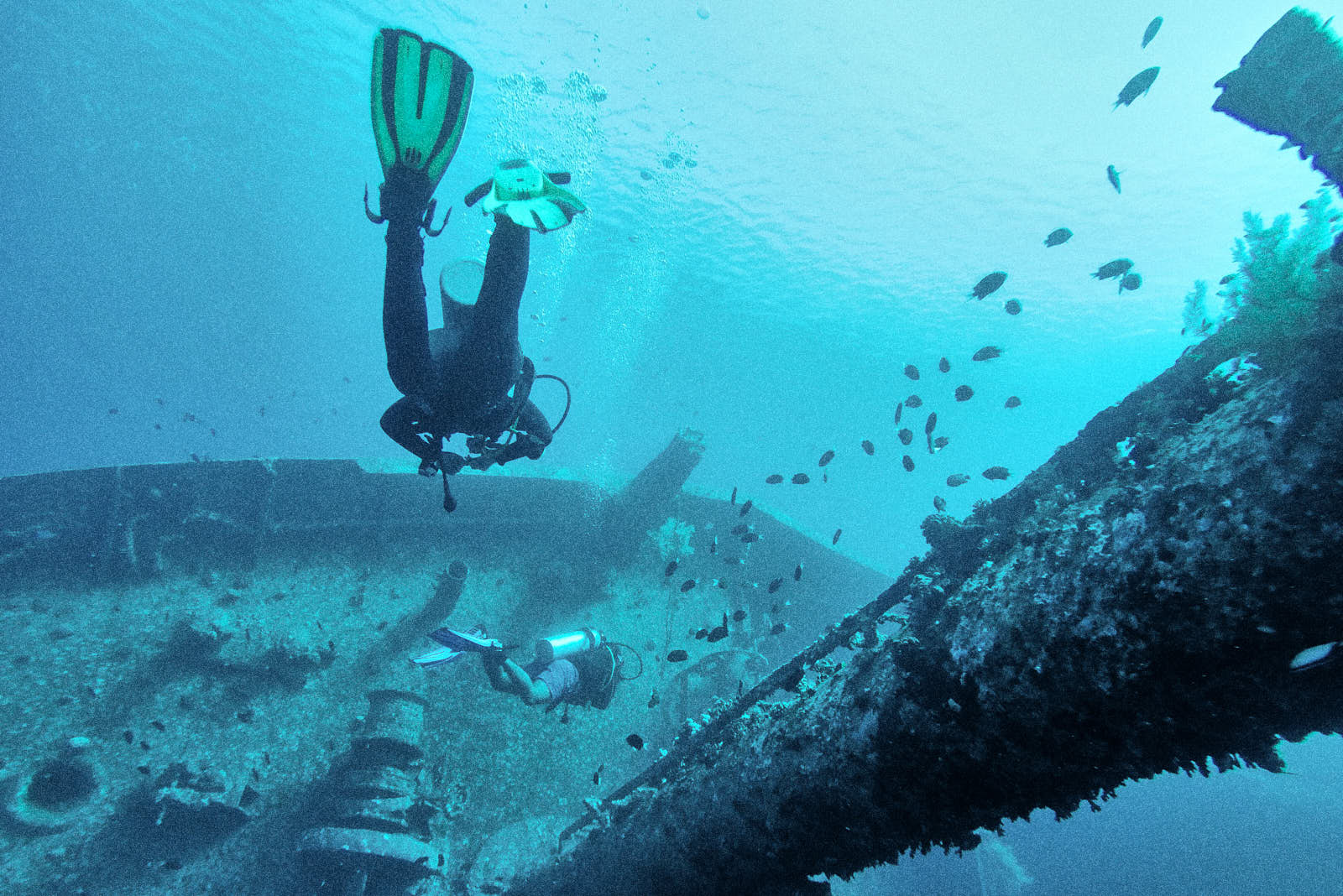
Aqaba is Jordan's main Red Sea resort, where visitors come first and foremost for diving and snorkeling, and secondarily for swimming. For a proper beach vacation, many choose the town of Tala Bay, 15 kilometers away.
There are a great many companies in Aqaba offering dives to tourists. Prices start from 40 dinars (56.4 USD). The Red Sea is home to more than 200 species of coral, rays, sea turtles, clownfish, and even dolphins. If you don't want to dive, you can book a yacht trip with a snorkeling stop — swimming with a mask and snorkel. A three-hour trip will cost around 35 dinars (49.4 USD). From the water, you can clearly see Israel, Egypt, and Saudi Arabia.
Aqaba itself doesn't have much to offer: you can visit the port, stroll along a couple of the main streets, haggle at the market, grab a bite at a fish restaurant, and see the country's largest flag and a Mamluk fort on the waterfront — a couple of hours is enough for all of that.
The land border crossing with Israel is located practically on the edge of the city and can be reached on foot. Ferries also run from Aqaba to the Egyptian ports of Nuweiba and Taba (for more details, see the "How to Get There" section).
What Else to See in Jordan
Wadi Mujib — a scenic canyon of the Mujib River, with six hiking trails. Trekking costs from 22 dinars (31 USD) per person. The trail runs along the riverbed surrounded by sheer cliffs; at times you have to wade chest-deep in water.
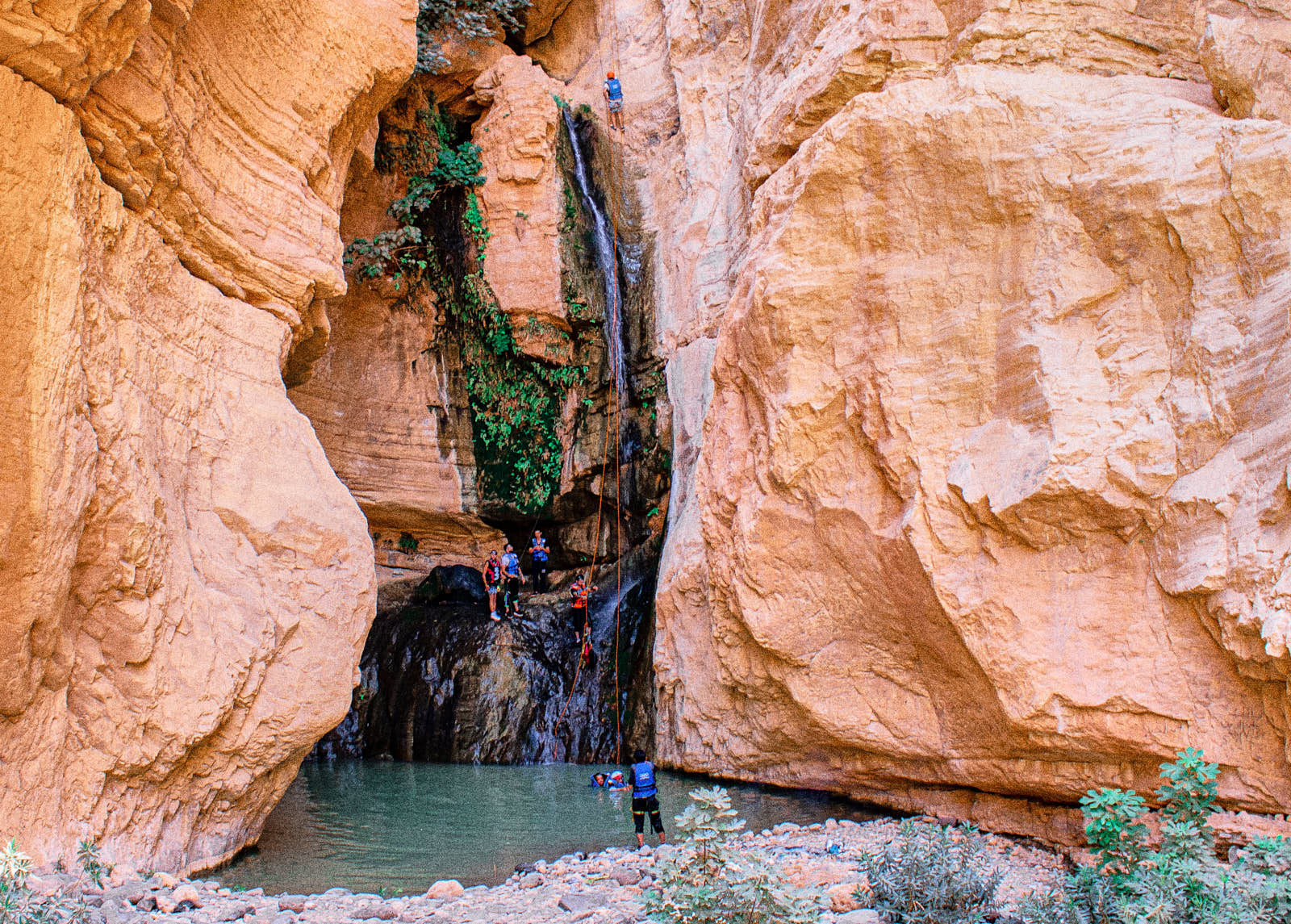
Hammamat Ma'in — hot springs about half an hour's drive from the Dead Sea. Waterfalls of hot water cascade into rock pools, forming natural jacuzzis. The main complex is open to everyone; admission costs 15 dinars (21.2 USD). It is better to visit on weekdays, as the springs get crowded with Amman residents on weekends.
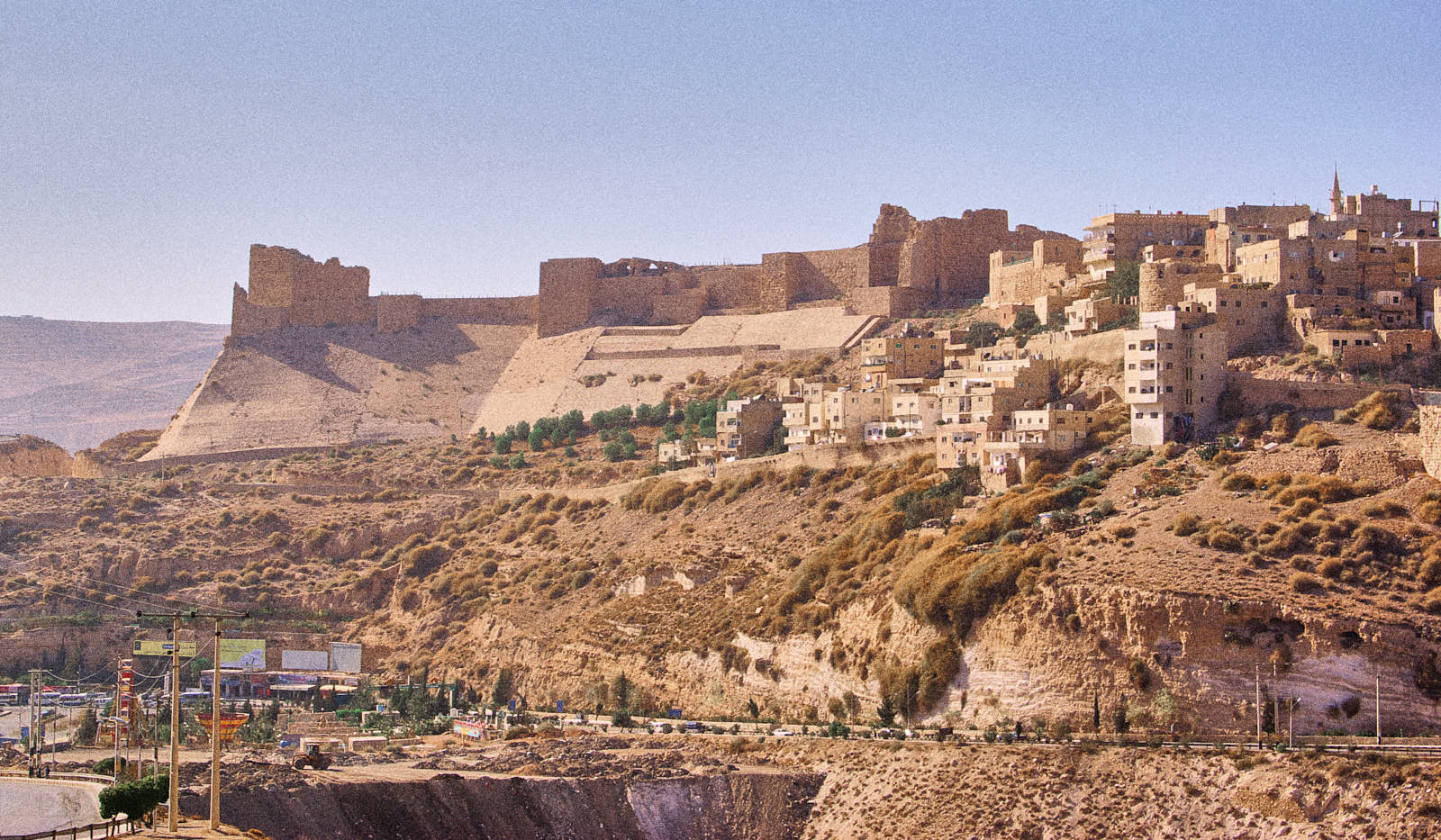
Al-Karak — a Crusader fortress built in the 12th century. It was mentioned in the writings of Ibn Battuta. Inside, an archaeological museum is open, but it is far more interesting to wander through the corridors, explore the dark halls, and admire the views from the ancient battlements. Admission costs two dinars (2.82 USD); the castle is open until 16:00.
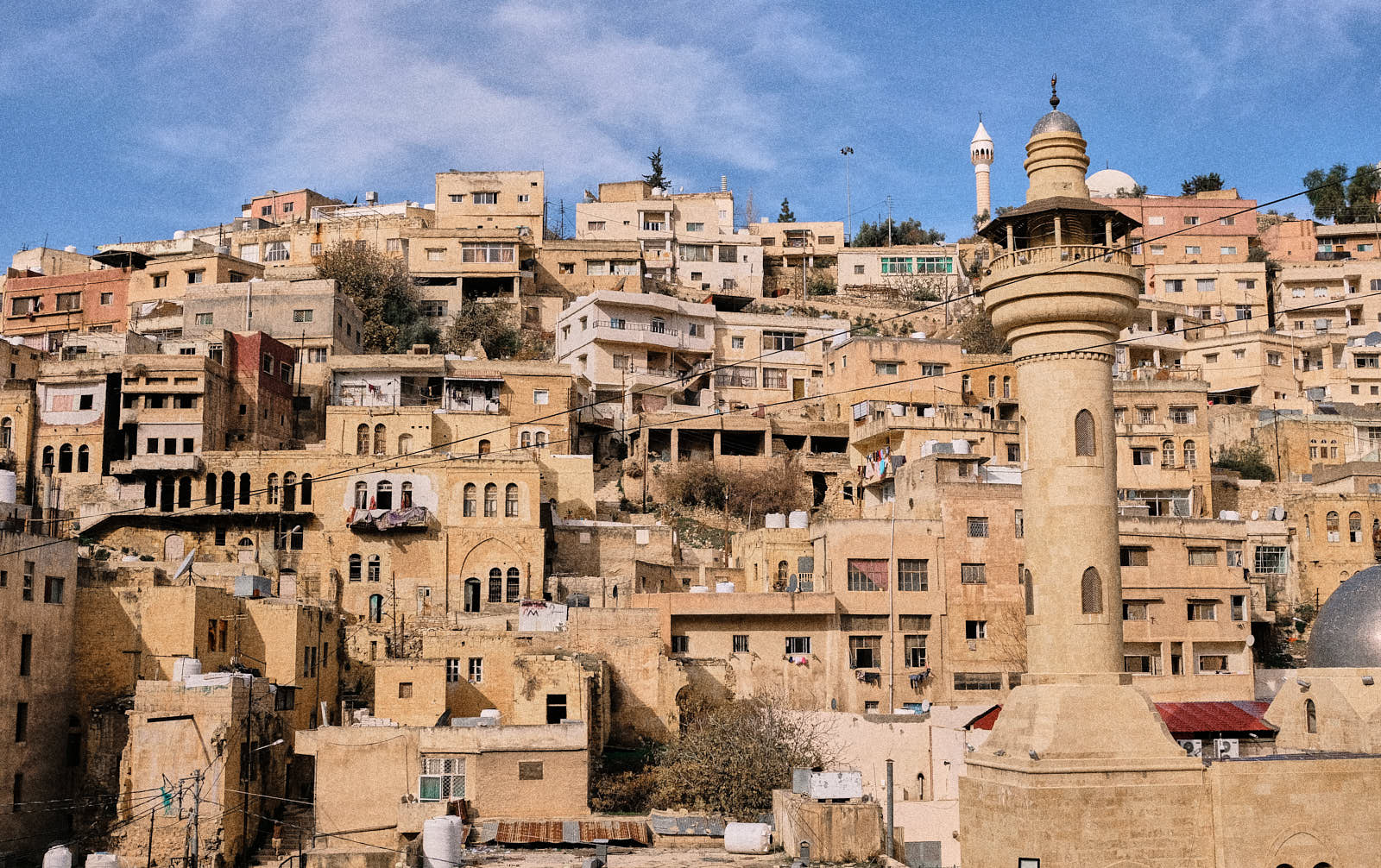
Es-Salt — the city is included on the UNESCO World Heritage List. It is the only city in Jordan where historic architecture has been preserved comprehensively. There are around 650 buildings in historical and Art Nouveau styles in total. At the cultural center exhibitions are held and staff can advise on what to see in the city. Though it is easy enough to find your way on your own — just stroll along the main street, Prince Hamza, and the parallel streets that spread across the hills.
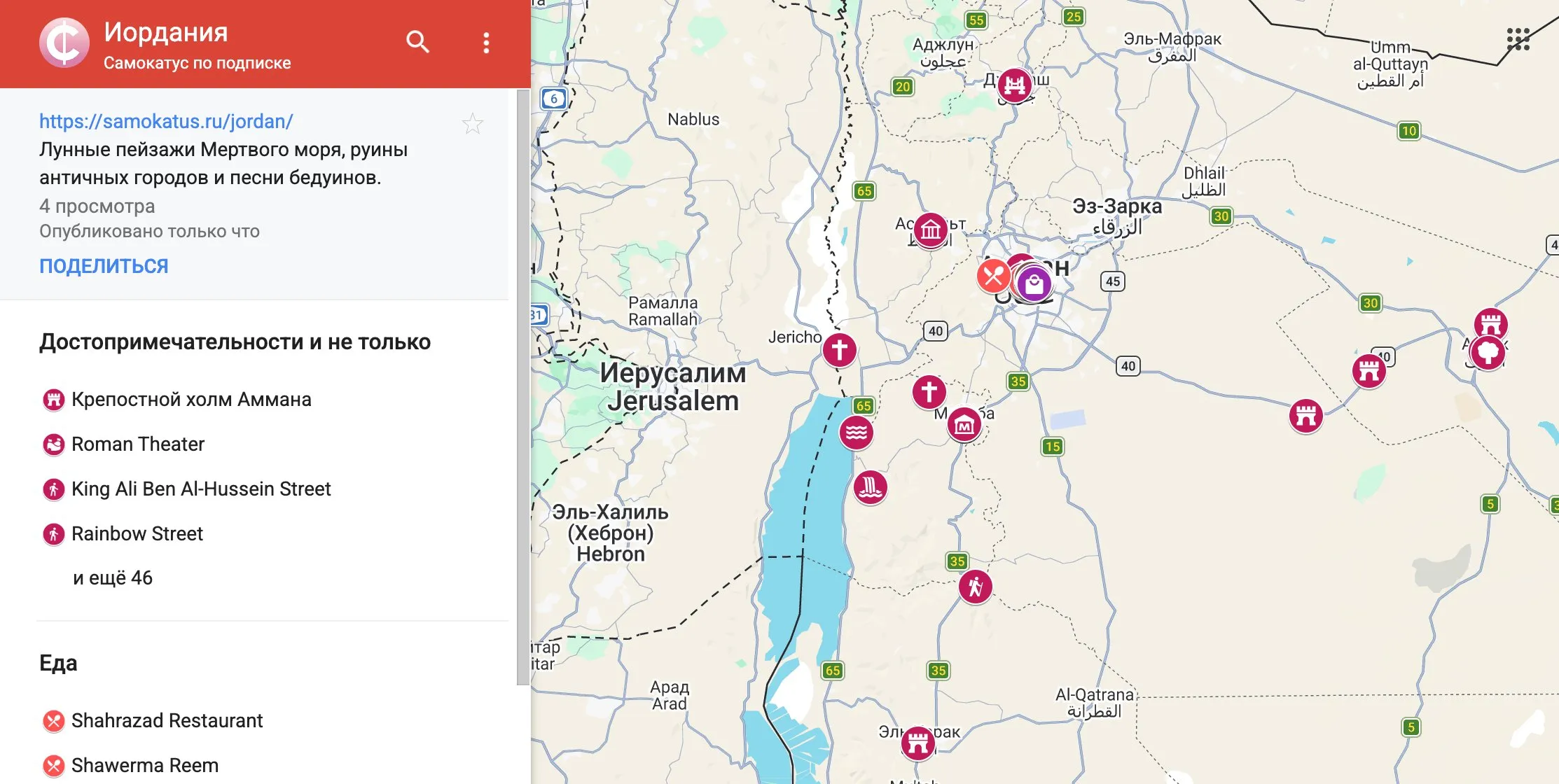
Map of Attractions
Food
Jordan sits at the crossroads of trade routes from India and Egypt, and as a result it has absorbed diverse traditions from its neighboring countries. This is most apparent in the local cuisine. All dishes can be placed into two broad categories: Arabic and Bedouin.
Arabic cuisine is more or less similar across all countries of the Middle East. Its cornerstone in Jordan is khobz, a warm flatbread. The bread's second name is aish — meaning 'life' in Arabic — which underscores the importance of bread in the local diet. Khobz is eaten at breakfast, sprinkled with a mixture of salt, sesame and sumac (a tart spice made from ground sumac berries) and dipped into labaneh, a yogurt cream cheese. At lunch or dinner the flatbread accompanies hearty meat and vegetable dishes, and as a snack it is wrapped around falafel.
Another popular dish is maqluba, a distinctive pilaf of rice, braised meat and vegetables — most often eggplant, potatoes and tomatoes. Maqluba is cooked in a large pot and garnished with pieces of onion, almonds and fresh herbs before serving.
Dinner, or any extended meal, traditionally begins with meze — a spread of small dishes that is quite filling on its own. The exact selection varies from place to place, but meze most commonly includes hummus, a roasted eggplant paste called mutabbal, fresh olives and tahini — sesame paste. Salads follow next: fattoush or tabbouleh. Only then come the hot dishes: roasted chicken, grilled meat skewers or kebab. Pigeon is also eaten fairly often in Jordan.
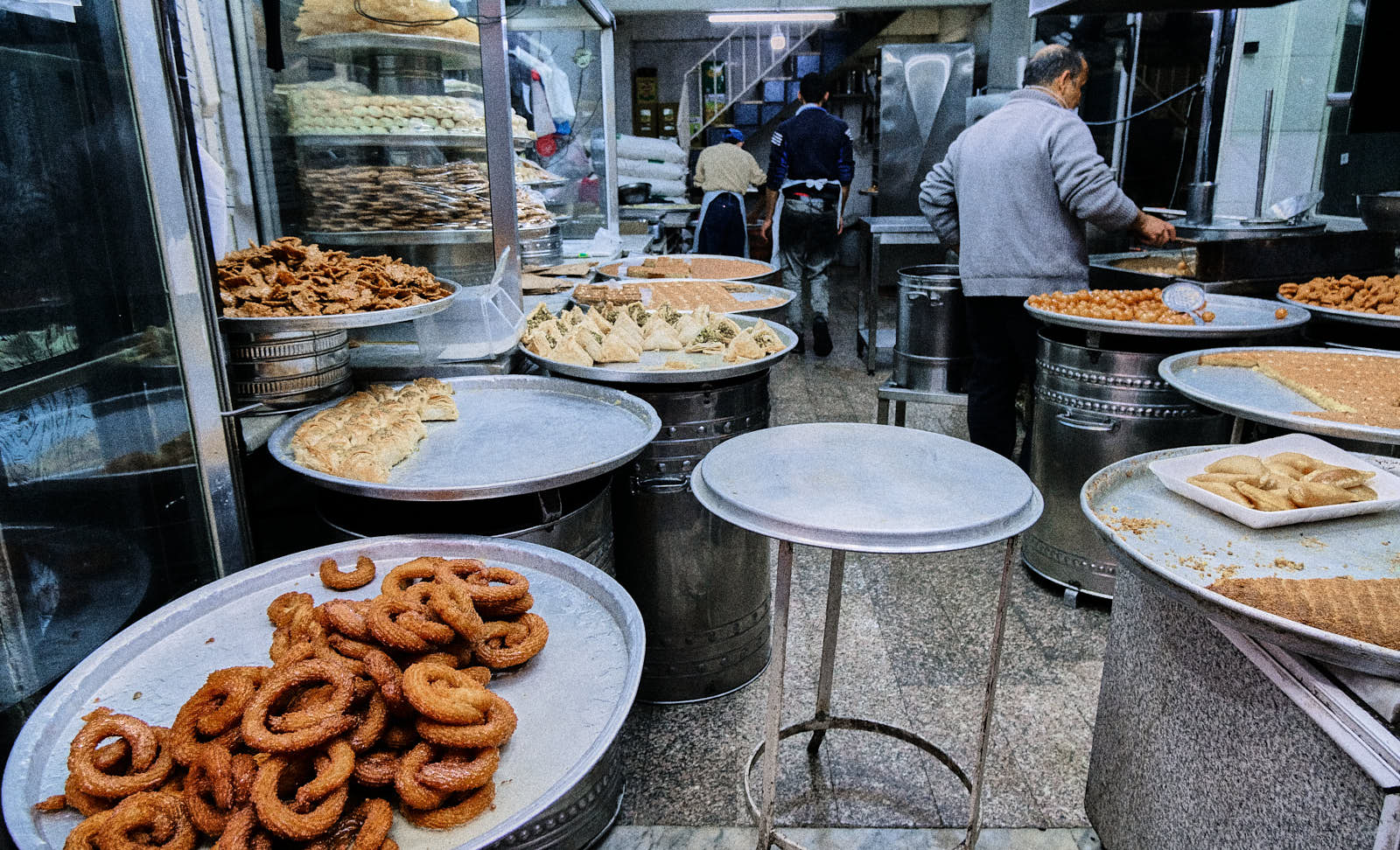
For dessert, the Middle Eastern classics — baklava, sesame halva, flaky phyllo pastries with assorted fillings, and knafeh.
The main ingredients in Bedouin cuisine are camel's milk, goat's cheese, dried dates and lamb. The defining Bedouin dish is mansaf — lamb slow-cooked in goat's or sheep's milk yogurt. Mansaf is prepared over several hours and served on a large platter with rice and pine nuts.
In the desert, you will certainly be offered zarb, a dish cooked underground. A layer of rice is spread across a large metal tray, lamb and vegetables are placed on top, then everything is covered with foil and several layers of rugs, lowered into a pit of hot coals and buried under sand. The dish braises in its own juices for several hours, after which it is dramatically unearthed before the eyes of astonished visitors.
Where to Stay
Finding accommodation in Jordan is not a problem, especially if you are staying in major cities or near the main attractions. The Dead Sea coast, Amman, Aqaba and Petra are all home to hotels belonging to most major international chains. Apartments are mainly rented through Airbnb.
Amman
Darna, Battuta, The Cabin — good hostels in the city center priced at around $12 per night.
Carob — a bed in a shared room starts from $23 per night.
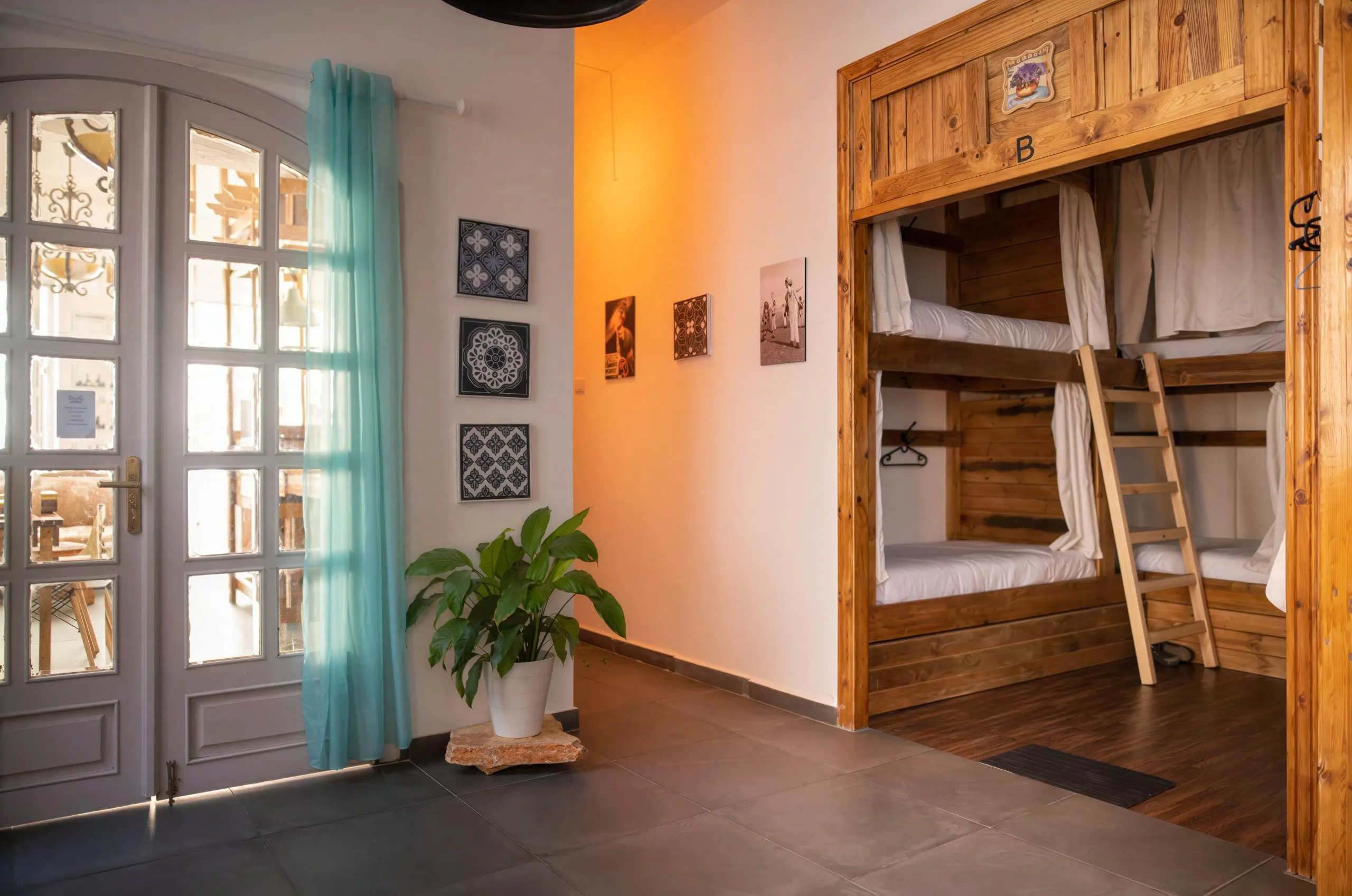
Beit Ahlan, City Citadel, Dali House, Panorama — $34–40 per room.
B-Suites — from $65 per room.
The Seventh Star — from $85 per room.
Radisson Blu Galleria Mall — from $120 per room.
Mövenpick — from $135 per room.
Marriott — from $160 per room.
Sheraton Al Nabil — from $175 per room.
Rotana — from $216 per room.
Fairmont— from $290 per room.
Four Seasons — from $320 per room.
Apartment Al-Burj on the seventh floor costs $135 per night. There are cheaper options too: Antica Jabalal-Lwebdeh costs $55 per night.
Petra
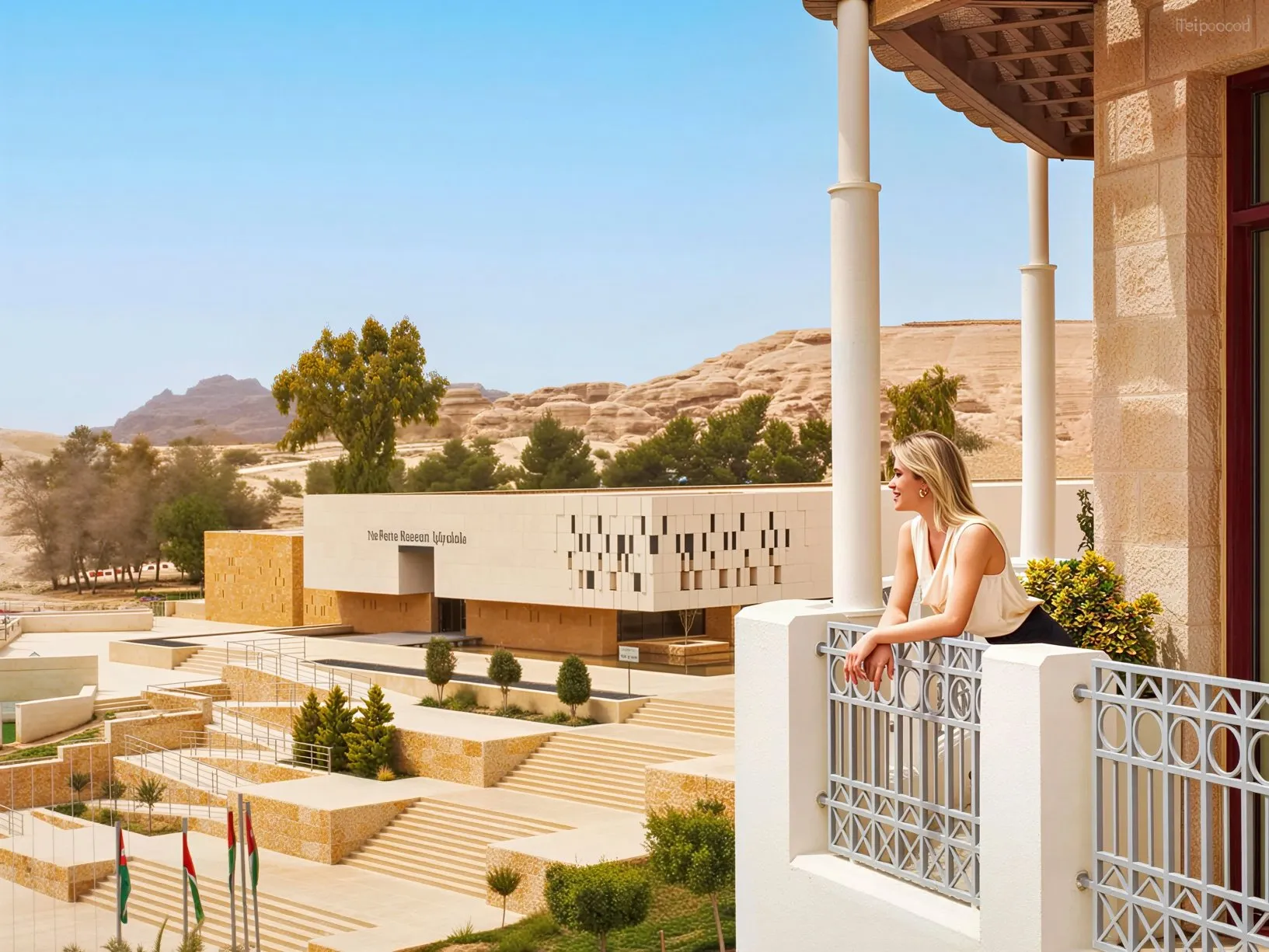
Petra is a popular tourist destination, but accommodation here can be a problem — not in terms of quantity, but quality, and there are attempts to overcharge tourists. So read reviews carefully and check the photos. We've picked hotels that aren't the cheapest, but have good reviews and include breakfast.
Petra Palace, Shaqilath Hotel, Petra Heart — $50–60 per night.
La Maison, Nomads, Petra Premium, Edom — $60–70 per night.
Corner View, The Rock Camp — $70–80 per night.
Petra Plaza, Petra Moon Luxury, Petra Canyon, The Old Village, Petra Legacy Luxury, Grand Mercure Petra, Crowne Plaza Resort Petra by IHG — $100–150 per night.
Mövenpick Petra — from $160 per night.
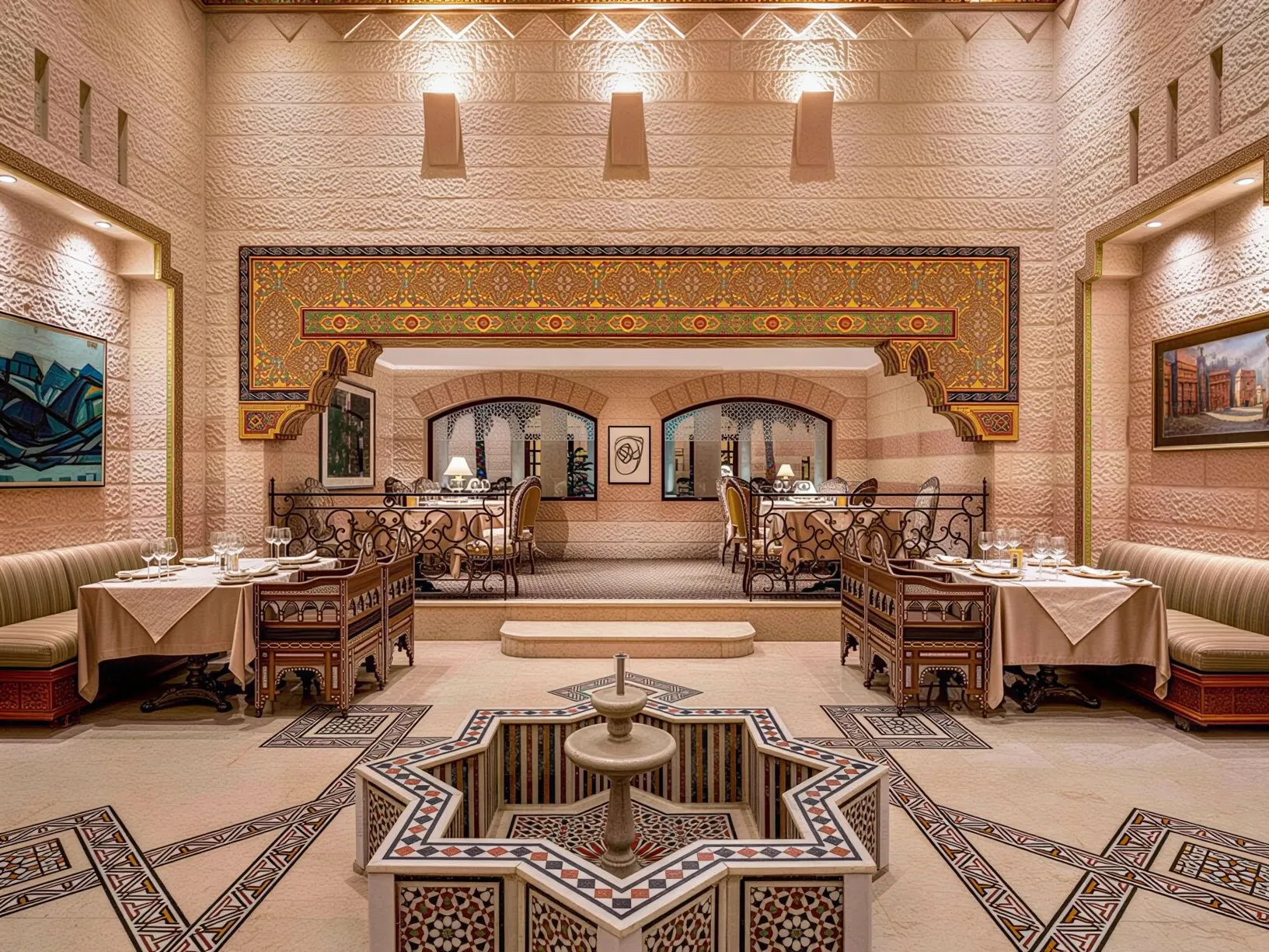
Hayat Zaman Hotel and Resort Petra — from $220 per night.
How to Travel Around Jordan
Car. The most convenient way to travel around Jordan is by car. The roads are good, traffic moves on the right, and driving is relatively calm. Rental cars are most often given green license plates, so locals understand there is a foreigner at the wheel and, in most cases, try to be helpful and are more forgiving of mistakes. And a drive along the King's Highway is an adventure in itself. This is an ancient route from Africa to Syria, part of which passed through the territory of modern Jordan. Today it corresponds to highways 35 and 15, which in the south cross several fantastically beautiful valleys. The second scenic road is the Jordan Valley Highway, which also crosses the entire country and runs from Aqaba in the south to Irbid in the north.
The easiest place to rent a car is at Amman Airport or in the city itself, where offices of major rental companies are located. A smaller number of offices can also be found in Aqaba. Renting a sedan costs around 50 dinars per day (70.5 USD). You will need your driver's license (plus an International Driving Permit if it isn't in Latin script) and a credit card, on which a deposit of around 400 dinars (564.2 USD) will be immediately frozen. However, it may be possible to arrange payment of the deposit in cash.
Everything can also be arranged through the Localrent service. A Hyundai i10 starts from $15 per day, a Kia Rio from $20, Geely Coolray crossovers from $35, a Mitsubishi Outlander from $55, and a Kia Carnival minivan from $100.

Bus. Comfortable air-conditioned buses with Wi-Fi operated by JETT run between Amman, Aqaba, and Petra. A ticket from Aqaba to Petra costs 11 dinars (15.5 USD). JETT offers tourist routes to the main attractions. For example, a day trip from Aqaba to the Wadi Rum desert and back costs 18 dinars (25.4 USD), and from Amman to Madaba and Mount Nebo — 15 dinars (21.2 USD).
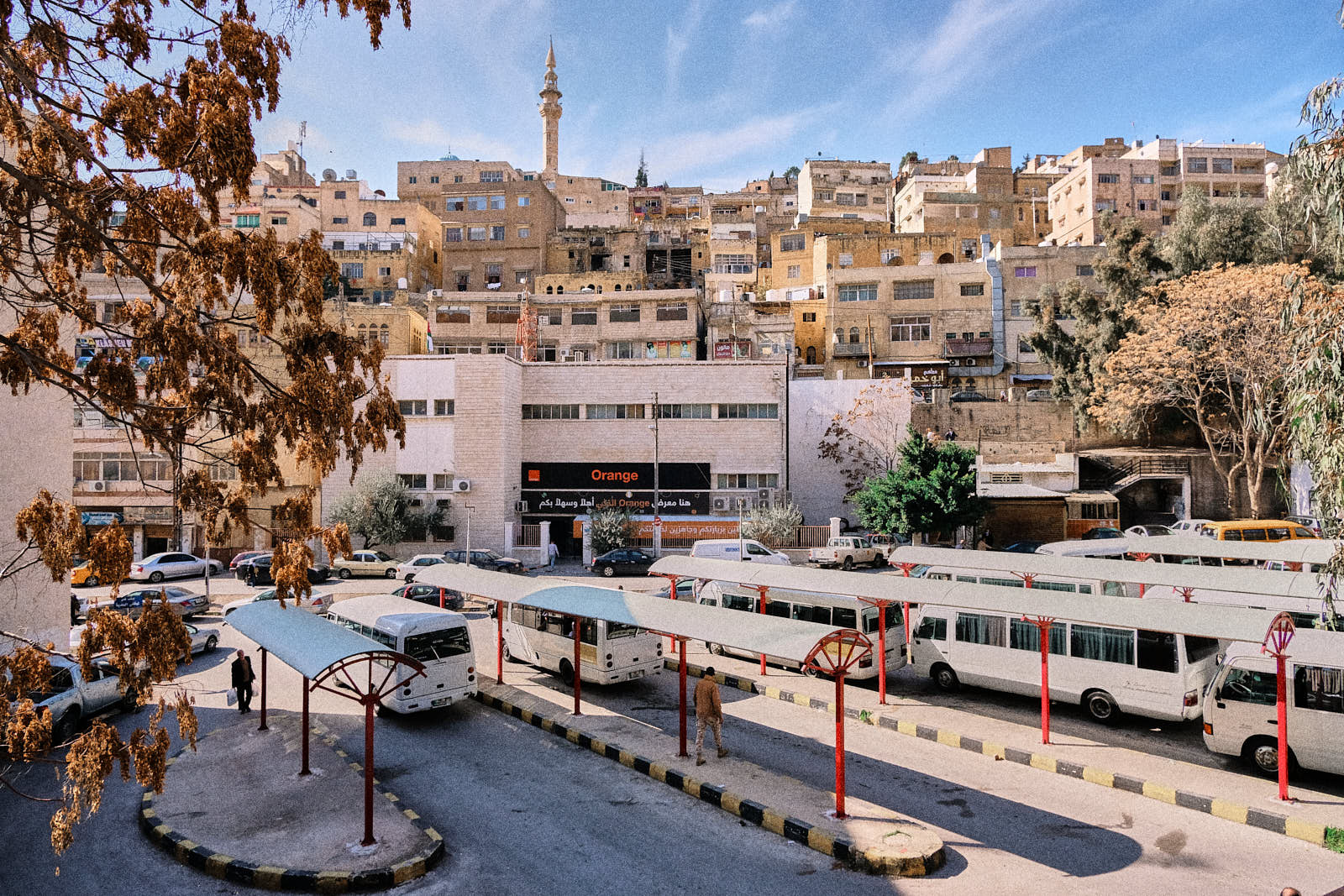
Minibus. Minibuses also run between cities. They depart from the main bus stations and operate without a fixed schedule, leaving when full. The driver sells tickets, and locals signal their stop by tapping a coin against the window.
Plane. Planes fly from Amman to Aqaba — operated by Royal Jordanian, with tickets costing around $80. The distance between the cities is just over 300 kilometers, and the drive by car often takes nearly as long as the flight plus pre-flight procedures.
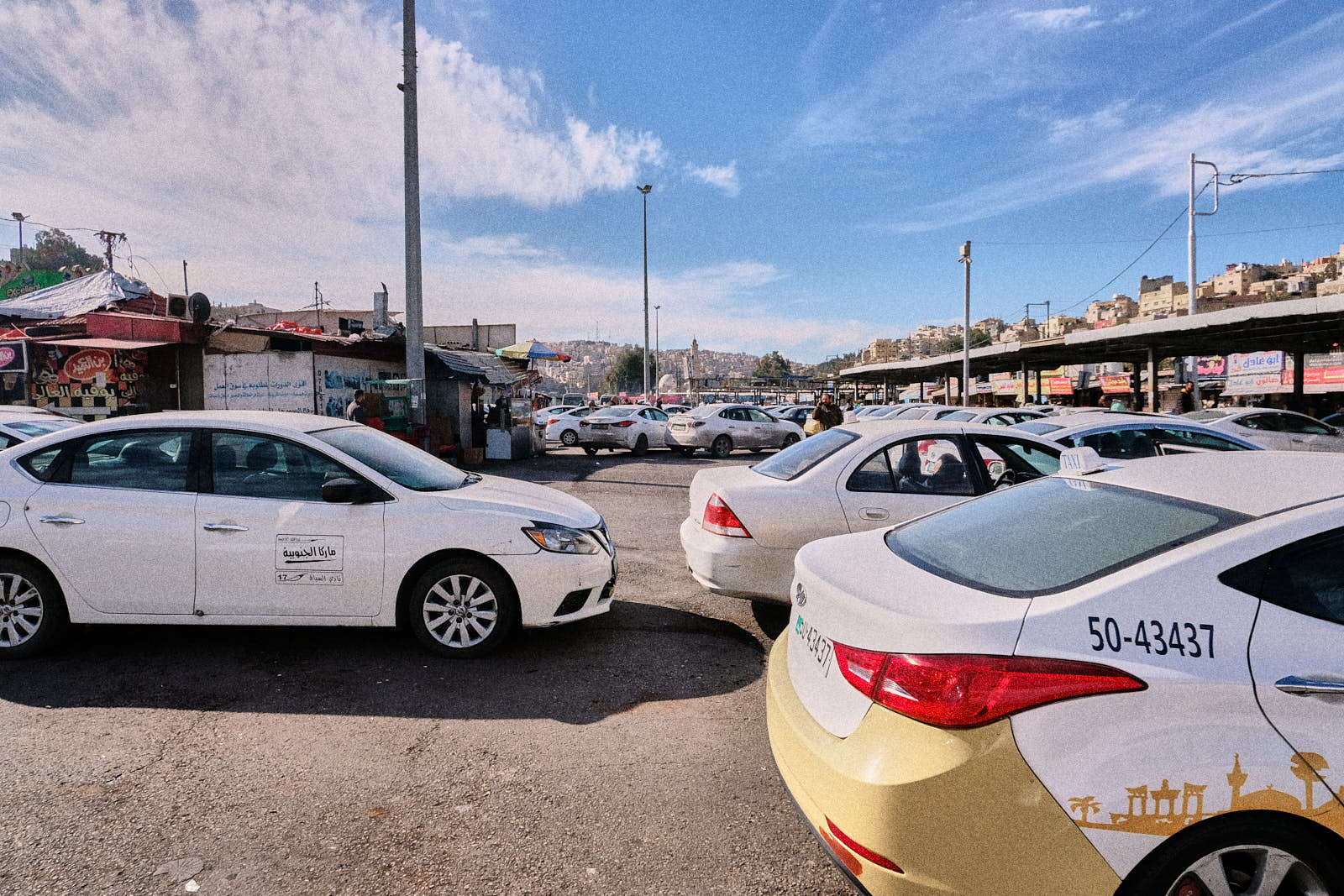
Taxi. Taxis in cities come in two types: yellow and white. Yellow taxis use a meter, with fares displayed in fils (one dinar equals 1,000 fils), and drivers typically speak English. White taxis follow a set route and may pick up additional passengers along the way. You can negotiate with the driver and arrange a full-day hire. Uber and its local equivalent Careem also operate in Jordan.
How to Get There
Jordan has two international airports, one ferry link, and land borders with Israel and the West Bank, Syria, Iraq and Saudi Arabia. For almost everyone the answer is "fly to Amman"; the rest of this section is for those who want to arrive from a neighboring country or fly straight to the Red Sea.
By plane
Amman — Queen Alia International Airport (AMM) is the main gateway, 35 km south of the city. Royal Jordanian, the national carrier and a oneworld member, flies non-stop to some 60 destinations. The long-haul network is more useful than the size of the country suggests: New York JFK (daily except Sundays), Chicago (10 weekly), Detroit, Washington Dulles, Montreal and Toronto in North America — with Dallas/Fort Worth added in May 2026 — plus Bangkok, and Mumbai and Delhi, both of which returned to the map in 2026 after a twelve-year gap. In Europe RJ serves London Heathrow and Stansted, Paris, Berlin, Munich, Hamburg, Rome and a dozen more; in the region, every Gulf capital, Cairo, Istanbul and Moscow (four times a week).
Everyone else connects through a hub. From the Americas, Asia and Australia the fastest options are the Gulf carriers — Emirates via Dubai, Qatar Airways via Doha, Etihad via Abu Dhabi — or Turkish Airlines via Istanbul, all with three-hour final legs into Amman. From Europe the full-service choice is Lufthansa, Austrian, British Airways, Air France and Turkish; the budget choice is Ryanair, which runs its biggest schedule from late October to March (17–18 routes to a dozen countries, including Paris, Brussels, Milan, Rome, Madrid, Vienna, Prague, Budapest and Sofia), with Wizz Air (Budapest and several Central European cities) and Eurowings filling in. Low-cost fares to Amman drop well under €100 one-way in sales, but note two things: the network shrinks sharply in summer, and it has been suspended outright during regional flare-ups — for 2026 Ryanair's routes are only returning for the winter season. Check that the airline is actually flying before you build a trip around it.
Aqaba — King Hussein International Airport (AQJ), 10 km from town, is the back door and worth considering if your trip is Petra, Wadi Rum and the Red Sea rather than Amman and the north: Petra is two hours away by road, Wadi Rum one. Year-round service is thin — Royal Jordanian from Amman, Cairo and Abu Dhabi, Turkish Airlines from Istanbul, and from late 2026 Royal Jordanian from Moscow twice a week. In winter Ryanair and, on and off, Wizz Air add direct flights from a handful of European cities (Rome, Milan, Athens, Sofia, Warsaw and others have all appeared in recent schedules); which ones survive each season is anyone's guess, so treat Aqaba routes as a bonus rather than a plan. Arriving here has a hidden benefit: the entry visa is free under the Aqaba Special Economic Zone rules (see Visa and documents).
The domestic Amman–Aqaba hop takes 50 minutes; Royal Jordanian flies it daily. The drive is 330 km and about four hours, so the plane wins only if you're traveling light or would be making the trip regardless.
By ferry from Egypt
There is no land border with Egypt; the Sinai and Jordan are linked by sea across the Gulf of Aqaba. AB Maritime (Arab Bridge Maritime) is the only operator, with two routes from the Aqaba passenger port, 10 km south of the city center — a taxi from town costs 4–6 dinars (5.64–8.46 USD).
Aqaba – Nuweiba is the workhorse: a conventional ferry that leaves Aqaba daily at 22:00 and docks in Nuweiba around 01:00, with the return sailing from Nuweiba around midday. Crossing time is 2.5–3 hours; delays of an hour or two are normal, and Egyptian passport control is done on board while the ship is underway, which saves time on the other side. A one-way ticket is about $80, a round trip about $110. From Nuweiba it's an hour by road to Dahab and three to Sharm el-Sheikh.
Aqaba – Taba is a fast passenger boat, about one hour, aimed at travelers heading for Taba Heights, Eilat or the Sinai's north coast. It sails from Aqaba mid-morning (currently 9:30) on Tuesdays, Thursdays and Fridays and returns from Taba at 13:30 on Tuesdays, Thursdays, Fridays, Saturdays and Sundays. Around $70 one way, $115 round trip.
Tickets for both routes are sold online at abmaritime.com.jo and at the company's office in Aqaba. Schedules shift with the season and with demand from pilgrims and workers, so check the sailing date before you commit to onward transport. Budget a further 10 JD (14.1 USD) for the Jordanian exit tax, payable in cash at the port, and allow at least two hours for check-in and Jordanian formalities. If the ferry timing doesn't suit you, EgyptAir, Royal Jordanian and Air Cairo fly Cairo–Amman several times a day, and there are usually flights to Aqaba too.
By land
Jordan has five neighbors by land and every crossing that matters to a tourist is open. All land borders charge a 10 JD exit tax on the way out; none of them issue multiple-entry visas, and one — Allenby — issues no visas at all.
Israel and the West Bank. Three crossings, from north to south:
Sheikh Hussein / Jordan River (near Beit She'an, 90 km from Amman) — the easiest for independent travelers coming from Tel Aviv, Haifa or the Galilee. Visas on arrival for all eligible nationalities. Nazarene Tours runs buses from Nazareth to Amman via this crossing; otherwise it's a taxi or bus to the Israeli terminal, a shuttle across, and a shared taxi to Irbid or Amman.
King Hussein Bridge / Allenby (from Jericho, 45 km from Amman) — the busiest and the most awkward. It's the only route from Jerusalem and the West Bank, but Jordan issues no visas on arrival here: come with an e-visa or a visa from an earlier entry; a Jordan Pass won't help you here. On the Israeli side there are no walk-across options — you take a mandatory shuttle bus between terminals. JETT runs a daily bus between the bridge and its Abdali terminal in Amman; a shared taxi is 7–8 JD, a private one about 30 JD. Fridays and Jewish holidays bring reduced hours and long lines; the crossing is closed on Yom Kippur.
Wadi Araba / Yitzhak Rabin (Eilat–Aqaba, 324 km from Amman) — a ten-minute taxi from Eilat and a five-minute one into Aqaba. Visas on arrival, free of charge thanks to the Aqaba economic zone. This is the natural entry if you're combining Petra and Wadi Rum with Israel's south.
Saudi Arabia. Three crossings, all open around the clock: Al-Omari on the Amman–Riyadh highway (the one long-distance buses use), Al-Mudawwara on the Desert Highway south of Ma'an toward Tabuk, and Al-Durra, 20 minutes south of Aqaba on the coast road to Haql and NEOM — the obvious choice for anyone linking the two Red Sea coasts. SAPTCO and JETT run buses between Amman and Riyadh, Dammam and Jeddah; it's a 15–20-hour ride, and flights are usually cheaper and make more sense.
Syria. The Jaber–Nassib crossing on the Amman–Damascus highway (80 km from Amman) reopened for tourists in early 2025 and has run 24/7 since March that year; Ramtha, further west, is mainly for cargo. Damascus is only 200 km from Amman and Jordanians have poured back — nearly 400,000 of them in 2025. For other nationalities the catch is on the Syrian side: you need a security clearance arranged through a Syrian travel agency before you reach the border, and JETT's daily Damascus bus has been limited to Syrian and Lebanese passport holders, leaving shared taxis from Amman's North (Tabarbour) terminal as the usual option. The rules on this border change faster than any guidebook can follow — verify the week you travel.
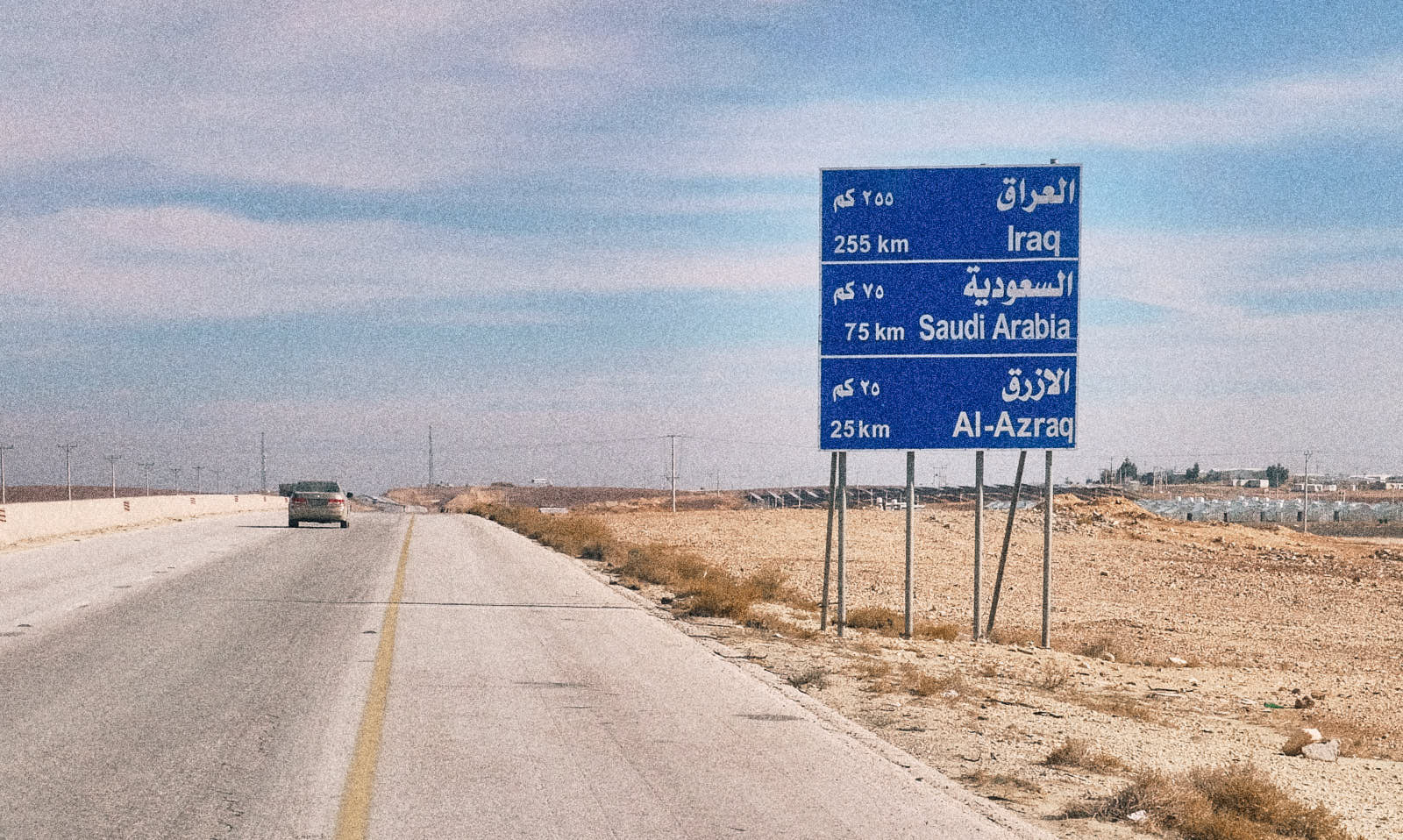
Iraq. The Karamah–Trebil crossing on the highway to Baghdad is the only one, open 24 hours and used almost entirely by trucks and Iraqi families. It works for transit if you have your Iraqi paperwork in order, but nothing about the 550 km desert road on the Iraqi side makes it a tourist route.
Whichever border you use, the Jordanian side is generally quick and courteous. Have your exit-tax dinars ready in cash, expect everyone in the car to be photographed at Saudi and Syrian crossings, and if you're driving a rental car, make sure the rental company has authorized the border crossing in writing.
Visa and documents needed to travel to Jordan
Jordan is one of the easier countries in the region to enter: most nationals will get a visa on arrival, a growing list gets in visa-free, and there is an official e-visa. The rules below are current as of September 2026; double-check with the Ministry of Interior portal (eservices.moi.gov.jo) or your airline's Timatic check a week before the flight.
Which group is your passport in?
Visa-free, up to 3 months in any 6-month period: citizens of the six GCC states (Saudi Arabia, UAE, Qatar, Kuwait, Bahrain, Oman), Lebanon and Turkey.
Visa-free, up to 1 month per visit: citizens of Russia (since December 13, 2025, no more than 90 days per calendar year in total, tourism and private visits only), Egypt, Uzbekistan and residents of the Palestinian Authority. No form, no QR code, no fee — just a passport (valid for at least six months, see "Documents to have on you").
Visa on arrival or e-visa — the vast majority of travelers: EU/EEA and UK, USA, Canada, Australia and New Zealand, all of Latin America, Japan, South Korea, China, most of Southeast Asia, the Caucasus and Central Asia, Ukraine, Belarus, and roughly 120 countries in all. You pay 40 JD (56.4 USD) for a single-entry visa valid for 1 month. A handful of these passports (South Africa, Malaysia, Hong Kong, Japan, Vatican City) get the visa on arrival with the fee waived.
Conditional or restricted: citizens of most sub-Saharan African countries, Iraq, Sri Lanka, Sudan, Somalia, Yemen, Laos, Cuba and several others cannot simply show up. They can still get a visa on arrival if they hold a residence permit (valid for at least six more months) in the EU, GCC, USA (Green Card), Canada, Australia, Switzerland, Norway or Iceland, plus a non-refundable round-trip ticket; otherwise they apply in advance through the Ministry of Interior's online visa service. Iraqi citizens holding a valid Schengen, UK or US visa also qualify for a visa on arrival. Pakistan and India sit in a gray zone where rules and enforcement have shifted several times in recent years — check the MOI portal and your airline before booking rather than relying on any blog, including this one.
Embassy visa only: Afghanistan, Bangladesh, Iran, Nigeria and Syria are excluded from the e-visa system and must apply in person at a Jordanian embassy or consulate. Emergency and temporary travel documents from any country also need an embassy visa.
Visa on arrival: how it works
Available at Queen Alia airport in Amman, King Hussein airport in Aqaba, the Aqaba seaport, and every land crossing except one (see below). You fill in nothing in advance: hand over your passport, pay 40 JD in dinars (cards are accepted at the airports, cash is safer at land borders) and get a stamp. There is no visa-on-arrival line at Amman most of the time, but late-evening arrivals from Europe can mean a 30–60 minute wait.
The single-entry visa is valid for one month. If you plan to stay longer, register at any police station before the month runs out — extensions of up to three months are routine and cost around 40 JD. Overstaying without registering is fined per day on exit (the Jordan Pass site quotes 3 JD a day), and you won't be let out until it's paid.
Multiple-entry visas are not issued on arrival. If you need one — say, for a trip that dips into Israel or Saudi Arabia and comes back through a different crossing — apply through the e-visa portal or a consulate beforehand; a six-month multiple-entry visa runs to 120 JD.
E-visa: same price, less waiting
Since 2023 most visa-on-arrival nationalities can apply online at eservices.moi.gov.jo (or the MOI app). The fee is the same 40 JD (56.4 USD) plus an online service charge; approval usually comes within 1 to 3 working days, sometimes minutes. Print the approval (!) — a PDF on your phone is not accepted at the border. The e-visa is worth it mainly if you are entering by land at a busy crossing or want peace of mind about eligibility before you buy flights. It is not available to the five embassy-only nationalities above.
The Jordan Pass: visa and Petra in one purchase
If you are staying at least three consecutive nights and going to Petra, buy the Jordan Pass at jordanpass.jo before you arrive. It comes in three tiers — 70 JD (one day in Petra), 75 JD (two days) and 80 JD (three days) — and includes the visa fee waiver plus free entry to 40-odd sites: Jerash, the Amman Citadel, Al-Karak, Ajloun, Wadi Rum, the desert castles and so on. Since Petra alone is 50/55/60 JD and the visa is 40 JD, the pass pays for itself before you've seen anything else. Two caveats: it only waives a single-entry visa, and if you leave Jordan within the three nights the 40 JD is charged at the exit desk. Show the pass QR code (printed or on your phone) at immigration; the visa is stamped free.
Entering from Israel and the West Bank: the one exception
Jordan has three crossings with Israel and the West Bank, and they are not interchangeable:
Sheikh Hussein / Jordan River (north, near Beit She'an) — visa on arrival for all eligible passports.
Wadi Araba / Yitzhak Rabin (south, Eilat–Aqaba) — visa on arrival for eligible passports, and because Aqaba is a special economic zone (ASEZA) the visa is free if you arrive here (or by air or sea into Aqaba). Restricted nationalities who enter here must leave through the same crossing.
King Hussein Bridge / Allenby (from Jericho and Jerusalem) — no visas on arrival, for anyone, Jordan Pass or not. You need an e-visa, a consulate visa, or a Jordanian visa already in your passport from an earlier entry. The good news: a single-entry visa issued in Amman stays valid for re-entry at Allenby if you leave and come back the same way within its one-month validity — tell the officer you're returning so they don't cancel it.
The ASEZA free visa comes with a condition: stay in Jordan at least two nights, or the 40 JD is collected when you leave. Historically, exiting through a crossing other than Aqaba could also trigger the fee, so budget for it if you fly out of Amman.
There is a 10 JD exit tax at every land and sea border (Israel, Egypt ferries, Saudi Arabia, Syria, Iraq). Airports charge nothing extra — the tax is built into your ticket.
Jordan does not care about Israeli stamps or Israeli entry slips in your passport. The reverse is a different question and belongs in a guide to Israel.
Documents to have on you
Passport valid for at least six months beyond your stay, with two blank pages. Immigration is strict on the six months; airlines are stricter.
Return or onward ticket. Officially required for visa on arrival; rarely asked for at Amman, occasionally at land borders. A screenshot is fine.
Printed e-visa (a PDF on your phone is not accepted), or your Jordan Pass QR code, printed or on your phone.
Accommodation address for the first night — you may be asked verbally, and the arrival card at some crossings has a field for it.
Travel insurance. Not a legal requirement for any nationality, but Jordanian hospitals bill foreigners at full private rates and Petra, Wadi Rum and Wadi Mujib are places where people twist ankles.
Driver's license from your home country plus an International Driving Permit if your license isn't in Latin script. Rental companies also want a credit card for the deposit.
Vaccinations: none required, except a yellow fever certificate if you arrive from a country with yellow fever transmission.
Drones need a permit from the Civil Aviation Regulatory Commission in advance; undeclared drones are confiscated at the airport.
Money
Jordanian dinar. 1 dinar = 1.41 USD.
Cards are accepted at most hotels, restaurants, and museums. ATMs are available everywhere, even in the smallest towns. Bargaining is possible, but don't expect to knock much off the price: in Jordan, haggling is more of a social ritual than a genuine way to save money. Still, it's worth a try.
How to Behave so as not to Offend Local Traditions
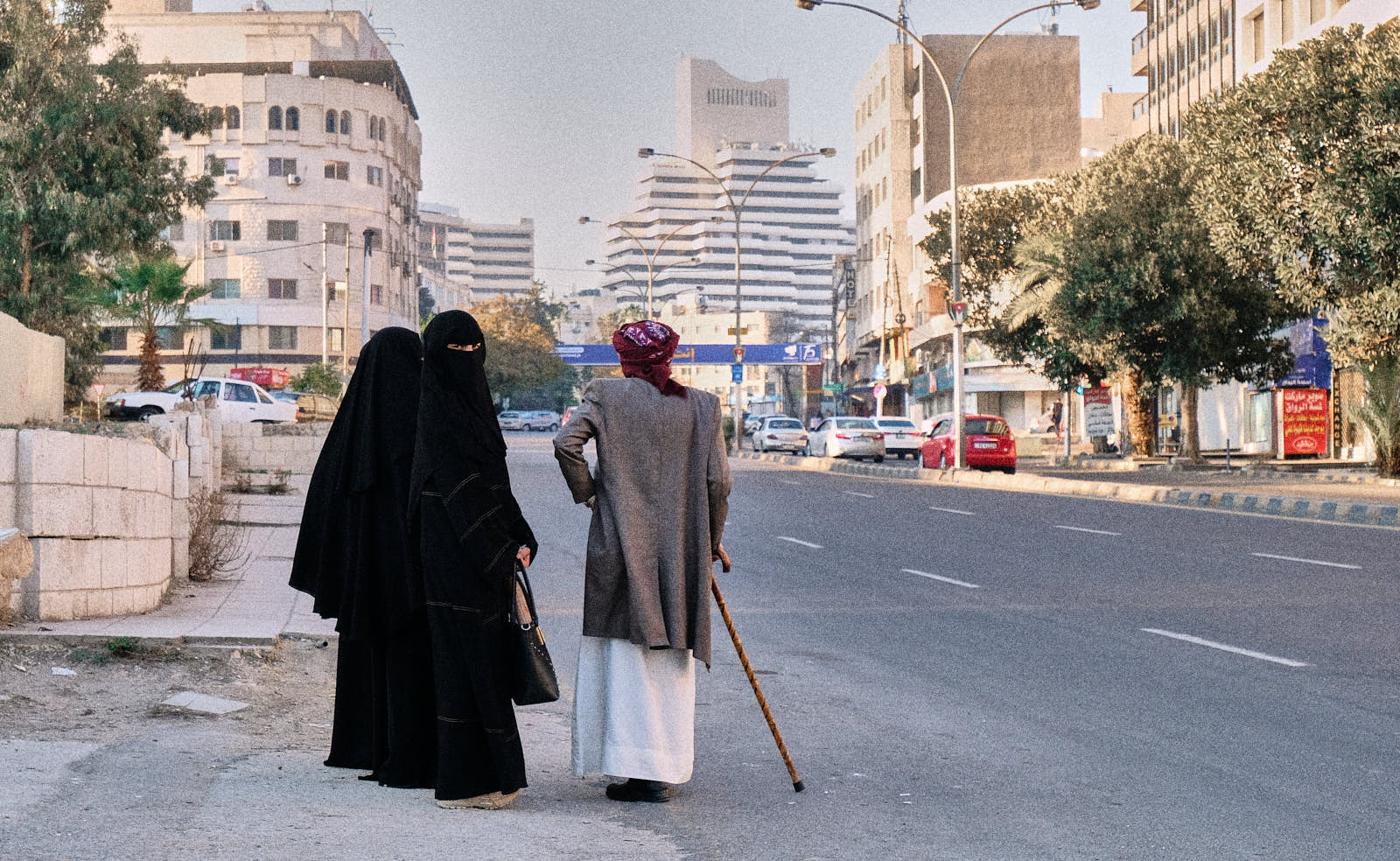
Jordan is a secular country, but it is still a Muslim one. Female tourists are not required to wear a hijab or cover their arms and ankles as they are in Iran, although doing so is considered good etiquette. Revealing outfits are acceptable in resort areas, but elsewhere they may draw disapproving looks. You can sunbathe and swim in regular swimwear, though local women typically wear a burkini (a swimsuit designed for Muslim women) — not only to avoid unwanted attention but also for protection from the sun.
On public transport, it is not customary for a man and a woman to sit next to each other unless they are related. You may even be asked to move or swap seats with someone.
Alcohol is legal in the country and can be purchased freely. The exception is the month of Ramadan, when the majority of the population observes the fast.
When to Visit
The best time to visit in terms of weather is from March to May. Warm days and relatively cool nights, with no suffocating heat — perfect for long walks and sightseeing. This makes spring the high season, with all that entails: higher prices for hotels, tours, and food, and large crowds at the main attractions.
Fall and winter are well suited for a vacation on the Red Sea — this is high season in Aqaba and the surrounding area. Heading into the desert at this time of year may not be possible: rain is frequent and can lead to road closures. In winter, Amman or Petra can even see snow.
The worst thing you can do is visit Jordan in summer, when extreme heat reaches up to 50 °C (122 °F). Many hotels do not operate during this period, while others lower their prices. If you don't mind the heat, you can save some money.